
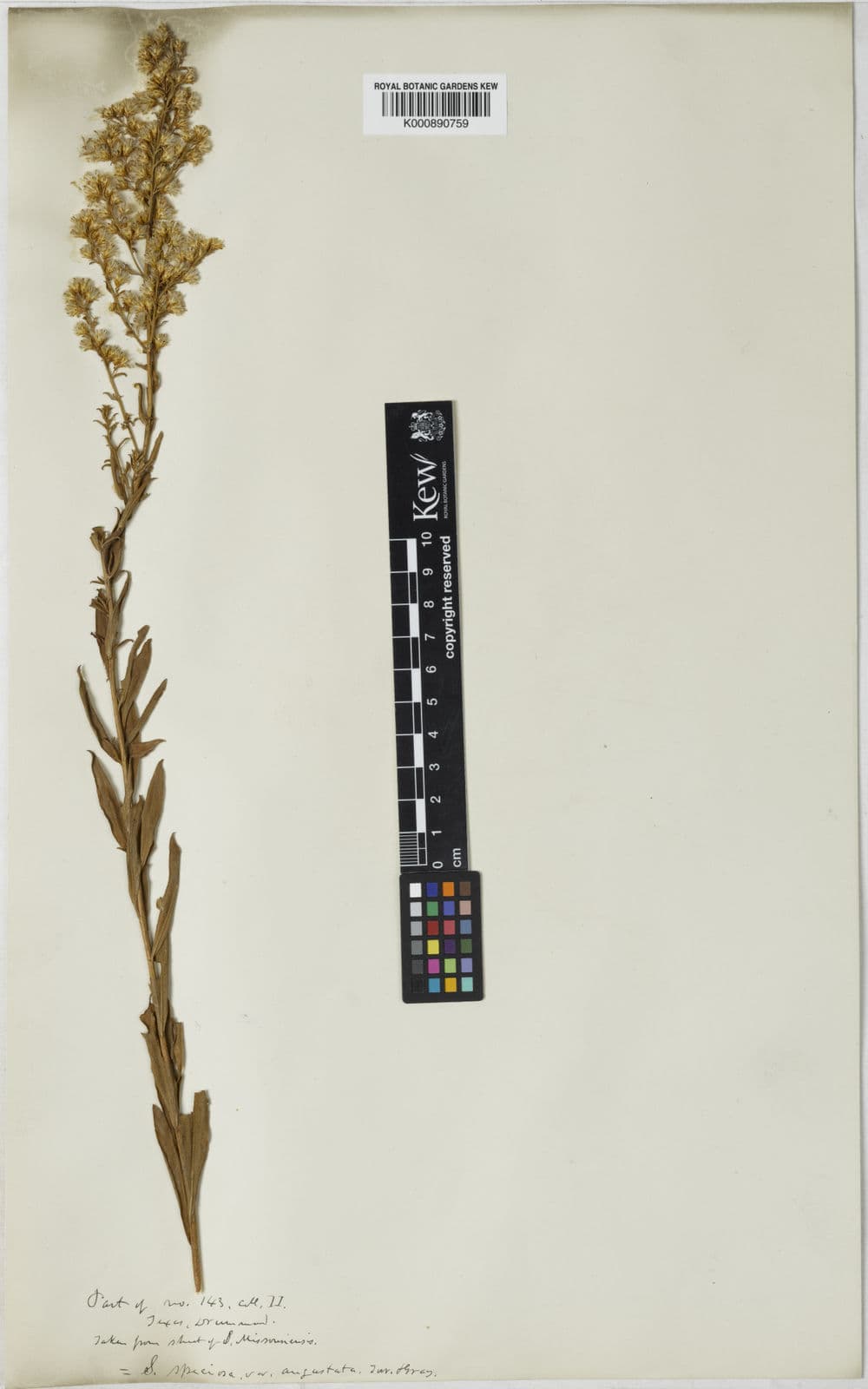
Solidago rigidiuscula: complete guide
Solidago rigidiuscula
¿Quieres ver Solidago rigidiuscula: complete guide en tu jardín?
1 minuto, sin tarjeta de crédito
Overview
Solidago rigidiuscula, known in English as stiff-leaved showy goldenrod, is a substantial herbaceous perennial in the aster family (Asteraceae) and a close relative of the better-known Solidago rigida, stiff goldenrod. The species occurs naturally from Walpole Island in Ontario into the central and east-central United States, from Illinois and Ohio to Texas and Louisiana, typically on prairies and dry, open limestone ground.
What sets this goldenrod apart from most other species in the genus is the combination of substantial size, sturdy, rough-textured leaves, and a flat, broad flower cluster with notably large individual flower heads, similar to those of Solidago rigida but with a slightly different, more refined leaf profile. For gardeners seeking a robust, non-flopping background plant for the prairie border, this is an excellent, little-used choice. Plan this imposing species with GardenWorld's design tools as a sturdy background element in a pollinator-friendly border.
Appearance and bloom
Solidago rigidiuscula is among the more substantial goldenrods, reaching 60 to 150 centimeters in height, with sturdy, stiff stems that rarely need staking, even in a windy border. The leaves are broad, stiff, and rough to the touch, grayish-green in color, with large oval basal leaves that are noticeably larger than the smaller stem leaves higher up.
The inflorescence forms a broad, flat to slightly domed corymb, studded with notably large golden-yellow flower heads, larger than those of most other goldenrods. This makes the species particularly valuable as a cut flower and as a landing platform for larger pollinators. Bloom occurs from August into October and draws enormous numbers of bees, bumblebees, and butterflies during those weeks.
Ideal location
This species flowers most abundantly in full sun, with at least 6 to 8 hours of direct sunlight daily. In partial shade the plant still grows but becomes noticeably taller and floppier, flowering distinctly less.
Solidago rigidiuscula is naturally a prairie plant and tolerates windy, open sites superbly thanks to its sturdy, almost woody stems. Plant it at the back of the border, in a prairie garden, along a fence, or as a solitary accent among lower plantings. The species is also well suited to dry, rocky, or calcareous garden areas where many other tall perennials struggle to hold their ground.
Soil
The plant accepts a wide range of soil types, from lean, rocky ground to moderately fertile loam, with a preference for a neutral to slightly alkaline pH between 6.5 and 8. Solidago rigidiuscula is remarkably drought tolerant once established and grows naturally on limestone substrates and dry prairie soil.
Heavy, wet clay is the main pitfall; ensure good drainage, particularly in winter. On very rich soil, the plant can become somewhat taller and looser than desired; in that case, a light cutback in June is an effective way to keep it more compact.
Watering
Once established, Solidago rigidiuscula is highly drought tolerant and needs almost no supplemental water during an average summer. During the first season after planting, water regularly, about once a week in dry weather, until the roots are well developed.
During extended heatwaves, an occasional deep soak does no harm, but consistent overwatering leads to floppy, overly tall stems and an increased risk of fungal disease. Let the soil dry out well between waterings.
Diseño gratis
¿Quieres ver Solidago rigidiuscula: complete guide en tu jardín? Crea un diseño gratis ahora.
Pruning
Pruning is largely optional. Leave the spent corymbs standing through winter; the seed heads provide abundant food for finches and other seed-eating birds, and the sturdy stems remain upright even under a layer of snow, creating an attractive winter scene. Cut the old stems back to just above the ground in February or March.
For a more compact plant, cut the stems back once in early June to about a third of their height. This delays flowering by a few weeks but produces a shorter, sturdier plant that is less likely to lean.
Propagation
Dividing the plant in early spring is the most reliable method for this robust species: dig up the substantial clump as soon as the first shoots appear and split the rootstock with a sharp spade into sections, each with several shoots and adequate roots. Replant immediately and keep the soil moist for the first few weeks.
Seed propagation also works well: collect the seed in October once the fluffy seed head is dry and loose, and sow it shallowly in spring after a cold period of 4 to 6 weeks in the refrigerator. Germination takes several weeks and young plants grow steadily through their first year.
Pests and diseases
Solidago rigidiuscula is a robust plant with few serious disease problems. Powdery mildew can appear under crowded planting during a humid late summer, recognizable by a white haze on the leaves; give the plant adequate spacing and ensure good air circulation.
Aphids occasionally appear on young shoots but rarely cause serious damage and often attract ladybirds in return. Slugs sometimes nibble young spring shoots, but mature plants with their rough, sturdy leaves are rarely bothered.
Maintenance calendar
March: cut back old stems to ground level, divide if desired. April-May: monitor rosette growth and new shoots. June: optional cutback for a more compact plant. July-August: full vegetative growth, minimal care needed. August-October: peak bloom of the large, golden-yellow flower clusters. November-February: winter dormancy, leave stems standing as bird feed and winter interest.
Winter hardiness
Solidago rigidiuscula is fully winter hardy in temperate climates and tolerates hard frost down to roughly -35 degrees Celsius without issue, corresponding to USDA zone 3, and performs well up through USDA zone 9 in warmer climates. The above-ground parts die back completely in winter, while the sturdy rootstock overwinters safely underground.
Winter protection is never necessary, even in windy, exposed sites. Only prolonged waterlogging in winter poses a risk to the roots, so ensure drainage that keeps functioning well during wet periods too.
Companion plants
Solidago rigidiuscula pairs beautifully with other robust prairie plants such as Echinacea purpurea, Rudbeckia hirta, ornamental grasses like Panicum virgatum and Schizachyrium scoparium, and late-blooming asters for the classic gold-purple contrast in late summer. Its substantial height also makes it an excellent background plant behind lower-growing Sedum and Nepeta species.
Browse the GardenWorld plant database for more pairing ideas with other tall, drought-tolerant prairie plants.
Closing
Solidago rigidiuscula is an impressive, sturdy goldenrod that holds its ground effortlessly in the back rows of a prairie border, without staking and without fuss. Its large, golden-yellow flower clusters and remarkable drought tolerance make this species a valuable choice for anyone seeking a robust, pollinator-friendly background plant. Plant it in full sun on well-drained, calcareous soil, and Solidago rigidiuscula will reward you for years with a spectacular late-summer bloom that draws thousands of pollinators.
¿Quieres ver Solidago rigidiuscula: complete guide en tu jardín? Crea un diseño gratis ahora.
Sube una foto, elige un estilo y obtén un diseño fotorrealista con lista de plantas en menos de un minuto.
Más de 10.000 jardines diseñados
Sin tarjeta de crédito


Plantas similares
Stiff goldenrod: complete guide
Solidago rigida
Everything about Solidago rigida: location, soil, care, and companion planting. A striking drought-tolerant perennial with broad flat-topped golden flower heads.
Showy goldenrod: complete guide
Solidago speciosa
Everything about Solidago speciosa: siting, soil, watering, pruning, winter hardiness and the best companion plants for your garden.
Solidago ptarmicoides: complete guide
Solidago ptarmicoides
Prairie goldenrod with white star-like flowers: compact, drought tolerant, and ideal for rock gardens and limestone borders.