
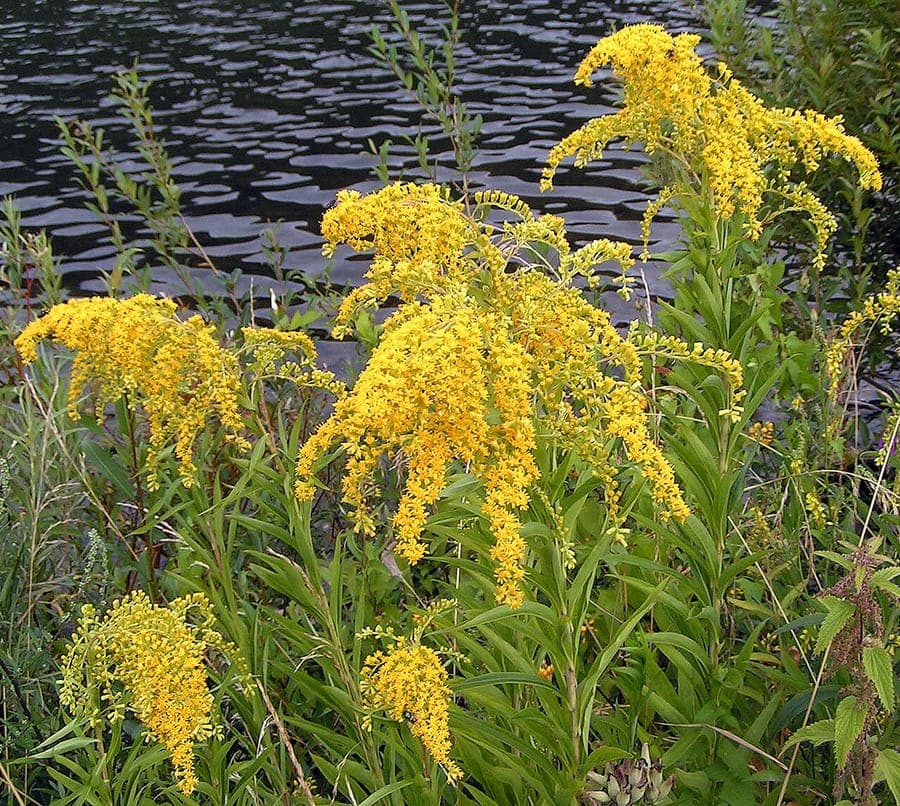
Wikimedia Commons / CC BY-SA 3.0, via Wikimedia Commons
Early goldenrod: complete guide
Solidago gigantea
¿Quieres ver Early goldenrod: complete guide en tu jardín?
1 minuto, sin tarjeta de crédito
Overview
Early goldenrod (Solidago gigantea) is a remarkable perennial reaching 100-180 cm height, making it one of the largest goldenrod species. This North American native blooms early in the season, starting in late July, providing valued color when many plants are still in summer mode. The species naturally ranges from Canada to northeastern Mexico and has adapted well to European gardens.
Despite its scientific name, early goldenrod is not invasive like some related species. The plant spreads via underground rhizomes and seed but remains quite manageable with regular maintenance. With a lifespan of many years, it slowly forms expanding colony-like patches. The plant is completely winter-hardy and requires minimal care.
Appearance and bloom cycle
This impressive plant features upright, slightly branching stems. Leaves are linear-lanceolate with matte green color and sometimes fine hairs. Stems often develop reddish tints in good light. Final height depends on location and soil moisture.
Flowers appear in July-August, peaking in August-September. This is earlier than most goldenrod species. The golden-yellow blooms form broad, dense plumes visited by numerous insects including bees, butterflies, and flies. Seeds mature in September-October and disperse widely by wind.
Ideal location
Early goldenrod performs best in full sun to part shade. Six hours of direct daily sunlight is ideal for compact growth and convincing flowers. In deep shade, plants become extremely leggy and bloom poorly.
Use this spectacular plant as a background in mixed borders, in wild plantings, or for cutting. The long flower stems make excellent cut flowers lasting 10-14 days indoors. Consider staking with garden stakes if plants grow very tall on rich soil.
Soil requirements
Early goldenrod thrives on a wide range of soils from sandy to heavy clay loam. Soil pH between 5.5-6.5 is ideal, though the plant accepts neutral to weakly alkaline conditions. Good drainage is important.
Weakly fertile to moderately fertile soil suits this plant. Overly rich soil encourages excessive vegetative growth with fewer flowers. Adding compost or garden soil at planting helps but is not essential.
Diseño gratis
¿Quieres ver Early goldenrod: complete guide en tu jardín? Crea un diseño gratis ahora.
Watering
Early goldenrod is drought-tolerant once established, especially on rich soil. Water regularly during the first year. In subsequent years, rainfall usually suffices, though supplemental water during dry periods is beneficial.
On sandy soil, more frequent watering is necessary. Avoid waterlogging as the plant resists wet conditions. Well-drained soil is essential to prevent root rot.
Pruning
Early goldenrod requires minimal pruning. After flowering in October-November, cut back stems to 5-10 cm. This promotes neat appearance and dense growth the following spring.
For more compact plants, pinch stem tips in June. This encourages lateral branching and more flowers, though slightly smaller. Remove strong, competing shoots as they develop.
Maintenance calendar
April-May: Growth begins. Install garden stakes for support if needed. June-July: Vigorous growth. Pinch tips for more compact plants (optional). July-September: Flowering period. Enjoy early golden plumes. October-November: Seed ripening. Cut stems after seeds mature. December: Cut back to 5-10 cm for winter appearance.
Winter hardiness
Early goldenrod is fully hardy throughout Europe to USDA zone 3 (-35°C). The plant overwinters completely underground and emerges each spring. No winter protection is needed, even in severe climates.
The plant withstands frost, snow, and cold winds without issue. In milder regions, plants grow even larger with more extended flowering.
Companion plants
Early goldenrod combines beautifully with:
- Asters (purple, pink forms) - provide extended bloom periods
- Sedums (autumn tints and texture)
- Rudbeckias (yellow, later flowering)
- Ornamental grasses (background and form contrast)
- Chrysanthemums - overlapping bloom times
This tall plant also works well in border backgrounds where shorter-growing plants grace the foreground.
Conclusion
Early goldenrod is an impressive perennial for larger gardens. With early July-August blooming, this plant provides valuable color extension throughout summer. Visit gardenworld.app for more plant guides and gardening advice. Also explore gardenworld.app for our garden planner featuring detailed plant positioning. Most garden centers stock this spectacular goldenrod regularly.
¿Quieres ver Early goldenrod: complete guide en tu jardín? Crea un diseño gratis ahora.
Sube una foto, elige un estilo y obtén un diseño fotorrealista con lista de plantas en menos de un minuto.
Más de 10.000 jardines diseñados
Sin tarjeta de crédito


Plantas similares
Calendula stellata: complete guide
Calendula stellata
Complete guide to Calendula stellata, the star-flowered marigold from Sicily: location, soil, watering and companion planting tips.
Korean chrysanthemum: complete guide
Chrysanthemum x rubellum
Chrysanthemum x rubellum is a hardy autumn perennial with single pink to copper flowers from August to November. Care and combinations.
Helianthus divaricatus: complete guide
Helianthus divaricatus
Helianthus divaricatus is a North American woodland sunflower with yellow summer blooms, ideal for naturalistic borders and shady edges.