
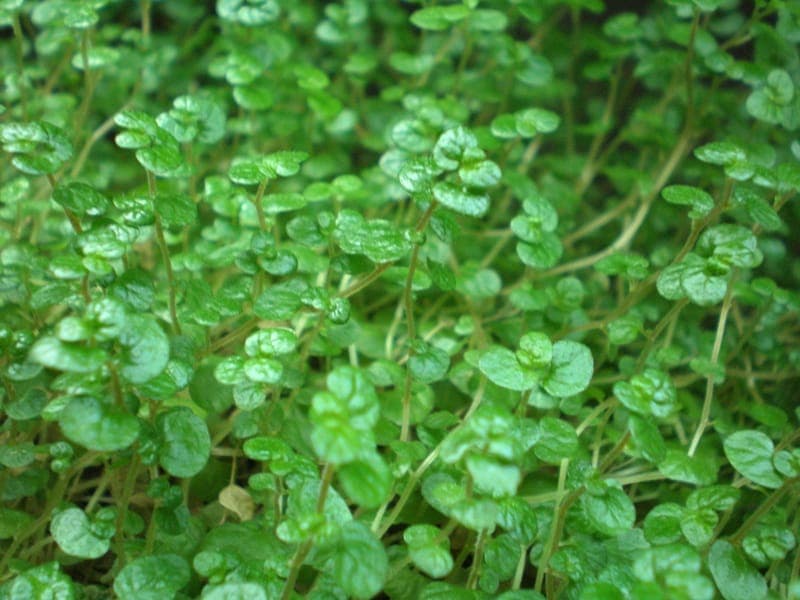
Hugo.arg / CC BY-SA 3.0, via Wikimedia Commons
Soleirolia soleirolii: complete guide
Soleirolia soleirolii
¿Quieres ver Soleirolia soleirolii: complete guide en tu jardín?
1 minuto, sin tarjeta de crédito
Overview
Soleirolia soleirolii, commonly called baby's-tears, Corsican carpet, or angel's-tears, is an exceptionally delicate trailing plant from the Urticaceae family (nettle family). This diminutive species originates from Mediterranean regions, particularly Corsica and Sardinia. Plant enthusiasts prize it for its airy, extremely fine foliage and cascading growth habit.
In temperate climates, Soleirolia soleirolii thrives exclusively as a houseplant, particularly in hanging baskets or terrariums. Not winter-hardy, the plant flourishes indoors under appropriate humidity conditions. Its characteristic moss-like leafy carpet renders it a favorite among collectors and interior decorators seeking unusual specimens.
Appearance and bloom cycle
Soleirolia soleirolii is an extraordinarily fine, creeping to trailing plant bearing incredibly tiny, round leaves measuring merely 2 to 5 millimeters across. The entire plant structure remains delicate due to diminutive proportions. Extremely thin, densely branched stems create a moss-like appearance.
Flowers are minute and inconspicuous, yellow-greenish in color, nearly invisible within the foliage. Blooms appear spring through summer under good conditions. While flowers contribute botanical interest, they rarely constitute the plant's visual appeal. The plant produces no significant fruit structures. Its primary charm remains the soft, green foliage resembling a verdant cushion.
Ideal location
Soleirolia soleirolii thrives in bright, indirect light or light shade. The plant tolerates full sunlight poorly; direct rays scorch delicate leaves. East or north-facing windows prove ideal.
The plant thrives in high humidity and prefers locations without direct drafts. Bathrooms and kitchens with natural moisture provide perfect settings. Terrariums and closed glass containers excel because they naturally retain humidity.
For ideas creating humidity-loving plant collections in compact spaces, consult gardenworld.app. At gardenworld.app, find tips on terrarium design and shade tolerance of various small plants.
Soil requirements
Use very light, moisture-retentive mix combining 50% peat or coco fiber, 30% terrarium soil or potting mix, and 20% perlite. This blend ensures adequate moisture retention without stagnation. The plant prefers slightly acidic conditions.
Alternatively, use sterile florist foam or create custom blend from coco and peat. The plant also accepts cultivation in pure coco fiber or leaf mold. Small drainage holes are unnecessary since this species requires water and moisture retention.
Diseño gratis
¿Quieres ver Soleirolia soleirolii: complete guide en tu jardín? Crea un diseño gratis ahora.
Watering
Soleirolia soleirolii requires continuously moist soil but not waterlogged conditions. This critical balance involves higher moisture than most plants but avoidance of drowning. Ensure soil always feels slightly moist, never completely dry.
Watering from above proves superior to bottom watering because it also raises humidity. Regularly mist the plant with soft-water spray. During dry periods (winter, central heating), mist daily or position a humidity mat beneath the pot.
The critical symptom of underwatering is leaf shriveling. However, this recovers quickly with resumed watering. Excessive waterlogging causes root rot, far more difficult to reverse.
Pruning
Pruning is rarely necessary for this delicate plant. It grows compactly and naturally assumes attractive form. Remove only dead, bleached, or damaged portions carefully.
With excessive growth, gently pinch or nip a few stems with fingernails. Never use pruners as they damage tender tissue. The plant recovers quickly from light damage.
In winter, carefully remove withered leaves with a soft brush.
Maintenance calendar
January-February: Winter dormancy, maintain moisture, no feeding, cool temperature 10-15 degrees C ideal.
March-April: Growing season begins, regular misting, minimal feeding.
May-June: Growth peak, daily misting in dry weather, biweekly feeding.
July-August: Warmest months, multiple daily mistings, minimal sun exposure.
September-October: Gradually reduce feeding, continue frequent misting.
November-December: Prepare dormancy, maintain moisture, cool positioning.
Winter hardiness
Soleirolia soleirolii is completely non-hardy and perishes at temperatures below 5 degrees Celsius. The plant thrives only in USDA zones 10-11. Outdoor winter placement is impossible in temperate regions.
Indoors, the plant flourishes between 12 and 20 degrees Celsius. Protect from cold window drafts and heating vents. Positioning near warm appliances (radiators) causes drying; maintain distance.
In very warm homes (above 25 degrees C), the plant may suffer drought; compensate with extra misting.
Companion plants
Soleirolia soleirolii combines beautifully in humidity-loving combinations:
- Ficus pumila (creeping fig, similar humidity needs)
- Peperomia obtusifolia (compact succulent appearance, contrasting texture)
- Syngonium podophyllum (miniature varieties, humidity-loving)
- Platycerium bifurcatum (miniature specimens, elegant form)
- Azalea (flowering interest, moisture-loving)
Avoid pairing with drought-tolerant plants; humidity requirements must match.
Closing thoughts
Soleirolia soleirolii surprises collectors seeking something distinctive. Minuscule leaves and soft trailing growth render this species unique in any collection. While it demands deliberate attention to humidity, the reward is a stunning, verdant miniature carpet.
When acquiring this specimen, verify health: leaves should appear green and crisp. Visit specialty nurseries for quality plants. Cultivate in terrariums or tall containers with saucers beneath. With annual care and humidity management, your Soleirolia soleirolii develops into beautiful, thriving miniature tapestry of living green.
¿Quieres ver Soleirolia soleirolii: complete guide en tu jardín? Crea un diseño gratis ahora.
Sube una foto, elige un estilo y obtén un diseño fotorrealista con lista de plantas en menos de un minuto.
Más de 10.000 jardines diseñados
Sin tarjeta de crédito


Plantas similares
False nettle (Boehmeria cylindrica): complete guide
Boehmeria cylindrica
Full guide to Boehmeria cylindrica, false nettle: origin, appearance, ideal location, soil, watering and care for this wetland perennial.
Pumpwood: complete guide
Cecropia schreberiana
Complete guide to Cecropia schreberiana: origins, appearance, care requirements and growing tips for this tropical pioneer tree.
Laportea canadensis: complete guide
Laportea canadensis
Discover Laportea canadensis (Wood-nettle), a fascinating woodland plant. Thrives in moist shaded areas. Complete growing and care guide for this unique species.