
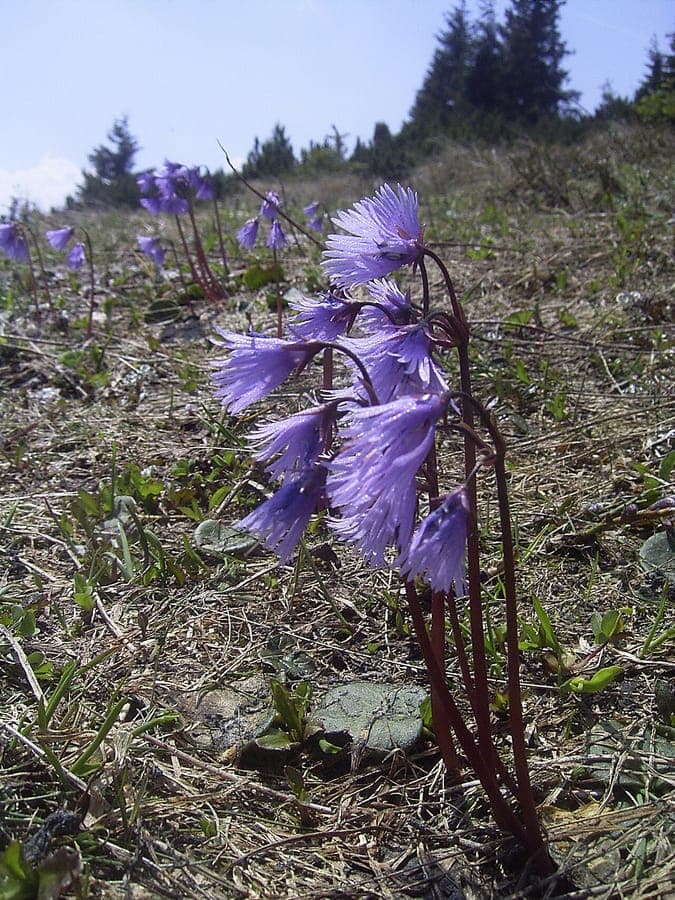
No machine-readable author provided. Denis Barthel assumed (based on copyright claims). / CC BY-SA 3.0, via Wikimedia Commons
Alpine snowbell: complete guide
Soldanella alpina
¿Quieres ver Alpine snowbell: complete guide en tu jardín?
1 minuto, sin tarjeta de crédito
Overview
Alpine Snowbell (Soldanella alpina) is a charming small mountain plant occurring naturally in the Alps and surrounding mountain ranges. This plant blooms from May to July with delicate, blue, bell-shaped flowers that often push through melting snow. It is a much-loved plant in rock gardens and alpine troughs.
Appearance and Bloom
The plant reaches only 5-15 cm in height with small, round-kidney-shaped leaves. The unique flowers have finely cut edges that justify the common name. The flowers are usually deep blue to violet, sometimes white. The plant forms compact rosettes and blooms abundantly from May to July.
Ideal Location
Soldanella alpina thrives best in partial shade with adequate moisture. Suitable for rock gardens, alpine troughs, wall crevices, or sharp drainage in mountain gardens. Plant in locations with some shelter from strong mountain winds.
Soil
The plant grows best in well-drained, humus-rich soil. A mixture of garden soil with sand, small gravel and compost (3:1:1:1) provides optimal conditions. pH may be between 6.5 and 7.5. Moisture excess must be absolutely avoided.
Watering
Alpine Snowbell does not tolerate drought well and prefers consistent moisture. During growing season water regularly but not waterlogging. In summer ensure lightly moist soil. Good drainage is essential.
Diseño gratis
¿Quieres ver Alpine snowbell: complete guide en tu jardín? Crea un diseño gratis ahora.
Pruning
No pruning needed. Remove only withered flower stems after blooming. Dead leaves can be gently removed without damaging the rosette.
Maintenance Calendar
May-July: Bloom period. July: Leave seed heads for seed dispersal. August-October: Moisture management. October-May: Keep dry but not desiccated. Winter: Protection with stone chips.
Winter Hardiness
Alpine Snowbell is very hardy to -20 degrees Celsius. The plant actually grows better in snowy winters where snow cover provides protection. In snow-free, severe winters, protection with dry stone chips is recommended.
Companion Plants
Combine Alpine Snowbell with other alpine plants such as Sedum, small Phlox, or Dianthus. The plant fits nicely in crevices between stones. Suitable for combination with Androsace and other compact mountain plants. Visit gardenworld.app/en for more ideas.
Closing
Alpine Snowbell is a true gem for alpine gardeners. With proper drainage, moisture, and shelter from wind, this plant grows for many years. Available from specialized alpine nurseries and garden centers. Purchase through reputable suppliers of alpine plants.
¿Quieres ver Alpine snowbell: complete guide en tu jardín? Crea un diseño gratis ahora.
Sube una foto, elige un estilo y obtén un diseño fotorrealista con lista de plantas en menos de un minuto.
Sin tarjeta de crédito


Plantas similares
Primula incana: complete guide to silvery alpine primrose
Primula incana
Silvery primrose (Primula incana), a delicate alpine flower with white blooms and powdered grey-green leaves. Growing, care, and cultivation guide.
Mealy cowslip: complete guide
Primula pulverulenta
Grow the Mealy cowslip (Primula pulverulenta): striking candelabra flowers in red and purple tones, moisture-loving and ideal for shady, damp garden corners.
Cliff dwarf-primrose: complete guide
Androsace laevigata
Full guide to growing Androsace laevigata, a rare Pacific Northwest alpine cushion plant. Planting, care, and garden design tips explained.