
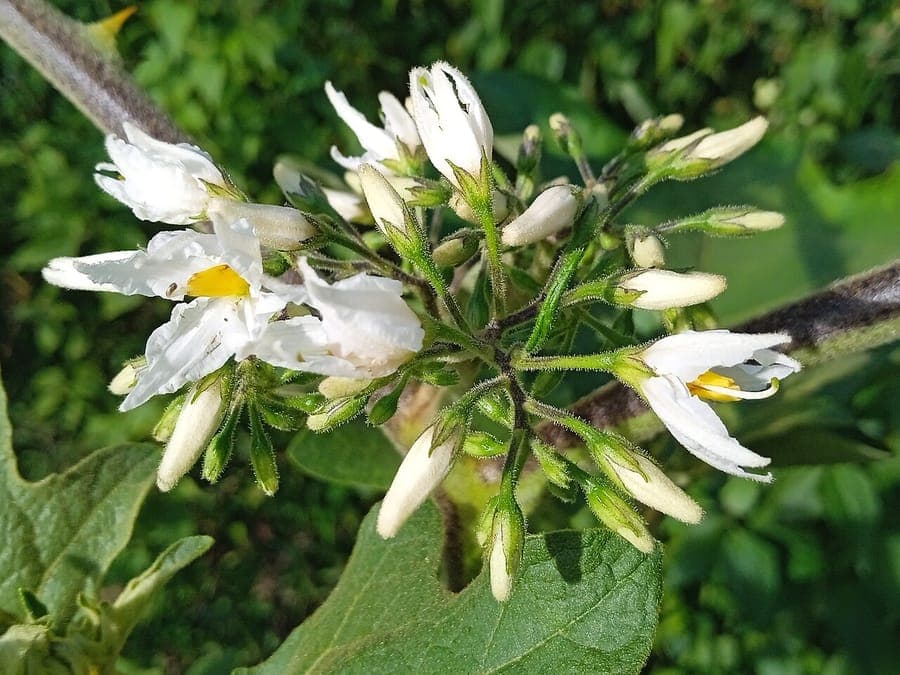
Wiki Farazi / CC0, via Wikimedia Commons
Solanum torvum: complete guide
Solanum torvum
¿Quieres ver Solanum torvum: complete guide en tu jardín?
1 minuto, sin tarjeta de crédito
Overview
Solanum torvum, commonly called pea eggplant, wild eggplant, or pepper eggplant, is a fascinating tropical fruiting plant from the Solanaceae family. Native to Central America, the Caribbean, and adjacent tropical regions, this shrub develops into a substantial plant. It earns appreciation primarily for its small, pepper-shaped fruits that ripen from green to orange or red.
In temperate zones like northern Europe, Solanum torvum functions best as a greenhouse or conservatory specimen, though it tolerates outdoor placement during warm seasons if sheltered. The fruits are edible, though somewhat bitter, and serve traditional culinary purposes in tropical regions.
Appearance and bloom cycle
Solanum torvum develops into a substantial shrub with dark green, lanceolate leaves. Under ideal conditions, the plant reaches 2 to 4 meters tall, though container cultivation maintains smaller dimensions. Greenish to brown stems occasionally bear small thorns.
White or pale purple flowers appear in loose clusters along stems, each bloom approximately 1 centimeter across. These flowers attract pollinators and precede fruit set. Following successful pollination, characteristic small, round to ovoid berries develop, approximately 1 to 2 centimeters in diameter.
Fruits begin green, ripening to orange or red with glossy finish resembling miniature peppers. This resemblance inspired the common name pea eggplant.
Ideal location
Solanum torvum thrives in warm, sunny locations receiving 6 to 8 hours daily direct sunlight. The plant craves warmth and intense radiation, essential for flowering and fruiting. South or west-facing windows are optimal in temperate regions.
Unlike some tropical species, this plant tolerates partial shade poorly and flowers less abundantly in insufficient light. Ensure good ventilation without harsh cold drafts. Consistent warmth between 18 and 28 degrees Celsius promotes optimal growth and production.
For ideas integrating tropical fruiting plants into greenhouse settings, consult gardenworld.app. At gardenworld.app, find guidance on greenhouse planning and optimal sunny locations.
Soil requirements
Prepare well-draining, nutrient-rich potting mix combining 40% quality potting soil, 40% coco fiber or peat, and 20% perlite or sand. This ensures adequate moisture retention while preventing waterlogging. The plant prefers slightly acidic to neutral soil with pH between 6.0 and 7.0.
Annual re-potting into slightly larger containers promotes growth. Ensure adequate drainage holes prevent root rot. For mature specimens, re-potting every two years suffices.
Diseño gratis
¿Quieres ver Solanum torvum: complete guide en tu jardín? Crea un diseño gratis ahora.
Watering
During the growing season (April through October), water regularly so soil remains consistently moist but not waterlogged. The plant favors continuously moist conditions. Winter brings significantly reduced watering.
Test moisture by inserting your finger into the potting mix. Water thoroughly until it drains from holes. In low humidity environments (heated homes), mist foliage regularly with tepid water, promoting growth and preventing spider mites.
Overwatering causes more problems than underwatering for this species.
Pruning
Solanum torvum responds positively to pruning and readily produces new branches. After winter, cut the plant back to approximately half its height to achieve compact form and stimulate side growth.
Remove dead branches and foliage throughout the year. Eliminate damaged or weak branches to maintain plant vigor. Cut just above a leaf node or lateral bud.
Regular light pruning yields better results than single harsh cuts.
Maintenance calendar
January-February: Winter dormancy, minimal water, cool temperature 12-18 degrees C, no feeding.
March: Prepare for growing season, gradually increase watering, begin monthly feeding.
April-May: Growth peak, water 2-3 times weekly, biweekly feeding.
June-August: Peak flowering and fruiting, maintain excellent moisture, weekly inspection.
September-October: Reduce feeding, gradually decrease watering.
November-December: Prepare for dormancy, minimal water.
Winter hardiness
Solanum torvum cannot tolerate frost and dies at temperatures below 5 degrees Celsius. The plant thrives only in USDA zones 10-11. In northern regions, bring plants indoors before October and maintain cool conditions (12-18 degrees C) for dormancy.
Protection from drafts and cold window air is essential. In warm, frost-free regions, the plant grows year-round outdoors.
Companion plants
Solanum torvum combines successfully with other tropical fruiting species:
- Solanum mauritianum (similar requirements)
- Capsicum annuum (pepper, similar needs)
- Passiflora species (climbing vines, contrasting habit)
- Coffea arabica (coffee, similar tropical requirements)
- Theobroma cacao (cacao, similar warmth needs)
Avoid vigorous growers that would overshadow this species.
Closing thoughts
Solanum torvum offers an intriguing tropical plant for those seeking both decoration and productivity. The small, colorful fruits provide ornamental value while remaining kitchen-useful in authentic tropical preparations.
When acquiring plants, consult specialty suppliers of tropical species. With dedicated cultivation maintaining proper temperature, light, and moisture, you will develop a mature, productive plant yielding harvests for many years.
¿Quieres ver Solanum torvum: complete guide en tu jardín? Crea un diseño gratis ahora.
Sube una foto, elige un estilo y obtén un diseño fotorrealista con lista de plantas en menos de un minuto.
Sin tarjeta de crédito


Plantas similares
Solanum dolichosepalum: complete guide
Solanum dolichosepalum
Discover Solanum dolichosepalum, an Andean nightshade with striking long sepals. Growing tips, hardiness, and companion planting for your patio.
Solanum ripense: complete guide
Solanum ripense
Discover Solanum ripense, a moisture-loving Andean nightshade for pond edges and conservatories. Growing tips, hardiness, and companions.
Solanum tomentosum: complete guide
Solanum tomentosum
Discover Solanum tomentosum, a thorny South African nightshade with felted leaves. Growing tips, hardiness, and companion planting ideas.