
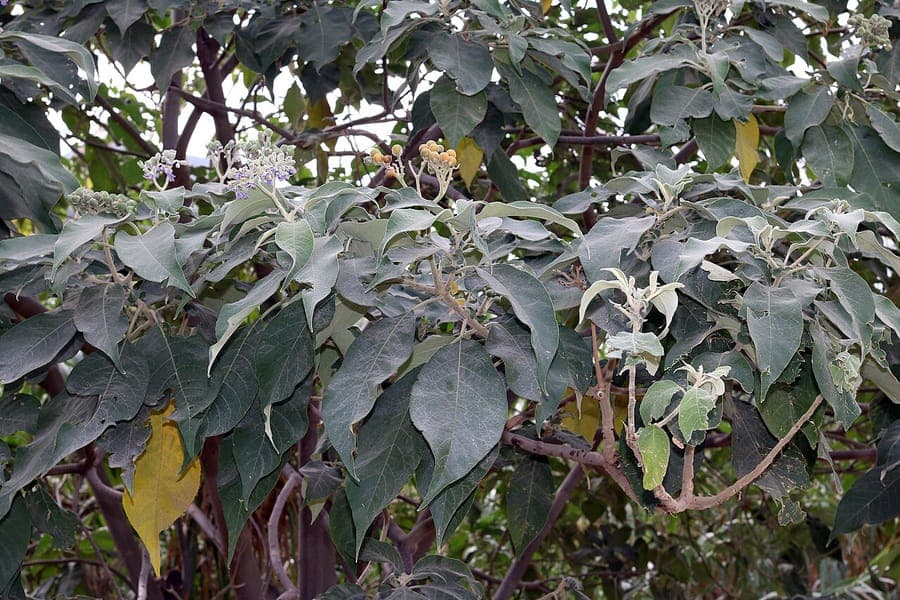
Umberto Ferrando / CC BY 2.0, via Wikimedia Commons
Solanum mauritianum: complete guide
Solanum mauritianum
¿Quieres ver Solanum mauritianum: complete guide en tu jardín?
1 minuto, sin tarjeta de crédito
Overview
Solanum mauritianum, commonly named ear-leaf nightshade, tobacco-wood, or wild tobacco tree, is a semi-woody shrub native to Brazil and adjacent South American regions. Belonging to the Solanaceae family, it earns appreciation for its stunning purple flowers and distinctive ear-shaped leaves. In its natural habitat, the plant develops into a sizable tree, though in temperate regions it remains more compact.
In cooler climates like northern Europe, Solanum mauritianum thrives as a greenhouse or conservatory specimen, tolerating outdoor placement during warm seasons if protected from wind. This semi-tropical plant rewards careful cultivation with continuous flowering and attractive foliage throughout the year.
Appearance and bloom cycle
Solanum mauritianum develops into a leafy shrub with large, velvety gray-green leaves reaching 10 to 20 centimeters in length. The leaves are distinctly ear-shaped or auriculate at the base, giving the plant its common name. This foliage provides visual interest even between flowering periods.
Purple, pink, or mauve flowers appear in dense clusters 2 centimeters across, blooming generously from spring through autumn in good conditions. These flowers attract pollinators and provide months of color. After flowering, small green berries develop, which are ornamental but not edible.
Under favorable conditions, the plant reaches 3 to 4 meters tall, though container cultivation keeps dimensions more manageable.
Ideal location
Position Solanum mauritianum in a warm location receiving 5 to 6 hours daily direct sunlight. South or west-facing windows are optimal in temperate zones. Unlike many tropical plants, this species tolerates partial shade reasonably well, making it versatile for various interior locations.
Ensure good air circulation without harsh drafts. During warm months, move the plant outdoors to sheltered terraces or patios. Consistent warmth between 15 and 25 degrees Celsius promotes best growth and flowering.
For ideas on positioning shade-tolerant tropicals in home interiors, consult gardenworld.app. At gardenworld.app, find combinations of plants with similar light requirements.
Soil requirements
Prepare well-draining potting mix combining equal parts potting soil, coco fiber or peat moss, and perlite. This blend ensures adequate moisture retention while preventing waterlogging. The plant accepts various soil types but prefers slightly acidic to neutral conditions.
Re-pot into slightly larger containers annually. For mature specimens, repotting every two years suffices. Always ensure adequate drainage holes to prevent root rot.
Diseño gratis
¿Quieres ver Solanum mauritianum: complete guide en tu jardín? Crea un diseño gratis ahora.
Watering
During growing season (March through October), water regularly so soil remains consistently moist but not waterlogged. A distinct advantage of Solanum mauritianum is its tolerance for brief dry periods compared to more sensitive tropical species.
Winter brings reduced watering, allowing soil to dry partially between waterings. Test moisture by inserting your finger into the potting mix. The plant signals water deficit through slightly drooping leaves, quickly recovering after watering.
While regular watering is necessary, absolutely avoid waterlogging, which rapidly causes root rot.
Pruning
Solanum mauritianum responds positively to regular pruning, creating denser, more compact growth. In spring, cut back any lanky shoots to approximately one-third original length, stimulating branching and future flower production.
Remove dead or damaged wood throughout the year. You can shorten overly long branches anytime. The plant recovers rapidly from pruning wounds. Perform light pruning regularly rather than single harsh cuts for best shape.
Maintenance calendar
January-February: Winter dormancy, minimal water, cool temperature 8-12 degrees C, no feeding.
March: Prepare for growth, gradually increase watering, begin monthly feeding.
April-June: Growth peak, water 2-3 times weekly, biweekly feeding.
July-August: Maximum growth, warm conditions, consistent watering, weekly foliage misting.
September-October: Reduce feeding, gradually decrease watering.
November-December: Prepare dormancy, minimal water, cool positioning.
Winter hardiness
Solanum mauritianum tolerates light frost to -5 degrees Celsius briefly, though it prefers warmer conditions. In northern regions, bring plants indoors before November. A cool winter location (8-12 degrees C) encourages proper dormancy.
Protect from temperature fluctuations and window drafts. Outdoor placement remains safe only when nighttime temperatures stay above 5 degrees Celsius. If early autumn frosts threaten, move plants indoors immediately.
Companion plants
Solanum mauritianum harmonizes with:
- Brugmansia (similar thermal needs)
- Plumbago (blue flowers, color contrast)
- Heliotrope (fragrant, purple tones)
- Coleus (foliage variation)
- Hibiscus (similar shrubby habit)
Avoid vigorous growers that would overshadow this species.
Closing thoughts
Solanum mauritianum offers an attractive, semi-tropical specimen for collectors seeking something distinctive. Its purple flowers and ear-shaped leaves provide unique visual interest to any room or conservatory. The plant is notably less demanding than truly tender tropical species while still providing exotic charm.
When acquiring specimens, purchase from nurseries specializing in tropical plants. With patient cultivation, you will develop a beautiful, mature plant that rewards your care with reliable flowering and elegant foliage.
¿Quieres ver Solanum mauritianum: complete guide en tu jardín? Crea un diseño gratis ahora.
Sube una foto, elige un estilo y obtén un diseño fotorrealista con lista de plantas en menos de un minuto.
Sin tarjeta de crédito


Plantas similares
Solanum dolichosepalum: complete guide
Solanum dolichosepalum
Discover Solanum dolichosepalum, an Andean nightshade with striking long sepals. Growing tips, hardiness, and companion planting for your patio.
Solanum ripense: complete guide
Solanum ripense
Discover Solanum ripense, a moisture-loving Andean nightshade for pond edges and conservatories. Growing tips, hardiness, and companions.
Solanum tomentosum: complete guide
Solanum tomentosum
Discover Solanum tomentosum, a thorny South African nightshade with felted leaves. Growing tips, hardiness, and companion planting ideas.