
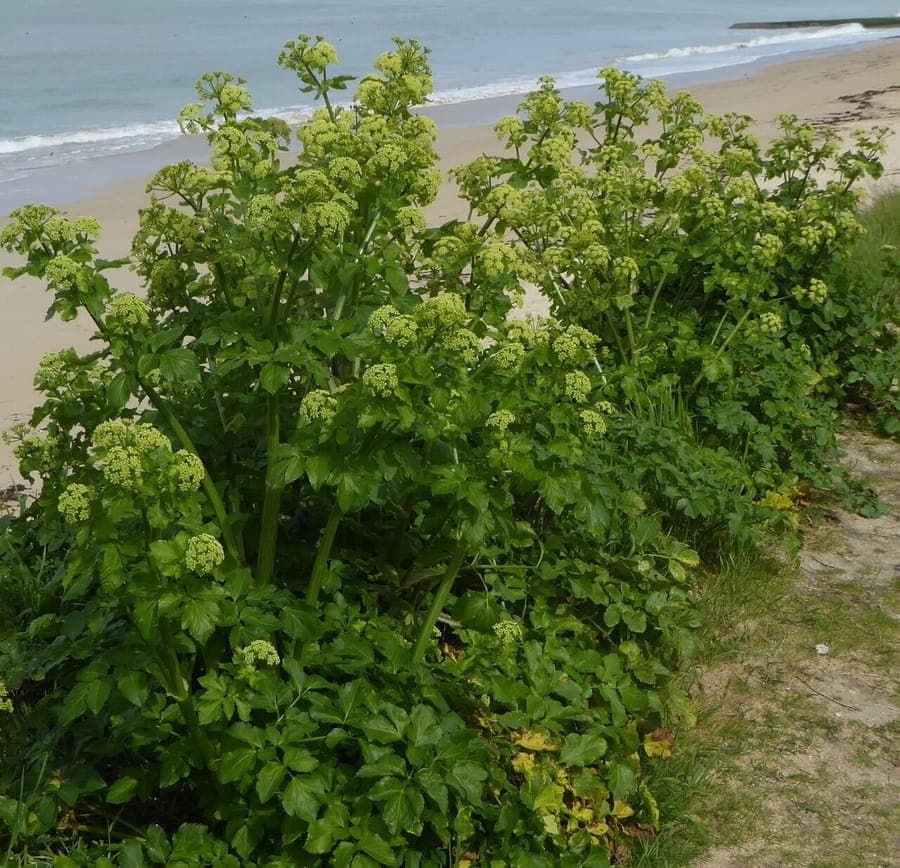
E Wusk / CC BY-SA 4.0, via Wikimedia Commons
Black-lovage: complete guide
Smyrnium olusatrum
¿Quieres ver Black-lovage: complete guide en tu jardín?
1 minuto, sin tarjeta de crédito
Black-lovage (Smyrnium olusatrum) is a fascinating Mediterranean plant from the Apiaceae family, the same family as parsley and parsnip. This plant grows naturally throughout the Mediterranean region to North Africa and Chad. The plant was extremely popular in medieval England and Europe and is now being rediscovered.
OVERVIEW
Black-lovage is a strong plant with interest for yellow flowers and dark-colored leaves. This is a biennial plant that forms leaves in the first year and flowers in the second year. The plant grows to about 60-80 centimeters in height. The flowers appear from April to July as small yellow flowers in clusters. The plant has a strong, distinctive taste described as black pepper and citrus.
APPEARANCE AND BLOOM
Black-lovage has deeply cut, jet-black leaves giving it a dramatic appearance. The leaves are trifoliate and have a fine texture. The stems are hollow and greenish. The flowers are small, yellow and appear in dense, yellow clusters offering excellent contrast against dark foliage. After blooming, small seeds form.
IDEAL LOCATION
Black-lovage thrives best in full sun to partial shade locations. The plant can also grow in lightly shaded conditions, though full sun leads to better growth. The plant loves warm, sheltered places. In cooler climates, the plant may need some protection.
SOIL
Black-lovage prefers well-draining, nutrient-rich soil with a pH of about 7.0 to 7.5. The plant is adaptable but grows best in rich soil. Add organic material to poor soils. The plant can tolerate reasonably dry soil once established.
WATERING
Black-lovage thrives best with regular watering, especially during the first growing season. Provide sufficient water in the first year to develop strong roots. In the second year of growth, the plant can tolerate more drought. Avoid excessive moisture.
PRUNING
Black-lovage requires minimal pruning. You can remove spent flowers, though many gardeners allow seeds to mature. After seed-setting, the entire seedhead can be removed for composting.
MAINTENANCE CALENDAR
Year 1 Spring: Sow seeds directly in ground or start indoors. Summer: Provide adequate watering. Fall: Plants reach full size. Winter: Plants may need protection in very cold climates.
Year 2 Spring: Flowers appear and reach their peak. Summer: Seeds mature. Fall: Harvest seeds for next generation.
WINTER HARDINESS
Black-lovage is reliably hardy in temperate climates. In very cold regions, the plant may need protection in the first year. The plant can be damaged by snow.
COMPANION PLANTS
Black-lovage looks beautiful with other Mediterranean plants such as rosemary and lavender. It combines nicely in borders with other apiaceae and yellow bloomers.
CLOSING
Black-lovage is an interesting, culturally important plant with great edible value. With minimal maintenance requirements, it is perfect for Mediterranean and traditional gardens. For more garden inspiration, visit gardenworld.app/en or gardenworld.app/en.
¿Quieres ver Black-lovage: complete guide en tu jardín? Crea un diseño gratis ahora.
Sube una foto, elige un estilo y obtén un diseño fotorrealista con lista de plantas en menos de un minuto.
Sin tarjeta de crédito


Plantas similares
Whorled carrot: complete guide
Daucus involucratus
Daucus involucratus is a Mediterranean umbellifer with white flower heads framed by lacy bracts. Growing this gravel garden gem.
Daucus muricatus: complete guide
Daucus muricatus
Daucus muricatus, the spiny wild carrot, grows wild on Mediterranean coasts. Discover sowing, June-July bloom, and wildflower meadow use.
Daucus pumilus: complete guide
Daucus pumilus
Daucus pumilus is a dwarf wild carrot relative with white lacy umbels, thriving on dunes and coastal rock in poor, fast-draining soil.