
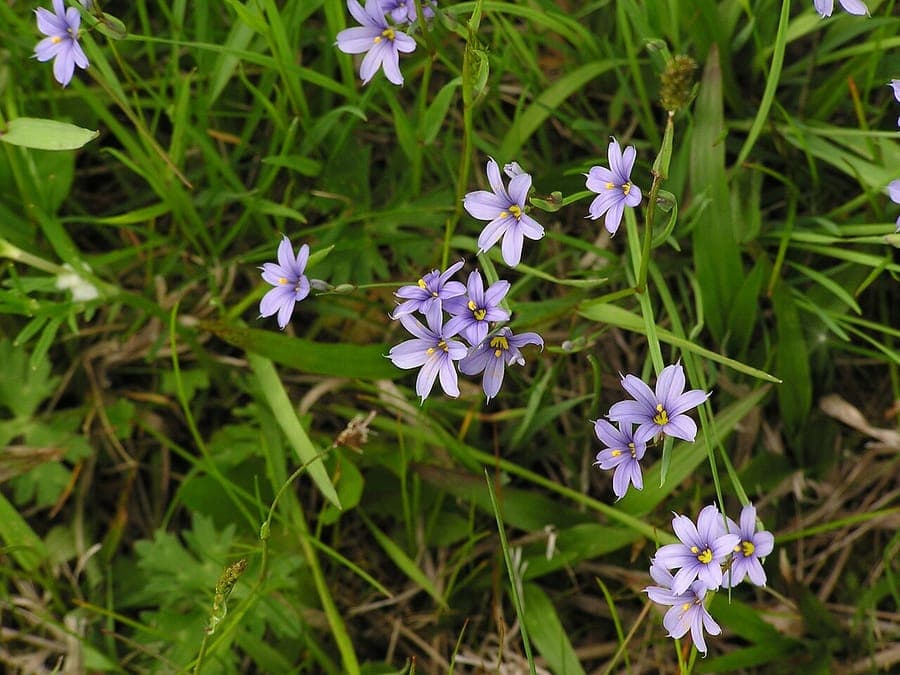
User:SB_Johnny / CC BY-SA 3.0, via Wikimedia Commons
Mountain blue-eyed grass: complete guide
Sisyrinchium montanum
¿Quieres ver Mountain blue-eyed grass: complete guide en tu jardín?
1 minuto, sin tarjeta de crédito
Mountain blue-eyed grass (Sisyrinchium montanum) is a delicate North American wildflower from the Iridaceae family, related to irises and gladiolus. This alpine plant grows naturally in rocky mountainous regions of North America and is now popular in gardens in temperate climates.
OVERVIEW
Mountain blue-eyed grass is a fascinating small plant known for its heavenly blue-colored flowers that open like little stars. The plant grows to about 15-30 centimeters tall and has an elegant, compact growth habit. The flowers appear in May and June and attract bees and other pollinators with their vibrant color. The plant disappears after blooming in some climates, giving it an interesting effect in borders.
APPEARANCE AND BLOOM
Mountain blue-eyed grass has narrow, grass-like leaves that form a compact rosette. The thin flower stems grow upright above the foliage and bear small, six-petaled flowers. Each bloom is sky-blue with yellow centers and has an elegant, star-shaped form. The flowers open in the morning and close in the evening, showing a natural rhythm. After blooming, small seed pods form.
IDEAL LOCATION
Mountain blue-eyed grass thrives best in sunny locations with at least six hours of direct sunlight daily. The plant can also grow in lightly shaded conditions, though more sun leads to better blooming. The plant loves fresh mountain air and open, airy spots. Avoid warm, stuffy places.
SOIL
Mountain blue-eyed grass prefers well-draining, slightly acidic soil with a pH of about 5.0-5.5. The plant is adaptable but grows best in light, sandy soil that drains well. Add extra sand or perlite to heavy soil to improve drainage. Avoid rich, heavy soils prone to stagnation.
WATERING
Mountain blue-eyed grass is relatively drought-tolerant once established. Provide regular watering during the first growing season to encourage good root establishment. Once established, the plant tolerates drought well, especially in well-draining soil. Avoid excessive moisture, especially in winter.
PRUNING
Mountain blue-eyed grass requires minimal pruning. The plant grows compactly and needs little maintenance. Remove dead leaves in spring. Many gardeners allow seeds to ripen and fall naturally for self-seeding in subsequent seasons.
MAINTENANCE CALENDAR
Spring: Plant mountain blue-eyed grass in full sun in well-draining soil. Gently support young plants until they are established. Summer: Enjoy the beautiful blue flowers. Water only during severe drought. Fall: The plant may disappear after blooming in some climates. Winter: Plants growing in very cold climates may need winter protection.
WINTER HARDINESS
Mountain blue-eyed grass is hardy in temperate climates to zone 5, though many selections grow better in somewhat warmer zones. The plant tolerates frost and light snow but can suffer damage in very cold periods. In very warm climates, the plant may weaken during summer periods.
COMPANION PLANTS
Mountain blue-eyed grass looks beautiful in rock gardens and alpine borders alongside other alpine plants such as saxifrage and sedums. It combines nicely with yellow and red flowers for contrast. In borders, it can be planted with other small Iridaceae and spring bulbs.
CLOSING
Mountain blue-eyed grass is a charming small plant offering unique blue color and elegant flower form. With minimal maintenance requirements, it is ideal for alpine gardens and rock gardens. For more garden inspiration, visit gardenworld.app/en or gardenworld.app/en.
¿Quieres ver Mountain blue-eyed grass: complete guide en tu jardín? Crea un diseño gratis ahora.
Sube una foto, elige un estilo y obtén un diseño fotorrealista con lista de plantas en menos de un minuto.
Más de 10.000 jardines diseñados
Sin tarjeta de crédito


Plantas similares
Iris tingitana: complete guide
Iris tingitana
Iris tingitana, the Morocco iris, is the bulb species behind the Dutch iris: early blue-violet blooms that need a sunny, well-drained position.
Iris hookeri: complete guide
Iris hookeri
Hooker's Iris is a compact North American native plant with blue flowers. Low-growing and moisture-loving water plant.
Siskiyou iris: complete guide
Iris bracteata
Complete guide to Iris bracteata, the Siskiyou iris: location, soil, bloom cycle, watering, pruning and companion plants for this rare Pacific Coast iris.