
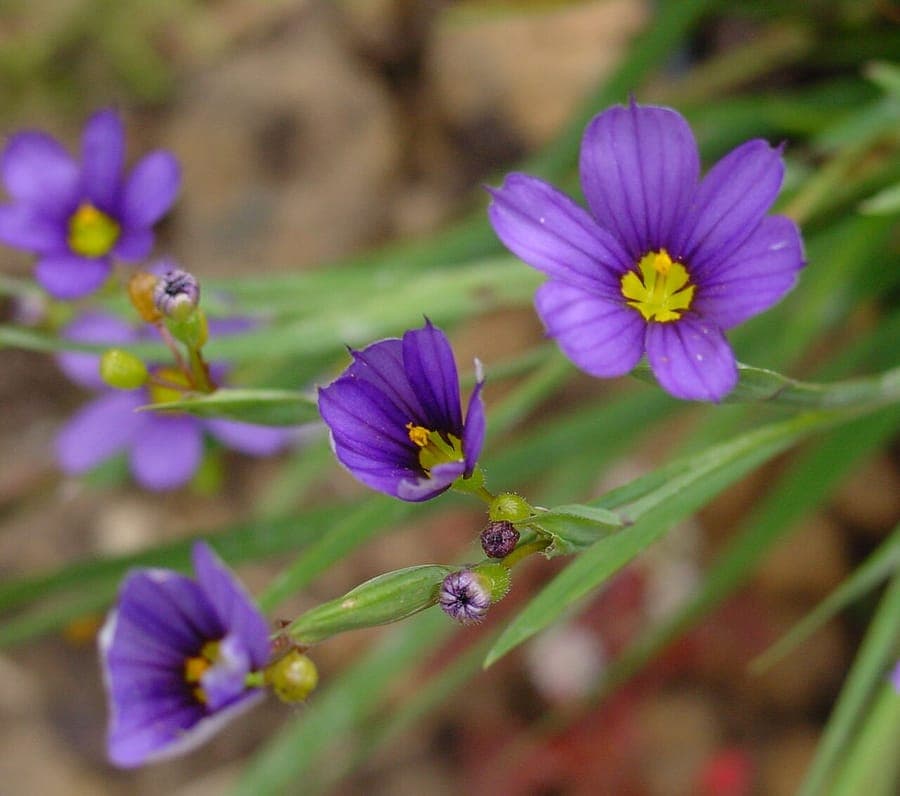
Wouter Hagens / Public domain, via Wikimedia Commons
Sisyrinchium bermudiana: complete guide
Sisyrinchium bermudiana
¿Quieres ver Sisyrinchium bermudiana: complete guide en tu jardín?
1 minuto, sin tarjeta de crédito
Overview
Sisyrinchium bermudiana, commonly known as Blue-eyed-grass or Bermudiana, is a perennial ornamental plant native to Bermuda. This member of the Iridaceae (iris) family is prized for its brilliant sky-blue flowers that bloom from May through June. Though originally from Bermuda, Sisyrinchium bermudiana has spread throughout temperate climates worldwide.
This plant forms compact, upright growth with narrow, grass-like foliage. It's known for attracting pollinators and providing extended blooming interest. Sisyrinchium bermudiana is ideal for borders, prairie-like plantings, and naturalistic gardens.
Appearance and Bloom
Sisyrinchium bermudiana grows in neat, upright clumps reaching approximately 30 to 45 cm tall. The foliage is narrow, linear, and green, creating a grass-like texture in the garden bed. The overall structure is compact and tidy, making it ideal for borders and smaller spaces.
The flowers are the main attraction of this plant. They are sky-blue with a yellow center or central marking. Individual flowers are small (approximately 1 cm diameter) but grow in clusters at the tops of stems. Blooming occurs from May through June, with occasional repeat blooming later in the season. Bees and butterflies visit the flowers readily.
Ideal Location
Sisyrinchium bermudiana thrives in full to partial sun. Select a location receiving at least 6 to 8 hours of direct sunlight daily. In very hot climates, light afternoon shade can help prolong blooming.
Ensure well-drained soil location. This plant performs poorly in waterlogged or boggy conditions. Sisyrinchium bermudiana works perfectly in borders, prairie plantings, alpine gardens, and as edging along pathways. Avoid shady or wet-soil locations.
Soil
Provide well-drained, loose soil. Sisyrinchium bermudiana tolerates standard soils but prefers slightly acidic to neutral soils (pH 6.5 to 7.5). Add sand or perlite to heavy soils to improve drainage.
This plant is not heavily nutrient-demanding and thrives in lean, loose soils. Avoid adding large amounts of compost, as excessive nutrition can result in reduced flowering. The plant prefers neutral to slightly acidic pH.
Watering
Once established, Sisyrinchium bermudiana is moderately drought-tolerant. Water regularly during the first year and during dry periods in mature plants. Prefer soil that feels dry between waterings, especially during growth. Avoid standing water and waterlogged soil, which cause root rot.
During the growing season (spring and summer), check soil moisture regularly. In autumn and winter, reduce watering dramatically. In rainy years, no supplemental watering may be necessary.
Diseño gratis
¿Quieres ver Sisyrinchium bermudiana: complete guide en tu jardín? Crea un diseño gratis ahora.
Pruning
Remove faded flowers to encourage continued blooming. When blooming ends, entire flower spikes can be cut. In autumn, after blooming ceases, dead foliage can be trimmed away.
This plant doesn't require heavy pruning. However, dead leaf material can be carefully removed. Damaged leaves can be trimmed at any time. The plant will naturally return to the ground in winter, depending on climate.
Maintenance Calendar
Spring (March to May): Water regularly as growth begins. Check for pests. Add thin mulch layer around plant base.
Summer (June to August): Water as needed (keep soil dry). Remove faded flowers. Enjoy full bloom.
Autumn (September to November): Reduce watering. Natural reseeding may occur. Foliage dies back.
Winter (December to February): Minimal watering. Plant is dormant.
Winter Hardiness
Sisyrinchium bermudiana is moderately hardy in many temperate climates, though tolerance varies by cultivar. Originally from Bermuda, it can tolerate temperatures to approximately -10 degrees Celsius, though many cultivars are hardier. In very cold climates (below -15 degrees Celsius), consider protection or potting in winter.
In very wet, cold winters where water freezes around stems, good drainage becomes essential. Mulch can reduce frost heave risk around the plant base.
Companion Plants
Sisyrinchium bermudiana works excellently in borders with other small perennials and ornamental grasses. Excellent companions include:
Allium caeruleum (Blue ornamental onion) Pulsatilla vulgaris (Pasque flower) Arabis alpina (Alpine rockcress) Jasione montana (Sheep's bit) Silene acaulis (Moss campion)
This grouping creates mixed-texture and long-blooming color schemes. The blue of Sisyrinchium pairs wonderfully with yellow or white-flowering plants.
Closing
Sisyrinchium bermudiana is an attractive choice for gardeners seeking long-blooming borders and naturalistic prairie-like plantings. With its brilliant blue flowers, compact growth, and minimal care, it offers years of beauty. Suited to borders, prairies, rock gardens, and edging situations, this ornamental deserves greater garden attention. Gardenworld.app provides expert plant advice and design services.
Available at major retailers. Visit gardenworld.app for more information.
¿Quieres ver Sisyrinchium bermudiana: complete guide en tu jardín? Crea un diseño gratis ahora.
Sube una foto, elige un estilo y obtén un diseño fotorrealista con lista de plantas en menos de un minuto.
Más de 10.000 jardines diseñados
Sin tarjeta de crédito


Plantas similares
Iris tingitana: complete guide
Iris tingitana
Iris tingitana, the Morocco iris, is the bulb species behind the Dutch iris: early blue-violet blooms that need a sunny, well-drained position.
Iris hookeri: complete guide
Iris hookeri
Hooker's Iris is a compact North American native plant with blue flowers. Low-growing and moisture-loving water plant.
Siskiyou iris: complete guide
Iris bracteata
Complete guide to Iris bracteata, the Siskiyou iris: location, soil, bloom cycle, watering, pruning and companion plants for this rare Pacific Coast iris.