
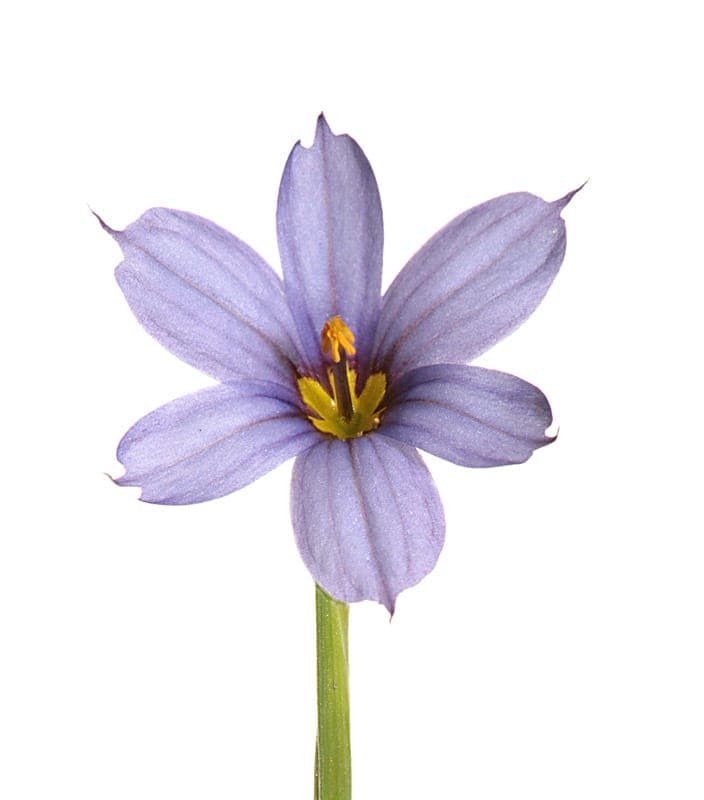
Hugowolf / CC BY 3.0, via Wikimedia Commons
Narrow-leaf blue-eyed grass: complete guide
Sisyrinchium angustifolium
¿Quieres ver Narrow-leaf blue-eyed grass: complete guide en tu jardín?
1 minuto, sin tarjeta de crédito
Overview
Narrow-leaf blue-eyed grass (Sisyrinchium angustifolium) is a charming grasslike perennial from the Iridaceae family native to northeastern North America and Canada. This striking plant with delicate grass-like foliage and brilliant blue flowers brings unforgettable charm to gardens. Known for its exceptional pollinator-friendly blooms and exceptional moisture tolerance, this ornamental grass offers unique garden appeal.
Appearance and bloom
The plant grows in dense clumps, reaching approximately 25 to 45 centimetres in height. Very narrow, thread-like leaves create a grassy appearance reminiscent of ornamental grasses. From May to June, plants produce numerous small sky to cobalt-blue flowers with yellow centers, arranged along thin stems. Flowers open each morning and close by midday, creating a daily spectacle. Each bloom is merely millimetres across, but collectively they produce a spectacular display.
Ideal location
The plant thrives in sunny locations receiving at least 6 hours of daily direct sunlight, ensuring optimal flowering and compact growth. Partial shade is tolerated, though flower production diminishes. Avoid extremely hot, dry microclimates. The plant grows well in open gardens, borders, and container gardens.
Soil
The plant exhibits remarkable soil flexibility, growing in nearly all soils from poor sand to quite rich grounds. Unlike many grasses, it tolerates wetter soils. Ideal pH ranges around 5.5 to 6.5. Well-draining soil remains advisable. In very wet sites, moisture tolerance shows, though flowering may reduce slightly.
Watering
Once established, the plant demonstrates reasonable drought tolerance, though regular watering yields better results. Water regularly during the growing season without waterlogging. In dry periods, water when the surface layer feels dry. The plant tolerates wet terrain reasonably well, making it ideal for moist garden corners.
Diseño gratis
¿Quieres ver Narrow-leaf blue-eyed grass: complete guide en tu jardín? Crea un diseño gratis ahora.
Pruning
Plants need no pruning, though faded leaves can be removed anytime. Best practice involves gently removing old foliage and flower stems in early spring, promoting neater appearance and new growth. After blooming, spent flowers can be removed, though this is unnecessary.
Maintenance calendar
April: Gently remove old foliage from last season. May: Monitor for spider mites in dry conditions. June-July: Water regularly during dry periods, remove faded flowers. August-September: Plant reaches peak growth. October-November: Gradually move toward dormancy. December-March: Winter rest, minimal care required.
Winter hardiness
The plant is extremely hardy, tolerating temperatures to -15 to -20 degrees Celsius without special protection. In Northern European climates, the plant survives winters without difficulty. The plant fully recovers in spring.
Companion plants
Narrow-leaf blue-eyed grass combines beautifully with other grasses such as Festuca glauca and Carex species. For color contrast, pair with yellow-flowering plants like Coreopsis or Achillea. In borders with other blue bloomers such as Delphiniums and Veronica species, it creates harmonious presentations. Also stunning combined with Allium species.
Closing thoughts
Narrow-leaf blue-eyed grass is an essential addition for gardens seeking elegant, low-growing ground covers with long-lasting blue flowers. These make ideal grasses for wetter terrain where many grasses fail. For more guidance and support, order today from quality retailers. For inspiration and design ideas, visit gardenworld.app, your comprehensive guide to modern garden design. gardenworld.app offers numerous plant guides and design tools to help you create your dream garden. Visit gardenworld.app today for more information and expert advice.
¿Quieres ver Narrow-leaf blue-eyed grass: complete guide en tu jardín? Crea un diseño gratis ahora.
Sube una foto, elige un estilo y obtén un diseño fotorrealista con lista de plantas en menos de un minuto.
Más de 10.000 jardines diseñados
Sin tarjeta de crédito


Plantas similares
Iris tingitana: complete guide
Iris tingitana
Iris tingitana, the Morocco iris, is the bulb species behind the Dutch iris: early blue-violet blooms that need a sunny, well-drained position.
Iris hookeri: complete guide
Iris hookeri
Hooker's Iris is a compact North American native plant with blue flowers. Low-growing and moisture-loving water plant.
Siskiyou iris: complete guide
Iris bracteata
Complete guide to Iris bracteata, the Siskiyou iris: location, soil, bloom cycle, watering, pruning and companion plants for this rare Pacific Coast iris.