
Konrad Lackerbeck / CC0, via Wikimedia Commons
Hedge Mustard (Sisymbrium officinale): complete guide
Sisymbrium officinale
¿Quieres ver Hedge Mustard (Sisymbrium officinale): complete guide en tu jardín?
1 minuto, sin tarjeta de crédito
Hedge Mustard (Sisymbrium officinale): complete guide
Overview
Hedge Mustard, scientifically known as Sisymbrium officinale, is a useful herbal plant from the Brassicaceae family used in traditional medicine and culinary applications. The plant is native to a vast region from Europe through Central Asia. The name 'officinale' indicates it was traditionally used for medicinal purposes. The plant is highly nutritious with vitamins and minerals and is an important part of many traditional herbal medicine recipes. In modern gardens, it appears as an opportunistic plant in disturbed soils, but it is also deliberately cultivated in herb gardens for its health benefits.
Appearance and bloom
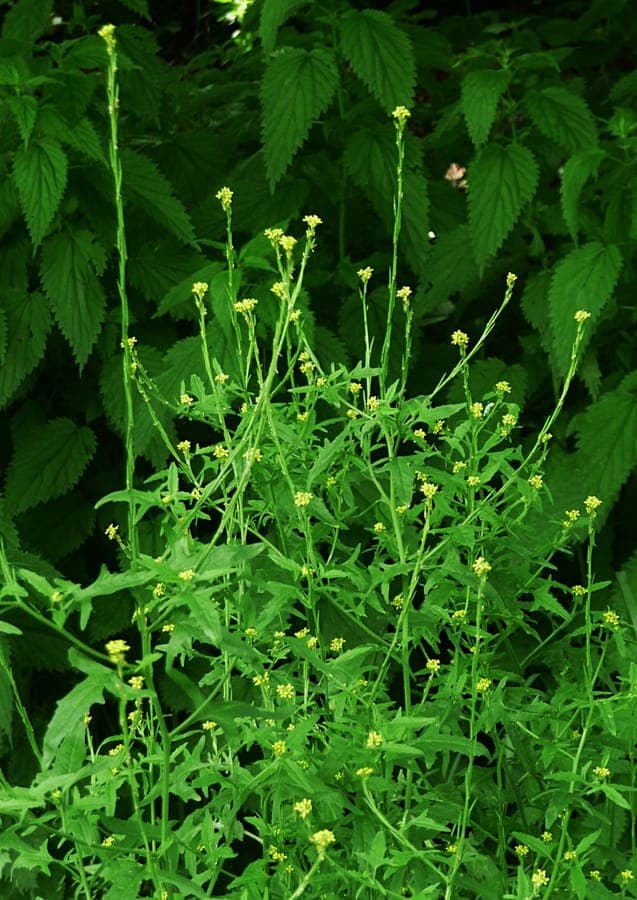
Sisymbrium officinale is a variable plant, usually somewhat hairy and upright to 60 centimeters tall. Leaves are lyrate-pinnatifid with significant terminal lobes. The plant flowers from May to August with small yellow flowers in dense racemes. The flowers are small but numerous and highly attractive to insects. After flowering, short, thick seed pods form only 1-2 centimeters long. These seed pods are important for self-seeding and give the plant its characteristic appearance. The entire plant is edible and rich in nutrients.
Ideal location
Hedge Mustard grows optimally in full sun but can also grow in partial shade. The plant is highly flexible and thrives in many different environments. It grows well in borders, wild gardens, herb gardens, and even containers. The plant can also be used as a pioneer plant in disturbed areas. In naturalization designs, it can be valuable as food for pollinators. The plant tolerates urban conditions well and even grows on compacted ground along roadsides.
Soil
Hedge Mustard is extremely adaptable to various soil types. The plant grows on poor sandy, loamy, and even highly fertile soils. It grows in both acidic and alkaline soils. Well-draining soil is preferred, but the plant can also tolerate fairly moist soils. No special soil preparation is usually necessary. This makes it a very low-maintenance plant that grows in almost any garden condition.
Diseño gratis
¿Quieres ver Hedge Mustard (Sisymbrium officinale): complete guide en tu jardín? Crea un diseño gratis ahora.
Watering
Once established, Hedge Mustard is moderately drought-tolerant. Regular watering promotes vigorous growth and better nutrient uptake. The plant tolerates wetter conditions. Young plants should be watered regularly. In very dry climates, watering during the growing period can be beneficial. The plant can establish in humid climates with minimal supplemental water. Regular watering is important during establishment.
Pruning
Hedge Mustard requires minimal maintenance pruning. The plant can be regularly pruned to promote young growth and stimulate continuous leaf harvest. If you feel it is getting out of place, cut it back. After blooming, most parts can be removed for tidiness. If collecting seed, allow some seed pods to mature. The plant can be pruned for regrowth.
Maintenance calendar
APRIL-MAY: Growth begins; water regularly. MAY-JUNE: Flowering period; begin leaf harvesting for nutrition. JUNE-JULY: Continuous bloom and growth; harvest regularly. JULY-AUGUST: Peak productivity; harvest seed. AUGUST-SEPTEMBER: Seed maturation; self-seeding begins. OCTOBER-MARCH: Winter dormancy in many regions.
Winter hardiness
Hedge Mustard is winter-hardy in zones 3-9 (to -35 degrees Celsius). The plant tolerates severe frost without difficulty. In very cold climates, it usually dies in autumn, but self-seeding provides new plants next spring. In milder climates, it can grow as a winter herb and regrow in spring. The plant is very cold-tolerant but dislikes extremely hot, dry conditions.
Companion plants
Hedge Mustard combines well with other herb plants in herb gardens. It works well alongside Oregano, Thyme, Marjoram, and other Mediterranean herbs. In wild gardens, it blends well with other opportunistic plants and flowers that attract bees. The plant can be underplanted beneath shrubs to provide ground cover. Yellow flowers combine well with purple and blue tones.
Closing remarks
Hedge Mustard is a versatile, useful plant with traditional medicinal uses and nutritional value. With its low maintenance, adaptability, and health benefits, it deserves more attention in modern herb gardens. The plant is easy to grow from seed and self-seeds readily. You can use crowns and young leaves for nutrition and medicinal purposes. With this complete guide, you are well-prepared to successfully grow Hedge Mustard. Visit gardenworld.app/en for more about medicinal herb gardens.
¿Quieres ver Hedge Mustard (Sisymbrium officinale): complete guide en tu jardín? Crea un diseño gratis ahora.
Sube una foto, elige un estilo y obtén un diseño fotorrealista con lista de plantas en menos de un minuto.
Más de 10.000 jardines diseñados
Sin tarjeta de crédito


Plantas similares
Brassica cretica: complete guide
Brassica cretica
Brassica cretica, the Cretan cabbage, grows wild on Aegean cliffs. Discover how to grow this drought-tolerant, yellow-flowered Mediterranean perennial.
Corsican cabbage: complete guide
Brassica insularis
Corsican cabbage is a rare Mediterranean rock cabbage with white flowers and blue-green leaves. Location, soil and winter protection.
Prostrate cabbage: complete guide
Brassica procumbens
Prostrate cabbage is a creeping North African cliff plant with yellow flowers. Discover location, soil type and winter protection.