
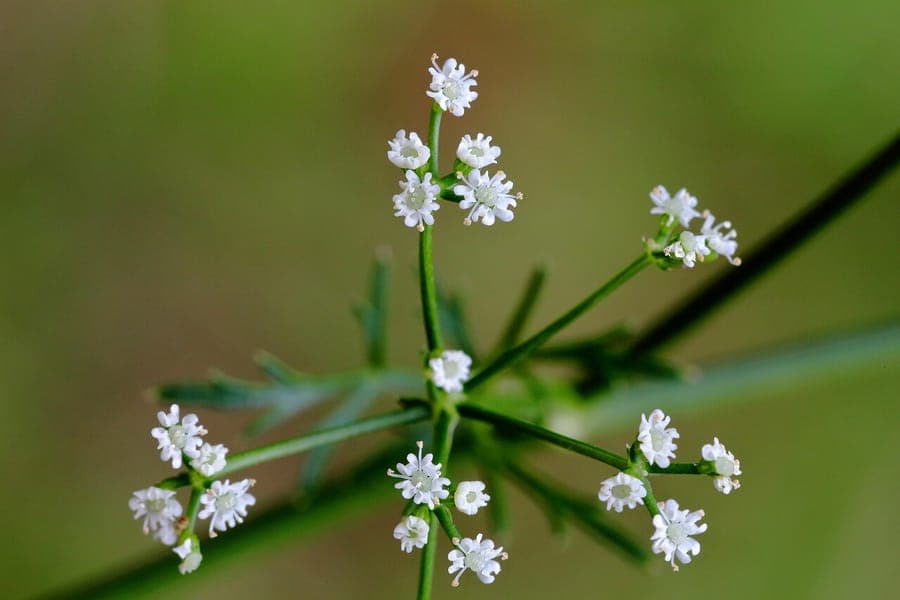
Michel Guerin / CC BY-SA 2.0 fr, via Wikimedia Commons
Stone Parsley: complete guide
Sison amomum
¿Quieres ver Stone Parsley: complete guide en tu jardín?
1 minuto, sin tarjeta de crédito
Overview
Stone Parsley (Sison amomum) is an elegant biennial to short-lived perennial from the Apiaceae family (carrot family). This charming plant grows wild across south-central and Mediterranean Europe, from France to Greece and Turkey. Stone Parsley is treasured for its aromatic foliage and delicate white flowers that attract beneficial insects and butterflies. Historically, the plant was used in traditional herbalism.
Appearance and Bloom
Stone Parsley grows 30-80 cm tall with finely divided, fern-like dark green leaves that emit a distinctive peppery-anise aroma when brushed. Tiny white flowers bloom in characteristic umbrella-shaped clusters (umbels) from July through September, followed by small oblong fruits. The entire plant has architectural grace.
Ideal Location
Plant Stone Parsley in full sun to partial shade, ideally with 6+ hours of direct sunlight daily. The plant performs well in garden borders, herb gardens, and along woodland edges. Excellent for pollinator gardens as it attracts hoverflies, bees, and parasitoid wasps.
Soil
Stone Parsley prefers well-draining soil with neutral to slightly alkaline pH (7.5-8). The plant is not fussy about fertility and thrives in lean soils. Excellent drainage is essential to prevent root rot in wet seasons.
Diseño gratis
¿Quieres ver Stone Parsley: complete guide en tu jardín? Crea un diseño gratis ahora.
Watering
Provide moderate water, keeping soil evenly moist but not waterlogged. Allow the top 2-3 cm of soil to dry between waterings. Once established, Stone Parsley is fairly drought-tolerant.
Pruning
Minimal pruning required. Remove dead flowers and yellowing leaves to encourage continued blooming. In late summer, stems can be cut back by half to maintain compact growth.
Maintenance Calendar
Spring: Direct sow seeds or transplant seedlings. Summer: Water regularly, deadhead spent flowers. Fall: Allow some flowers to set seed for self-sowing. Winter: Minimal intervention.
Winter Hardiness
Stone Parsley is moderately hardy in temperate zones (down to -10 C). The plant often self-seeds in favorable sites, providing renewal.
Companion Plants
Combine Stone Parsley with other umbellifers: Fennel (Foeniculum vulgare), Dill (Anethum graveolens), and Caraway (Carum carvi). These complementary herbs share similar cultural needs and create a cohesive herb garden aesthetic.
Closing Thoughts
Stone Parsley is a delightful nod to European garden heritage, perfect for gardeners seeking aromatic, pollinator-friendly plants. Discover garden design at gardenworld.app/en and explore more plant guides at gardenworld.app/nl.
¿Quieres ver Stone Parsley: complete guide en tu jardín? Crea un diseño gratis ahora.
Sube una foto, elige un estilo y obtén un diseño fotorrealista con lista de plantas en menos de un minuto.
Más de 10.000 jardines diseñados
Sin tarjeta de crédito


Plantas similares
Whorled carrot: complete guide
Daucus involucratus
Daucus involucratus is a Mediterranean umbellifer with white flower heads framed by lacy bracts. Growing this gravel garden gem.
Daucus muricatus: complete guide
Daucus muricatus
Daucus muricatus, the spiny wild carrot, grows wild on Mediterranean coasts. Discover sowing, June-July bloom, and wildflower meadow use.
Daucus pumilus: complete guide
Daucus pumilus
Daucus pumilus is a dwarf wild carrot relative with white lacy umbels, thriving on dunes and coastal rock in poor, fast-draining soil.