
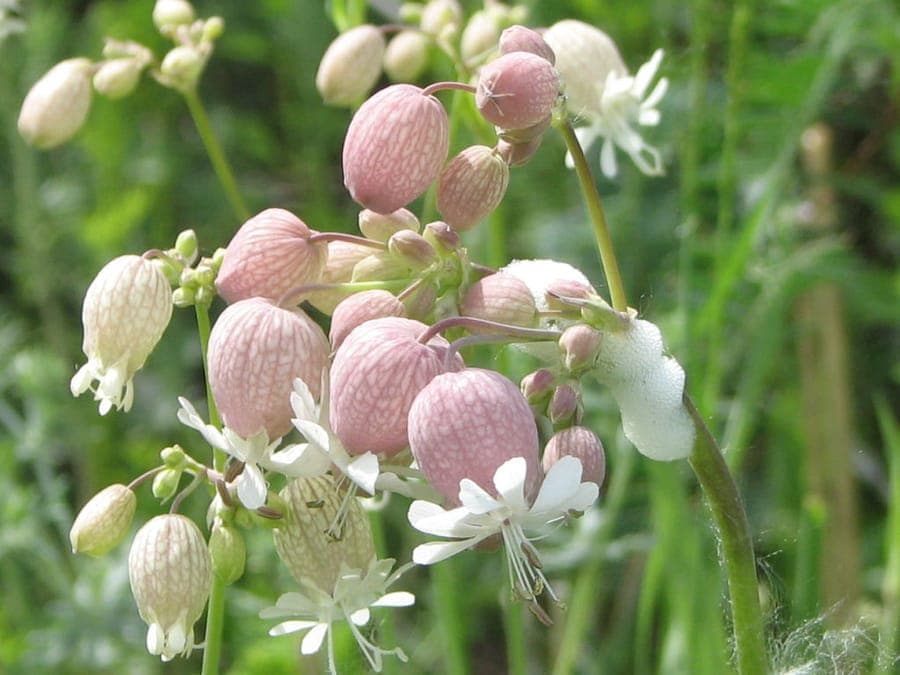
D. Gordon E. Robertson / CC BY-SA 3.0, via Wikimedia Commons
Bladder campion: complete guide
Silene vulgaris
¿Quieres ver Bladder campion: complete guide en tu jardín?
1 minuto, sin tarjeta de crédito
Overview
Bladder campion, scientifically known as Silene vulgaris, is a versatile plant found in both wild environments and cultivated gardens. This member of the carnation family is distinguished by its striking inflated calyces and delicate white flowers. The plant is renowned for its edible parts, particularly young leaves and buds, making it an interesting choice for permaculture and food gardens. At gardenworld.app, you can obtain a garden design that integrates this useful plant in the right location within your landscape plan.
Silene vulgaris is extremely adaptable and grows on diverse soil types and climatic conditions. This makes it an ideal plant for dry, contaminated, or difficult terrain. It establishes easily from seed and reproduces without significant effort.
Appearance & bloom cycle
Bladder campion is a herbaceous crop that can reach 30 to 60 cm in height. The stems are green, smooth, and branched, forming dense networks of plant material. The leaves are opposite, linear lanceolate, green, and approximately 4-8 cm long. They have a somewhat bluish tinge and are smooth to somewhat hairy.
The flowers are the most distinctive feature of this plant. They appear in late spring through summer, typically from May to September. The flowers are very small, approximately 1.5-2 cm in diameter, white or pale pink, and grow in loose panicles. The inflated calyx is clearly visible and forms a characteristic balloon-like structure around the flower base, which is very noticeable between the blooms. These inflated calyces give the plant its common name and are highly distinctive.
After pollination, seed pods develop that share the same inflated characteristics as the flowers. The seeds are small, approximately 1-2 mm, black and extremely numerous.
Ideal location
Bladder campion is highly robust and grows in virtually any location. It thrives best in full sun to partial shade. The plant is notably drought-tolerant and can even grow on extremely dry, barren terrain. This makes it ideal for marginal areas, sloping gardens, green roofs, and other challenging planting situations.
Although it performs best in full sun or partial shade, the plant can also grow reasonably well in more shaded situations. However, it is clearly a 'sun-lover' in every sense and will produce fewer flowers and yellow more quickly in densely shaded environments.
Soil & underground requirements
Silene vulgaris is very flexible regarding soil requirements. It grows well on extremely nutrient-poor, heavy clay, sand, gravel, and even contaminated soils. There is no preference for acidic or alkaline conditions and it can grow on pH values of approximately 4.0 to 8.0. The plant is, however, clearly more adaptable on well-drained, somewhat dry soils than on moist, wet grounds.
It is important not to add extra fertilization unless you have extremely nutrient-poor grounds. Excess nitrogen leads to excessive leafy growth and fewer flowers. Drainage is important; in winter, wet soils can cause root rot.
Diseño gratis
¿Quieres ver Bladder campion: complete guide en tu jardín? Crea un diseño gratis ahora.
Watering
Bladder campion is highly drought-tolerant and requires little watering once well established. In fact, it tolerates regular overwatering and rich soil poorly. Once planted, it almost never needs additional water unless you live in a very dry region or experience a very dry season with minimal precipitation. For seed beds, avoid letting them dry out excessively, but water the soil regularly without making it waterlogged.
In very hot, dry periods, some water may help, but it is not essential. The plant will die more readily from oversaturation than from thirst.
Pruning & maintenance
Pruning is not really necessary or even advisable for Bladder campion. The plant has a natural, spreading form and cutting away parts will likely cause more harm than good. The only thing you could do is remove dead or diseased parts in spring. The plant spreads itself easily by seed if you allow it.
If you want to prevent it from becoming invasive, you can remove seed pods before they ripen, but this is usually not necessary or desirable in wild food situations.
Maintenance calendar
- January - February (Winter): Little maintenance needed. In very wet winters, check for water accumulation around the plant.
- March (Early spring): Sow seed directly into the ground. Remove dead parts from the previous season.
- April - May (Spring): Seeds germinate and grow. Thin seedlings if sown too thickly.
- June - July (Summer): Flowers appear. Plant thrives without extra care.
- August - September (Summer - Fall): Flowers continue. Seeds ripen.
- October - November (Fall): Seeds ripen and disperse or collect them for next season.
- December (Winter): Plant dies back. Clean up and add organic material.
Winter hardiness
Silene vulgaris is very winter hardy and can grow in virtually all European climatic zones. It tolerates frosts of -20°C and lower. However, it is not a true biennial or perennial in the traditional sense; it grows as an annual plant in some years and as a perennial in other situations. This depends on the specific growing conditions and weather of that year.
Young plants can die in very severe frosts and snow load in very wet winters, especially on extremely wet soils. This is, however, unusual, and the plant typically grows without problems through winter.
Companion plants
Bladder campion grows well alongside many other wildflowers and herbs. It is particularly well suited for combination with other drought-tolerant species such as poppies, veronicas, and other brassicas. It also attracts many pollinators and can therefore be useful near vegetables and pollination-dependent fruits.
In food gardens, it can grow well in intercropping situations with other vegetables and can help maximize land use. At gardenworld.app, you can create designs with multiple useful species that grow well together.
Conclusion
Bladder campion is a valuable, versatile, and highly easy-to-use plant. Its nutritional possibilities, pollinator attraction, and adaptability make it an excellent choice for sustainable and food-productive gardens. For more inspiration and professional garden design, you can always consult gardenworld.app, where you can get expert help in planning your garden.
¿Quieres ver Bladder campion: complete guide en tu jardín? Crea un diseño gratis ahora.
Sube una foto, elige un estilo y obtén un diseño fotorrealista con lista de plantas en menos de un minuto.
Más de 10.000 jardines diseñados
Sin tarjeta de crédito


Plantas similares
Dianthus karami: complete guide
Dianthus karami
Dianthus karami is a rare Lebanese mountain pink with fringed pink blooms on limestone cliffs, ideal for rock gardens and troughs.
Sicilian pink: complete guide
Dianthus siculus
Discover Dianthus siculus, an elegant purple bloomer from Sicily. Cultivation, June-September flowering and garden combinations.
Alpine mouse-ear chickweed: complete guide
Cerastium pedunculatum
Full growing guide for Cerastium pedunculatum: ideal location, soil, watering, winter hardiness, and companion plants for rock gardens.