
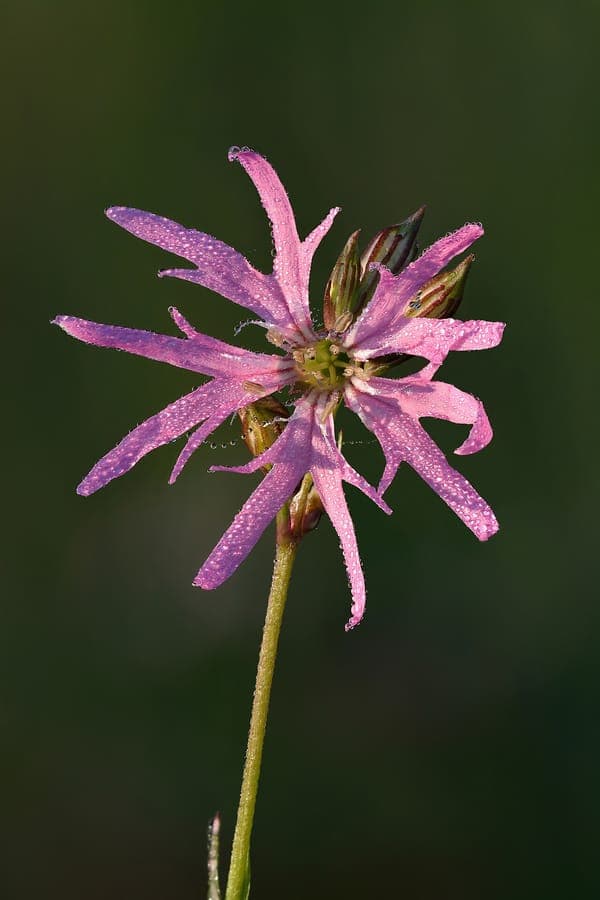
Ivar Leidus / CC BY-SA 4.0, via Wikimedia Commons
Silene flos-cuculi: complete guide
Silene flos-cuculi
¿Quieres ver Silene flos-cuculi: complete guide en tu jardín?
1 minuto, sin tarjeta de crédito
Overview
Silene flos-cuculi, commonly known as meadow campion or ragged robin, is an elegant moisture-loving plant from the carnation family (Caryophyllaceae). The plant grows naturally in moist meadows and wetlands from Europe to Siberia. Meadow campion is prized for its distinctive tattered, fringed flowers in pink to red tones. The plant typically reaches 40-60 cm in height and forms a slender, upright growing specimen.
Meadow campion is a valuable component of wildflower mixes, especially for moist locations. The plant attracts numerous butterflies and other pollinators. It is a perennial plant that returns year after year without intervention.
Appearance and bloom
The flowers of Silene flos-cuculi are very distinctive, approximately 1.5-2 cm in diameter, consisting of five deeply split petals creating a fringed or tattered appearance. Color ranges from pale pink to bright pink-red. Leaves are narrow lance-shaped and dark green.
Floering occurs from May to July, with peak bloom in June. The plant produces numerous small seed capsules. Growth is slender and upright with minimal branching. This makes the plant suitable for borders and wildflower mixes.
Ideal location
Meadow campion thrives in locations with good light, from full sun to light partial shade. The plant prefers partially shaded environments under deciduous trees.
The plant is extremely hardy and tolerates severe frost. It grows wild at elevations well above the tree line in the Alps. It occurs in many northern countries.
Soil
Meadow campion requires moisture-retaining or muddy soils. The plant grows naturally in wet meadows and wetlands. It does not tolerate dry, sandy soils.
A pH between 6 and 7 is ideal. The plant also grows on acidic soils. Drainage is not critical because the plant tolerates much water. It thrives on lean soils but also grows on richer ground.
Diseño gratis
¿Quieres ver Silene flos-cuculi: complete guide en tu jardín? Crea un diseño gratis ahora.
Watering
Meadow campion needs plenty of water and does not tolerate dry feet. The plant naturally grows along stream banks and wet meadows. It must receive plenty of water, especially during the growing season.
In containers, the potting soil should remain constantly moist. In borders, soil should be heavily mulched to promote moisture retention. The plant dies in dry summers without supplemental water.
Pruning
Meadow campion requires no pruning. Faded flowers can be removed to prevent self-seeding. Remove dead stems in autumn.
In spring, you can remove dead stems. The plant grows naturally slender and needs no shaping.
Maintenance calendar
Spring: Young plants can be planted in moist soils. Sow indoors in February-March. Water very regularly.
Summer: Keep soil very moist. Monitor flowering. Remove faded flowers if you want to prevent self-seeding.
Autumn: Allow seed capsules to mature if you want them to self-seed. Cut stems back in October.
Winter: Plant is dormant and requires minimal care. The root zone should remain moist.
Winter hardiness
Silene flos-cuculi is extremely hardy, tolerating temperatures as low as -20 degrees Celsius. The plant grows wild in Europe to Siberia. It occurs in many northern countries.
The plant tolerates long, harsh winters without damage. However, moisture retention is important because the plant does not tolerate drought.
Companion plants
Meadow campion combines beautifully with other moisture-loving plants. Try it with marsh marigold, astilbe and primula. Also effective with hellebore, Solomon's seal and other moisture-loving plants.
In wildflower mixes for moist locations, meadow campion fits perfectly. Group in large numbers for best effect.
Conclusion
Silene flos-cuculi is an elegant, moisture-loving plant with distinctive fringed flowers. With its preference for moist soils, it is ideal for natural waterside and wet gardens. The plant thrives in full sun to partial shade. It is extremely hardy and attracts many butterflies.
Discover more plant choices at gardenworld.app/en for complete garden inspiration!
¿Quieres ver Silene flos-cuculi: complete guide en tu jardín? Crea un diseño gratis ahora.
Sube una foto, elige un estilo y obtén un diseño fotorrealista con lista de plantas en menos de un minuto.
Más de 10.000 jardines diseñados
Sin tarjeta de crédito


Plantas similares
Dianthus karami: complete guide
Dianthus karami
Dianthus karami is a rare Lebanese mountain pink with fringed pink blooms on limestone cliffs, ideal for rock gardens and troughs.
Sicilian pink: complete guide
Dianthus siculus
Discover Dianthus siculus, an elegant purple bloomer from Sicily. Cultivation, June-September flowering and garden combinations.
Alpine mouse-ear chickweed: complete guide
Cerastium pedunculatum
Full growing guide for Cerastium pedunculatum: ideal location, soil, watering, winter hardiness, and companion plants for rock gardens.