
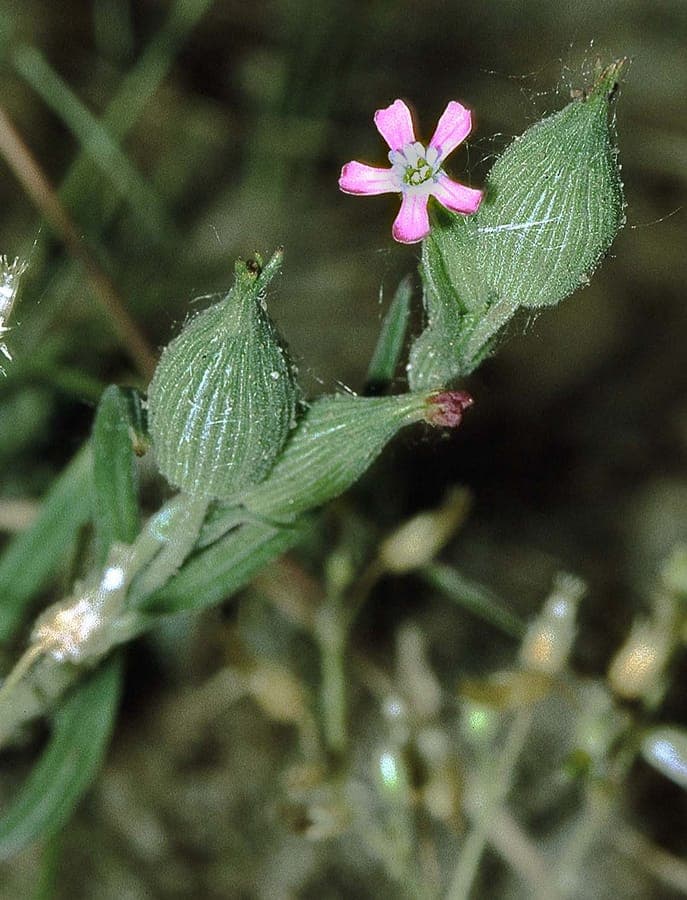
No machine-readable author provided. Fornax assumed (based on copyright claims). / Public domain, via Wikimedia Commons
Sand Catchfly: Complete Guide
Silene conica
¿Quieres ver Sand Catchfly: Complete Guide en tu jardín?
1 minuto, sin tarjeta de crédito
Sand Catchfly (Silene conica): Complete Guide
Overview
Sand catchfly, scientifically known as Silene conica, is an elegant annual flowering plant from the Caryophyllaceae family. This plant originates from Mediterranean areas and originally from North Africa and Europe to Central Asia and Afghanistan. With its characteristic purple flowers and conical seed capsules, it forms a valuable addition to both wild and formal gardens.
The plant is known by various common names, including sand catchfly in English, kegel-leimkraut in German, and silène conique in French. The botanical name conica directly refers to the distinctly conical shape of the seed capsules.
Appearance and Bloom
Sand catchfly is a graceful plant with fine, narrow leaves growing in a compact form. The plant reaches a height of approximately 20-40 centimeters and forms a neat, compact specimen. The stems are fairly sturdy and the plant has an attractive appearance.
The flowers are small but striking, usually purple, sometimes white, appearing in small flower clusters during spring and early summer (April to May). After blooming, distinctive conical seed capsules form, which are the most striking ornament. These seed capsules are distinctly cone-shaped and give the plant its common name.
Ideal Location
Sand catchfly grows optimally in full-sun locations with at least six hours of direct sunlight daily. The plant is a true sun-lover and grows poorly in shaded places. The plant tolerates wind and dry conditions reasonably well.
The plant feels most at home in open, dry locations with well-ventilated soil.
Diseño gratis
¿Quieres ver Sand Catchfly: Complete Guide en tu jardín? Crea un diseño gratis ahora.
Soil
Sand catchfly grows best in well-drained, poor soils. The plant is very adaptable and grows even in very poor, rocky soils. Light sandy soil is ideal.
The plant tolerates various soil pH but thrives best in neutral to slightly acidic soils. Moist soils should be avoided as these can cause waterlogging.
Watering
Once established, sand catchfly is reasonably drought-tolerant. In very dry periods, water can be given, but the plant can survive without regular moisture supply. Excessive watering should be avoided.
Young plants need somewhat more moisture until they develop good roots.
Pruning
Pruning is virtually unnecessary for sand catchfly. Spent flowers can be removed if desired. Because it is an annual plant, no winter pruning is needed.
Maintenance Calendar
Spring: Sow seeds directly where growth is desired. Germination appears quickly. Summer: Blooming. Minimal care needed. Allow seeds to ripen. Fall: Plant begins declining. Allow seeds to fall for next season. Winter: Plant dies. No maintenance needed.
Winter Hardiness
Sand catchfly is not winter hardy and dies at frost. It is a true annual that cannot overwinter. Seeds can, however, be stored in protected conditions for the following season.
Companion Plants
Sand catchfly combines well with other Mediterranean wildflowers and other annuals. Drought-tolerant plants are suitable partners.
Conclusion
Sand catchfly is an enchanting plant for enthusiasts of fine, elegant flowers. With its characteristic conical seed capsules, it offers distinctive botanical interest. The plant is easy to grow from seed and requires minimal care. Visit gardenworld.app for more plant advice. Happy gardening!
¿Quieres ver Sand Catchfly: Complete Guide en tu jardín? Crea un diseño gratis ahora.
Sube una foto, elige un estilo y obtén un diseño fotorrealista con lista de plantas en menos de un minuto.
Más de 10.000 jardines diseñados
Sin tarjeta de crédito


Plantas similares
Dianthus karami: complete guide
Dianthus karami
Dianthus karami is a rare Lebanese mountain pink with fringed pink blooms on limestone cliffs, ideal for rock gardens and troughs.
Sicilian pink: complete guide
Dianthus siculus
Discover Dianthus siculus, an elegant purple bloomer from Sicily. Cultivation, June-September flowering and garden combinations.
Alpine mouse-ear chickweed: complete guide
Cerastium pedunculatum
Full growing guide for Cerastium pedunculatum: ideal location, soil, watering, winter hardiness, and companion plants for rock gardens.