
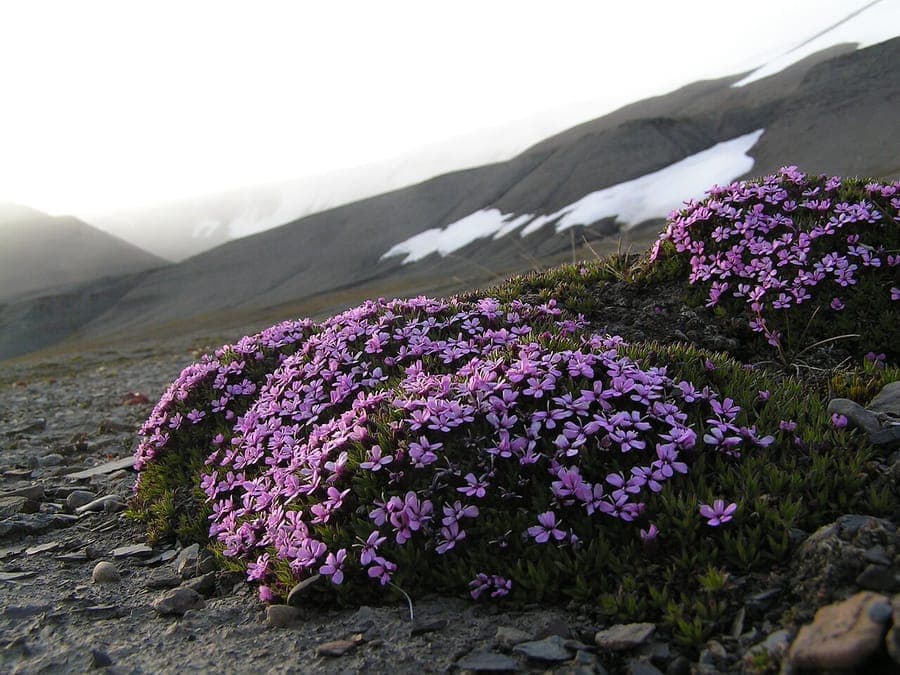
No machine-readable author provided. Hermanhi assumed (based on copyright claims). / CC BY-SA 3.0, via Wikimedia Commons
Cushion-pink: Complete Guide
Silene acaulis
¿Quieres ver Cushion-pink: Complete Guide en tu jardín?
1 minuto, sin tarjeta de crédito
Cushion-pink (Silene acaulis): Complete Guide
Overview
Cushion-pink, scientifically known as Silene acaulis, is a charming and compact alpine plant from the Caryophyllaceae family (carnation family). This perennial grows naturally in subalpine and arctic regions of the northern hemisphere, from Scandinavia to Japan and from North America to Greenland. With its characteristic dense cushion growth and bright pink flowers, it is a popular choice for alpine and rock gardens.
The plant is known by various common names, including moss campion, cushion pink, and fjällglim. The botanical name refers to the absence of a distinct stem, with flowers emerging almost directly from the cushion-like foliage.
Appearance and Bloom
Cushion-pink forms compact, dense cushions of narrow, needle-like leaves. The plant grows very slowly, often just a few millimeters annually. This makes it one of the most compact flowering plants in alpine areas. A fully grown cushion may be a few centimeters tall and ten to twenty centimeters wide.
The flowers are small but striking, usually bright pink, sometimes white or purple, appearing in summer (May to August, depending on elevation and latitude). Flowers grow almost flush with the green cushion, making the entire plant appear bright red when in full bloom. The flowers attract butterflies and bees and later form small seed pods.
Ideal Location
Cushion-pink grows best in full-sun locations receiving at least six hours of direct sunlight daily. In warmer climates, some afternoon shade can be beneficial. The plant tolerates full sun exposure better than many other alpine plants.
The plant prefers well-ventilated, sheltered locations where waterlogging cannot accumulate. Protective rocks can help shield against strong winds.
Diseño gratis
¿Quieres ver Cushion-pink: Complete Guide en tu jardín? Crea un diseño gratis ahora.
Soil
Cushion-pink demands very well-drained soil, even more than most alpine plants. A mixture of gravel, sand, and minimal organic matter is ideal. The plant does not grow well in moisture-rich soils. A scree-mix of free-draining stony soil is perfect.
The plant grows in poor soils and requires minimal nutrition. Paradoxically, excessive feeding can cause problems by stimulating weak, rapid growth.
Watering
Once well established, cushion-pink is extremely drought-tolerant thanks to its deep root system. In dry summers, occasional watering can be beneficial. Young plants should be carefully watered until well established.
Warning against excessive moisture is far more important than underwatering. Water must never accumulate around the plant. Ensure water drains quickly.
Pruning
Pruning is virtually unnecessary for cushion-pink. Remove only dead or diseased stems. The plant naturally maintains its compact form.
Maintenance Calendar
Spring: New growth begins. Minimal intervention needed. Summer: Blooming. Minimal feeding if desired. Self-seeds itself. Fall: Growth slows. Plant prepares for winter. Winter: Winter rest in alpine conditions. Protect against excessive snowfall and moisture.
Winter Hardiness
Cushion-pink is extremely winter hardy and survives temperatures to -30 degrees Celsius or lower. It is designed for alpine winters and thrives in cold climates. Protection against excessive snow load can be helpful to prevent plant breakage.
Companion Plants
Cushion-pink combines beautifully with other alpine plants such as saxifrages, sedums, and other small compact plants. Stones and gravel provide the right alpine atmosphere. In rock gardens, it makes a beautiful front planting.
Conclusion
Cushion-pink is an enchanting plant for alpine and rock garden enthusiasts. With its characteristic dense cushion growth and bright flowers, it offers irresistible charm year after year. Although slow-growing and requiring patience, this is rewarded with a long lifespan and reliable annual bloom. Visit gardenworld.app for more plant advice. Happy gardening!
¿Quieres ver Cushion-pink: Complete Guide en tu jardín? Crea un diseño gratis ahora.
Sube una foto, elige un estilo y obtén un diseño fotorrealista con lista de plantas en menos de un minuto.
Más de 10.000 jardines diseñados
Sin tarjeta de crédito


Plantas similares
Dianthus karami: complete guide
Dianthus karami
Dianthus karami is a rare Lebanese mountain pink with fringed pink blooms on limestone cliffs, ideal for rock gardens and troughs.
Sicilian pink: complete guide
Dianthus siculus
Discover Dianthus siculus, an elegant purple bloomer from Sicily. Cultivation, June-September flowering and garden combinations.
Alpine mouse-ear chickweed: complete guide
Cerastium pedunculatum
Full growing guide for Cerastium pedunculatum: ideal location, soil, watering, winter hardiness, and companion plants for rock gardens.