
Wikimedia Commons / Public domain, via Wikimedia Commons
Pepper Saxifrage: Complete Guide
Silaum silaus
¿Quieres ver Pepper Saxifrage: Complete Guide en tu jardín?
1 minuto, sin tarjeta de crédito
Pepper Saxifrage (Silaum silaus): Complete Guide
Overview
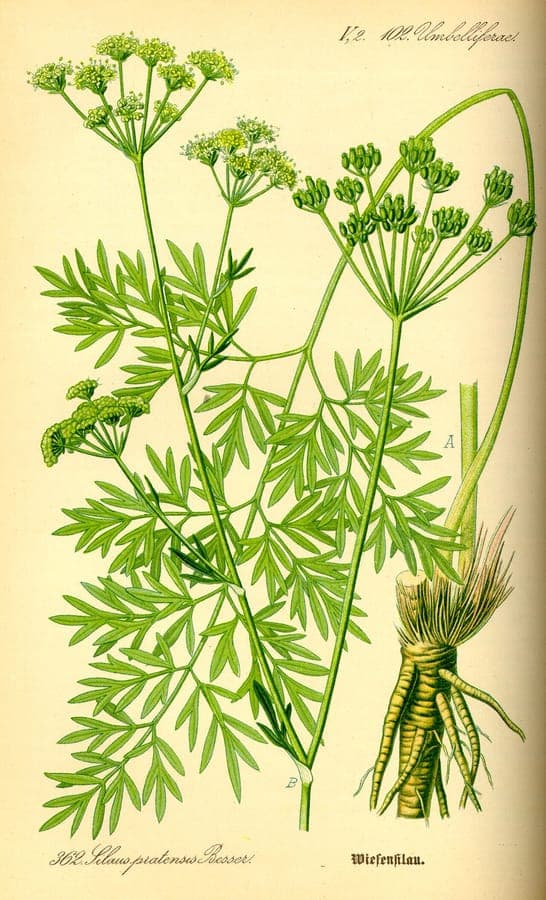
Pepper saxifrage, scientifically known as Silaum silaus, is an elegant and delicate plant from the Apiaceae family (umbelliferous plants). This perennial is native to Europe and naturally occurs in grassland habitats from Scandinavia to the Mediterranean. With its fine foliage and characteristic yellow flowers, it forms a valuable addition to both wild gardens and more formal planting schemes.
The natural distribution extends from France to southwestern Siberia and Central Asia, demonstrating this plant's excellent adaptability to diverse climate conditions. The plant is known by various names in different countries, including rossfenchel in German regions and silaüs des prés in French areas.
Appearance and Bloom
Pepper saxifrage is a notably elegant plant with fine, feathery compound leaves that are finely divided. The foliage has an almost filamentous delicacy that resembles fine vine-like forms in texture. The plant grows to approximately 60-100 centimeters in height, depending on growing conditions.
The flowers are among the most interesting features, appearing in dense, flat umbels of brilliant yellow. These emerge during summer months (June to August) and attract numerous insects. The bright yellow color provides beautiful contrast with the light green of the fine foliage. After flowering, characteristic two-seeded fruits form that naturally dispersed.
Ideal Location
Pepper saxifrage grows optimally in full to partial shade locations, ideally receiving at least four hours of direct sunlight. The plant tolerates lightly shaded positions better than many other umbelliferous plants. This makes it suitable for various garden locations, from sunny grassland to semi-shaded woodland edges.
The plant prefers well-ventilated locations where air circulates freely. This helps prevent disease and encourages healthy growth.
Soil
Pepper saxifrage is not particular about soil type but grows best in well-draining soils. It can grow in poor soils, making it ideal for neglected garden corners. Average fertility is sufficient; excess nutrition can lead to excessive vegetative growth.
The plant prefers neutral to slightly acidic soil (pH 7.0-7.5) and grows in heavy clay soils. Well-drained soils prevent waterlogging, which can cause root rot.
Diseño gratis
¿Quieres ver Pepper Saxifrage: Complete Guide en tu jardín? Crea un diseño gratis ahora.
Watering
Once established, pepper saxifrage is relatively drought-tolerant. Young plants need regular moisture until they develop good root systems. Once established, water should only be applied during very dry periods.
Warning against overwatering is important, as the plant dislikes wet conditions. A light mulch layer helps retain moisture while improving soil.
Pruning
Pruning is minimal for pepper saxifrage. Remove spent flowers for secondary blooms and to prevent seed development (unless self-collecting seed). Cut back declining plants in autumn to ground level.
If desired, seed can be used in the natural dispersal process for self-seeding in surrounding areas.
Maintenance Calendar
Spring: New growth begins. Apply light fertilization if desired. Remove previous season's dead material. Summer: Water during dry periods. Remove spent flowers. Collect seed if desired. Fall: Plants decline. Remove spent stems to ground level. Allow seed to fall for next season. Winter: Winter rest. Plant survives freezing temperatures.
Winter Hardiness
Pepper saxifrage is completely winter hardy in temperate climates and can tolerate temperatures down to -15 degrees Celsius. The plant survives winters without special protection in most European gardens.
Companion Plants
Pepper saxifrage combines beautifully with other wildflowers and grass species. Excellent partners are other umbelliferous plants, grasses, and wildflowers such as marjoram and lavender. The yellow flowers create beautiful combinations with purple or blue flowers.
Conclusion
Pepper saxifrage is a versatile plant for gardeners who enjoy working with native wild plants. With its elegant foliage and bright yellow flowers, it offers both biological value and visual beauty. The plant is easy to cultivate, winter hardy, and suitable for many different garden types. Visit gardenworld.app for more plant advice. Happy gardening!
¿Quieres ver Pepper Saxifrage: Complete Guide en tu jardín? Crea un diseño gratis ahora.
Sube una foto, elige un estilo y obtén un diseño fotorrealista con lista de plantas en menos de un minuto.
Más de 10.000 jardines diseñados
Sin tarjeta de crédito


Plantas similares
Whorled carrot: complete guide
Daucus involucratus
Daucus involucratus is a Mediterranean umbellifer with white flower heads framed by lacy bracts. Growing this gravel garden gem.
Daucus muricatus: complete guide
Daucus muricatus
Daucus muricatus, the spiny wild carrot, grows wild on Mediterranean coasts. Discover sowing, June-July bloom, and wildflower meadow use.
Daucus pumilus: complete guide
Daucus pumilus
Daucus pumilus is a dwarf wild carrot relative with white lacy umbels, thriving on dunes and coastal rock in poor, fast-draining soil.