
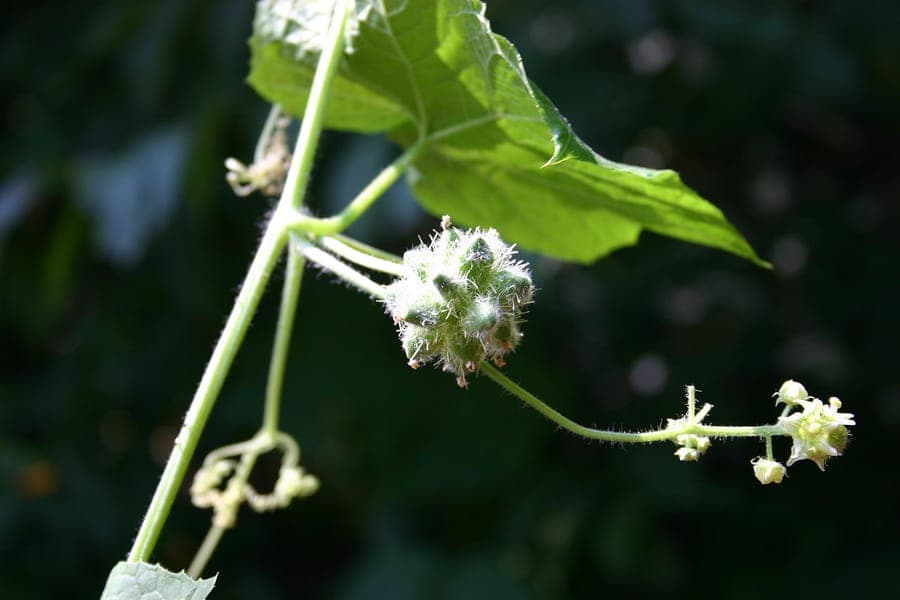
User:SB_Johnny / CC BY-SA 3.0, via Wikimedia Commons
Bur Cucumber: Complete Guide
Sicyos angulatus
¿Quieres ver Bur Cucumber: Complete Guide en tu jardín?
1 minuto, sin tarjeta de crédito
Bur Cucumber (Sicyos angulatus): Complete Guide
Overview
The bur cucumber, scientifically known as Sicyos angulatus, is a fascinating climbing plant from the Cucurbitaceae family. This annual vine originates from eastern North America and has become naturalized across many regions of the American continent. With its characteristic angular fruits covered in soft spines and vigorous growth habit, it offers interesting possibilities for gardeners seeking rapid coverage of garden structures.
This plant is known by various common names including bur cucumber, one-seed burr cucumber, and star cucumber in English-speaking regions. The botanical name refers to the distinctive angular shape of the fruits. While not cultivated as an edible crop in the traditional sense, it offers decorative and practical values for garden coverage and visual interest.
Appearance and Bloom
The bur cucumber grows as a climbing vine with narrow, lobed leaves. The foliage is delicate and creates a light, semi-transparent canopy perfect for partial screening. Flowers are small and inconspicuous, yellow in color, appearing throughout the growing season. The most distinctive feature is the fruit: small, angular spheres covered with soft spines approximately the size of a pea. These fruits transition from green to yellowish as they mature.
The plant exhibits vigorous growth and can extend several meters in a single season. The tendrils are thin yet strong enough to grip supports securely. The foliage becomes quite dense, creating a beautiful green covering over pergolas, fences, and trellises.
Ideal Location
Bur cucumber grows best in locations receiving at least six hours of direct sunlight daily. Full sun promotes optimal growth and fruit production. The plant tolerates partial shade but exhibits slower growth in such conditions. Position the plant where it can easily climb against a support structure such as a pergola, fence, wall, or trellis.
The plant adapts well to various microclimates but thrives in sheltered locations protected from excessive wind exposure. This preserves climbing tendrils and prevents damage to the delicate foliage.
Soil
Bur cucumber is not particular about soil quality and grows in various soil types. However, well-draining soil prevents root waterlogging. Average garden soil with moderate organic matter is sufficient. Heavier soils benefit from incorporating compost or other organic amendments.
The plant requires moderate fertility. Excessive nitrogen promotes excessive leaf growth at the expense of fruit production. Balanced fertilization during the growing season provides adequate nutrition.
Diseño gratis
¿Quieres ver Bur Cucumber: Complete Guide en tu jardín? Crea un diseño gratis ahora.
Watering
Bur cucumber requires regular moisture, especially during dry periods. Water when the top 2-3 centimeters of soil feel dry. Provide deep waterings rather than shallow frequent sprinkling, which encourages deeper root development.
During normal rainy seasons, rainfall often provides sufficient moisture. In dry summers, daily watering may be necessary depending on temperature and soil type. Avoid overwatering, as this can cause root rot.
Pruning
Pruning is optional but helps control growth form. Remove dead or damaged vines. Cut back weak or bare vines at the base to encourage fuller branching. As an annual, only maintenance pruning during the season is necessary.
To limit the plant's size, pinch back vine tips periodically. This encourages lateral branching and fuller growth. This can be repeated several times during the growing season.
Maintenance Calendar
Spring: Plant after frost danger passes. Water regularly and provide light fertilization. Summer: Maintain consistent moisture. Monitor for pests. Remove dead material. Fall: Plant begins declining as temperatures cool. Collect seed for next season if desired. Winter: Annual plant dies at first frost. Remove plant debris.
Winter Hardiness
Bur cucumber is not winter hardy in temperate climates and dies at the first frost. It is a true annual that cannot survive winter in areas with regular freezing temperatures. However, seeds can overwinter in protected conditions for use the following season.
In tropical and subtropical climates, the plant may grow perennially.
Companion Plants
Bur cucumber pairs well with other vigorous climbing plants such as hops or other Cucurbitaceae species. Ground covers beneath the climbing plant add interest. Permanent shrubs provide structure for the bur cucumber to climb.
Although not edible itself, it combines well with useful garden plants such as insect-attracting flowers.
Conclusion
Bur cucumber is a versatile plant for gardeners seeking rapid growth and temporary coverage of garden structures. With its distinctive spiny fruits and vigorous climbing habit, it offers visual interest throughout the growing season. While not winter hardy, it can easily be grown from seed for the following season. For more plant information, visit gardenworld.app. Happy gardening and see you at gardenworld.app!
¿Quieres ver Bur Cucumber: Complete Guide en tu jardín? Crea un diseño gratis ahora.
Sube una foto, elige un estilo y obtén un diseño fotorrealista con lista de plantas en menos de un minuto.
Más de 10.000 jardines diseñados
Sin tarjeta de crédito


Plantas similares
Kiwano: complete guide
Cucumis metuliferus
Everything about growing kiwano: location, soil, watering, and harvesting this striking African horned cucumber with spiny orange fruits.
Sponge gourd: complete guide
Luffa aegyptiaca
Full guide to growing sponge gourd (Luffa aegyptiaca): sowing, care, harvesting edible fruits and drying natural loofah sponges in your garden.
Cucumis prophetarum: complete guide
Cucumis prophetarum
Wild cucumber is a fascinating climbing plant with remarkable spiky fruits. Learn how to grow this exotic annual from seed to harvest for decorative interest.