
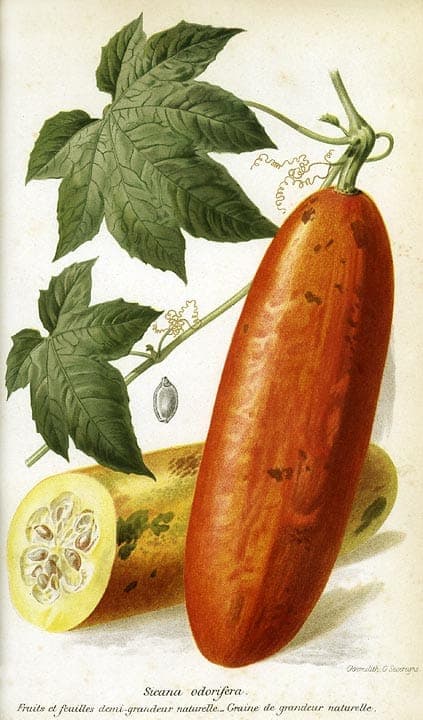
E. André / Public domain, via Wikimedia Commons
Cassabanana: complete guide
Sicana odorifera
¿Quieres ver Cassabanana: complete guide en tu jardín?
1 minuto, sin tarjeta de crédito
Overview
The Cassabanana, scientifically known as Sicana odorifera, is a tropical climbing plant from the melon family (Cucurbitaceae). This plant is famous for its large, aromatic fruits that smell and taste like a blend of mango and pineapple. Native to Peru and Bolivia, this plant has spread throughout Latin America and is now grown under glass in temperate climates.
The plant grows quickly and can reach several meters per season. The fruits are quite large - up to 30 cm long - and emit an intense fragrance that can fill an entire garden. For fruitfulness, warm weather is essential, making this plant best suited for serious tropical gardens.
Appearance & bloom
The Cassabanana is a green climbing plant with large, heart-shaped leaves. The leaves have a light green color and fine hairs on the surface. The fruits are elongated, yellow to orange in color, and have a harder shell than, for example, cucumbers.
Yellow, inconspicuous flowers appear along the stems. These flowers are important for pollination and fruit formation. The plant flowers during the growing season when temperatures remain above 20 degrees Celsius.
Ideal location
Place your Cassabanana in a spot with lots of sun. The plant needs a minimum of 6-8 hours of direct sunlight daily to grow well and produce fruit. In warm regions, light afternoon shade can prevent leaf scorch in the hottest parts of the day.
Protection from wind is important, especially for fruit-heavy plants. A south or southwest-facing spot is ideal. In greenhouses, supplemental artificial light can help.
Soil requirements
The Cassabanana grows best in humus-rich, well-draining soil. The soil must remain regularly moist, but should not be waterlogged. Add compost or organic matter before planting to improve soil structure.
A soil pH between 6.0 and 7.0 is ideal. Heavy soils can be amended with sand and organic matter. Drainage is crucial because water stagnation damages roots.
Diseño gratis
¿Quieres ver Cassabanana: complete guide en tu jardín? Crea un diseño gratis ahora.
Watering
Water regularly, especially during flowering and fruiting. The soil should be moister than normal, but not soggy. In hot periods, daily watering may be necessary. Drip irrigation is efficient and prevents leaf damage.
Reduce watering in winter as growth slows. Use lukewarm water for best results. Monitoring for drought is important, as this plant is sensitive to drying out.
Pruning
Pruning encourages branching and more fruit production. Remove dead or diseased branches immediately. Some gardeners prune side shoots back to direct energy to fruits. Prune carefully because much woody material can develop.
Remove excess vegetation around fruits so they can ripen better. This also improves air circulation and reduces disease risk.
Maintenance calendar
Spring: Plant from seed or cuttings. Provide warmth and humidity. Start feeding. Summer: Place support structures, water regularly, monitor plants for pests. Harvest when fruits turn yellow. Fall: Gradually reduce feeding, prepare for dormancy. Winter: Minimal care, protect from frost in temperate zones.
Winter hardiness
The Cassabanana is not winter hardy in temperate zones. It cannot tolerate temperatures below 10 degrees Celsius. In colder regions, the plant must be brought indoors to a warm greenhouse. Outside in southern zones, it can sometimes overwinter with protection.
At frost warnings, cover the plant with cloths or move container plants indoors. In tropical zones, it grows year-round.
Companion plants
Sow herbs nearby like oregano or thyme, which repel pests. Flowering companions like nasturtium attract pollinators. Marigolds help against harmful insects.
Avoid strong growers nearby that compete for nutrients. Ensure companions do not smother the climbing plant.
Closing
The Cassabanana offers a unique way to grow tropical flavors in your own garden. With sufficient warmth, sun, and care, spectacular fruits with intoxicating aromas develop. Whether you work in a greenhouse or live in warm regions, this plant will certainly make your garden experience extraordinary.
Visit gardenworld.app for more inspiration about exotic fruit plants. Discover more garden designs and advice for your ideal garden at gardenworld.app.
¿Quieres ver Cassabanana: complete guide en tu jardín? Crea un diseño gratis ahora.
Sube una foto, elige un estilo y obtén un diseño fotorrealista con lista de plantas en menos de un minuto.
Más de 10.000 jardines diseñados
Sin tarjeta de crédito


Plantas similares
Kiwano: complete guide
Cucumis metuliferus
Everything about growing kiwano: location, soil, watering, and harvesting this striking African horned cucumber with spiny orange fruits.
Sponge gourd: complete guide
Luffa aegyptiaca
Full guide to growing sponge gourd (Luffa aegyptiaca): sowing, care, harvesting edible fruits and drying natural loofah sponges in your garden.
Cucumis prophetarum: complete guide
Cucumis prophetarum
Wild cucumber is a fascinating climbing plant with remarkable spiky fruits. Learn how to grow this exotic annual from seed to harvest for decorative interest.