
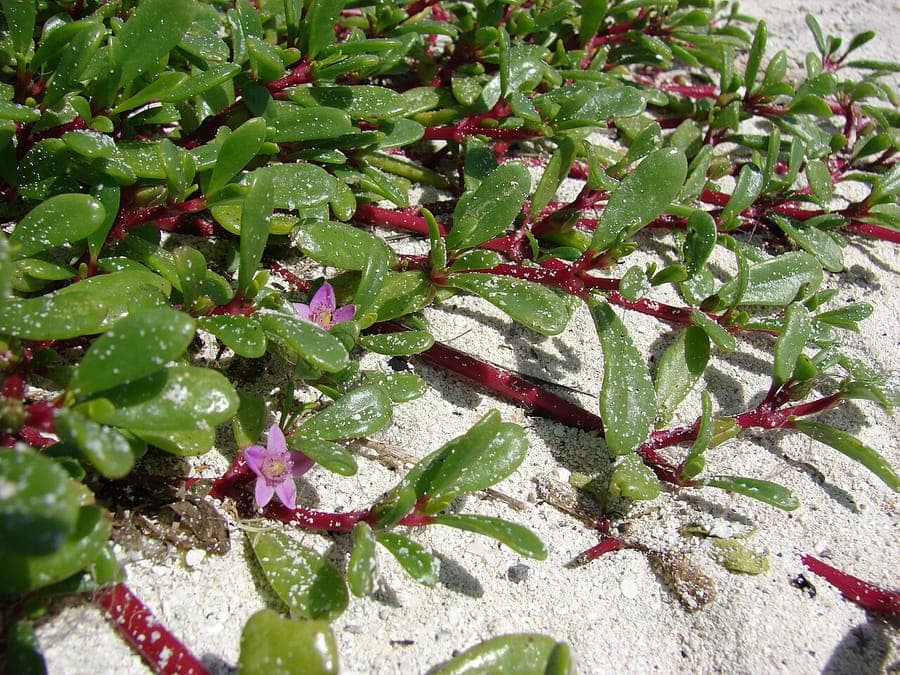
Forest & Kim Starr / CC BY 3.0, via Wikimedia Commons
Sea-purslane: complete guide
Sesuvium portulacastrum
¿Quieres ver Sea-purslane: complete guide en tu jardín?
1 minuto, sin tarjeta de crédito
Overview
Shoreline sea-purslane (Sesuvium portulacastrum) is a remarkable succulent engineered by nature to thrive in some of the planet's toughest spots. This low-growing, creeping plant hails from tropical and subtropical shorelines where salt spray and sand are the default. For gardeners hunting a no-fuss plant that laughs at salt, sand, and full sun, sea-purslane is a clear winner.
Appearance & Bloom
Sea-purslane builds a compact, trailing mat of fleshy, narrow leaves in fresh green to reddish-purple, depending on light and stress. The plant usually stays under 15 cm tall and spreads slowly over ground. Tiny, abundant flowers bloom in pink or magenta hues during warm months, attracting pollinators and adding delicate contrast to the succulent foliage. Flower time extends from late spring to early autumn in temperate zones.
Ideal Location
Full sun is non-negotiable for sea-purslane. Aim for 6-8 hours of direct sunlight daily. In moderate climates, full exposure is safe. In scorching regions, afternoon shade may help prevent bleaching. Choose airy, open spots; avoid windbreaks and ensure airflow, as moisture-trapping shelters invite rot.
Soil
Soil needs are modest. Sea-purslane thrives on sandy, gravelly loam and tolerates salinity levels that kill most plants. For garden planting, amend regular soil with sand, grit, and bark to boost drainage. Cactus or succulent potting mix works excellently. The plant tolerates poor soils; excess nutrition weakens it.
Watering
Sea-purslane is stingy with water wants thanks to its fleshy leaves. Once established, it needs almost none. During drought spells longer than 3 weeks, offer light soaking. In pots, water every 10-14 days in the growing season. Withhold water in winter. Overwatering causes root rot and fungal disease.
Diseño gratis
¿Quieres ver Sea-purslane: complete guide en tu jardín? Crea un diseño gratis ahora.
Pruning
Sea-purslane requires no pruning; it naturally forms a compact mound. Remove dead or damaged stems. After a few years, thin to 5 cm height in early spring to restore bushy shape and vigor.
Maintenance Calendar
- Spring: Check for winter injury; remove dead matter. Propagate cuttings.
- Summer: Minimal water; enjoy flowers. Monitor for long dry spells.
- Autumn: Taper watering as the plant enters dormancy.
- Winter: Almost no water. Protect from hard frosts in borderline zones.
Winter Hardiness
Sea-purslane is frost-tender. It survives frost-free winters (above 5 Celsius) but dies in hard freezes. In cooler regions, grow in pots and move indoors in autumn. Suitable for USDA zones 10-11, or as an annual summer bedding plant in colder zones.
Companion Plants
Sea-purslane pairs beautifully with drought-enduring succulents and coastal flora. Team it with acacia, rosemary, lavender, senecio, portulacaria, and other fleshy companions. In coastal gardens, it integrates naturally with marram grass, sea spurge, and sea-rocket.
Closing
Sea-purslane is the ultimate low-maintenance wonder. Its adaptations prove toughness and grace are not opposites. Whether you are landscaping a beach house, wrestling poor sandy soil, or seeking zero-worry plants, sea-purslane will reward you handsomely. Shop now at garden centers or online nurseries. Visit gardenworld.app for more drought-resistant plant ideas. Visit gardenworld.app for additional coastal garden guides.
¿Quieres ver Sea-purslane: complete guide en tu jardín? Crea un diseño gratis ahora.
Sube una foto, elige un estilo y obtén un diseño fotorrealista con lista de plantas en menos de un minuto.
Más de 10.000 jardines diseñados
Sin tarjeta de crédito


Plantas similares
Carpobrotus glaucescens: complete guide
Carpobrotus glaucescens
Pigface or angular sea-fig is a succulent from Australia. Learn cultivation, care, and use for coastal and container gardens.
Delosperma nubigenum: complete guide
Delosperma nubigenum
Everything about Delosperma nubigenum: a prolific-flowering succulent from South Africa with orange blooms. Growing tips, care and design ideas for your garden.
Crocea Iceplant: complete guide
Malephora crocea
Discover Crocea Iceplant (Malephora crocea), a South African succulent with coppery-orange flowers. Perfect for dry, sunny gardens and rock gardens.