
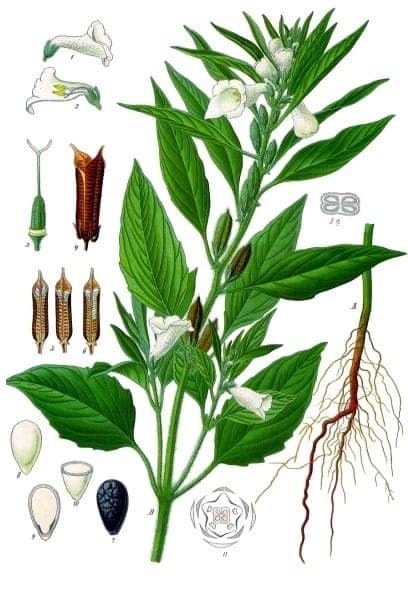
Franz Eugen Köhler, Köhler's Medizinal-Pflanzen / Public domain, via Wikimedia Commons
Sesame plant: complete guide
Sesamum indicum
¿Quieres ver Sesame plant: complete guide en tu jardín?
1 minuto, sin tarjeta de crédito
Overview
The sesame plant (Sesamum indicum) is an annual plant belonging to the Pedaliaceae family, originating from the Indian subcontinent. This plant is one of the oldest oil plants in the world and has been cultivated for thousands of years. Sesame seeds are used worldwide for nutrition, oil extraction, and medicinal purposes.
In gardens, sesame grows easily and offers interesting flowers and useful seeds. The plant is drought-tolerant and can grow in many different climates. It is an ideal choice for experimental gardeners who want to grow their own food.
At gardenworld.app, you can find designs where useful plants like sesame are perfectly integrated. The plant offers not only visual beauty but also practical value in the form of harvestable seeds.
Appearance and bloom time
Sesame plants reach heights of 45 to 90 centimeters, depending on growing conditions. The leaves are oblong-lanceolate, greenish, and softly hairy. The plant grows upright with a naturally branched form.
The flowers are small, tubular blooms that come in purple-white to pink tints. They appear along the stem in leaf axils and bloom continuously during the season. After pollination, small, rectangular seed pods form that are 2 to 3 centimeters long.
The seed pods ripen from green to yellow-brown and contain many small, grayish-white seeds. These seeds are the most valuable part of the plant, both for nutrition and oil extraction.
Ideal location
Sesame plants require full sun. Provide at least 6 to 8 hours of direct sunlight daily. With plenty of sunshine, plants grow faster and produce more seeds.
The plant is flexible regarding location but prefers warm, protected spots. In windy areas, plants may topple, so some shelter is beneficial. Ensure good air circulation to prevent disease problems.
Sesame plants can be grown in containers, but larger pots (at least 20 liters) are recommended for optimal growth.
Soil requirements
Sesame plants grow well in well-draining soil. The plant is not fussy about soil type but prefers neutral to slightly acidic soil (pH 6.5-7). Heavy clay should be improved with sand and organic matter.
Optimal soil is loamy-sandy with moderate nutrient content. Too much nutrition can lead to more leaf growth than seed production. Adding compost when planting helps structure and nutrition.
Mulching around the plant helps with moisture retention and temperature regulation.
Diseño gratis
¿Quieres ver Sesame plant: complete guide en tu jardín? Crea un diseño gratis ahora.
Watering
Sesame plants are drought-tolerant but grow better with regular watering. Water when the top 2-3 centimeters of soil feel dry. Excessive water should be avoided.
During growing periods (summer), regular watering is beneficial. In very dry spells, extra water may be needed. Excessive water, especially at the base, can lead to disease.
Water at the base of the plant, not over the foliage. This helps with disease prevention.
Pruning
Pruning is not necessary but can keep the plant compact. Remove lower leaves once the plant is large enough to stimulate more air circulation.
Avoid heavy pruning, as this can reduce seed production. It's better to let the plant maintain its natural form.
If the plant becomes too tall, careful pruning of the top can stimulate growth of side branches.
Maintenance calendar
Spring/Early summer: Sow seed directly outdoors when soil is warm. Place in full sun. Water regularly. Summer: Ensure adequate watering. Observe for insects. Flowers appear and seed pods form. Late summer/Fall: Seed pods ripen. Harvest seeds when pods turn yellow-brown. Extract seeds from pods. Fall/Winter: Plant dies after seed harvesting. Compost or clean up.
Winter hardiness
Sesame plants are thermophilic (heat-loving) and cannot tolerate frost. They are true annuals in most regions, preferring warm growing periods. The plant grows best when temperatures are above 20 degrees Celsius.
In cold regions, seed should be sown after all frost danger has passed. In warm regions, sesame may sometimes produce for two seasons.
Seed harvesting must take place before frost threatens.
Companion plants
Sesame plants grow well alongside other warm-loving plants like tomatoes, peppers, and eggplants. They combine well with other seed plants for food production.
In experimental edible gardens, sesame works well with other oil plants and nutrition plants. Avoid dense planting that impedes air flow.
Conclusion
The sesame plant is a fascinating, useful plant that offers both visual beauty and practical value. With its pink flowers, interesting seed pods, and valuable seeds, it is an excellent choice for self-sufficient gardeners. It is easy to grow, requires minimal maintenance, and offers harvestable results.
At gardenworld.app, you'll find designs where useful plants are perfectly incorporated. Our experts are happy to help you create edible, functional gardens. gardenworld.app also offers a detailed plant catalog and advice for food production. Order seeds from quality garden centers.
¿Quieres ver Sesame plant: complete guide en tu jardín? Crea un diseño gratis ahora.
Sube una foto, elige un estilo y obtén un diseño fotorrealista con lista de plantas en menos de un minuto.
Más de 10.000 jardines diseñados
Sin tarjeta de crédito


Plantas similares
Acer pycnanthum: complete guide
Acer pycnanthum
Acer pycnanthum, the Japanese swamp maple, is a fast-growing tree with early red flowers and brilliant autumn color, ideal for damp garden settings.
Freeman maple: complete guide
Acer × freemanii
Everything about the Freeman maple (Acer x freemanii): a fast-growing shade tree with spectacular autumn colour for large gardens.
Silver vine: complete guide
Actinidia polygama
Discover silver vine (Actinidia polygama): a hardy climbing plant with silvery foliage, loved by gardeners and cats alike.