
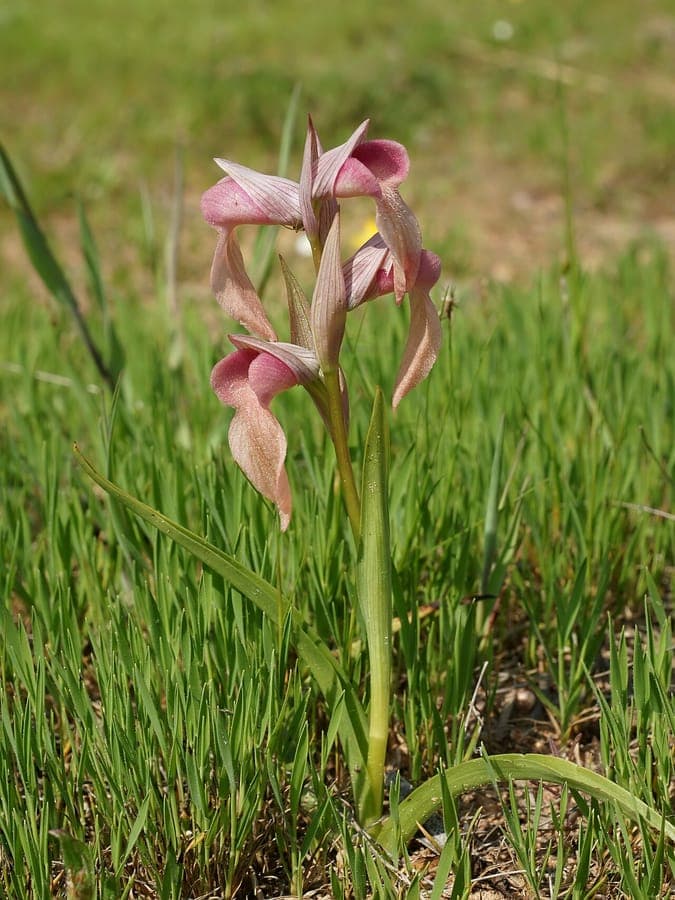
Hans Hillewaert / CC BY-SA 3.0, via Wikimedia Commons
Serapias neglecta: complete guide to the neglected orchid
Serapias neglecta
¿Quieres ver Serapias neglecta: complete guide to the neglected orchid en tu jardín?
1 minuto, sin tarjeta de crédito
Overview
Serapias neglecta, known as the neglected serapias or scarce tongue-orchid, is a fascinating wild orchid belonging to the Orchidaceae family. This plant is endemic to southeastern France and western Mediterranean regions, growing naturally in moist meadows and grasslands.
This remarkable orchid is rare in cultivation and represents the growing importance of preserving wild plant species. With its unusual flower architecture and dark purple-brown blooms, it is a true treasure for orchid enthusiasts.
Appearance and Bloom
Serapias neglecta is a herbaceous orchid reaching 15-40 centimeters in height. The plant grows from underground tubers that anchor into soil and store nutrients and water.
Leaves are linear to lance-shaped, green, and emerge directly from the stem. Flowers appear in clusters of 3-10 blooms at the stem's apex. These flowers are highly specialized: they have a dark brown to purple-brown labellum (lip) that mimics an insect.
The flowering period occurs April to May, making this plant important for spring gardens. While individual flowers last only a few days, successive blooms provide sustained color.
Ideal Location
Serapias neglecta prefers partial shade to full sun, depending on climate. In warmer regions (southern Europe), partial shade prevents desiccation. In temperate climates, full sun is preferable.
This orchid naturally grows in moist meadows, so a location with moisture-retentive soil is essential. Good air circulation prevents fungal issues.
Soil
Serapias neglecta requires highly organic, moisture-retentive soil very different from typical orchids. Blend garden soil with substantial compost (30-50%).
Soil pH should be neutral to slightly acidic (5.0-6.5). Excellent drainage must still be present; waterlogging causes root rot.
Diseño gratis
¿Quieres ver Serapias neglecta: complete guide to the neglected orchid en tu jardín? Crea un diseño gratis ahora.
Watering
This is not a drought-tolerant plant. Serapias neglecta requires consistently moist (not wet) soil. Water regularly, especially during growth and bloom periods.
Soil should not dry out between waterings. However, avoid waterlogging. Test soil moisture by inserting your finger - it should feel moist.
Pruning
Minimal pruning is needed. Remove spent flowers after blooming. If plants become too large, you can carefully divide them after flowering.
Maintenance Calendar
Spring: Begin regular watering. Flowers appear. Feed with orchid fertilizer.
Summer: Continue watering after growth. Provide shade in hot regions.
Autumn: Gradually reduce watering.
Winter: Minimal water. Plant rests. Remove dead leaf material.
Winter Hardiness
Serapias neglecta is relatively hardy in climates without hard frost. In northern Europe it can grow in protected locations, though potted culture for overwintering is preferable.
In regions with harder winters, protect with thick mulch or place pots in sheltered spots. Temperatures below -10 degrees Celsius can damage plant tissues.
Companion Plants
Serapias neglecta works well with other spring-blooming plants:
- Other spring orchids
- Helleborus (hellebores)
- Spring geophytes
- Shade-tolerant groundcovers
The dark flowers contrast beautifully with light spring blooms.
Conclusion
Serapias neglecta is an exciting orchid for experienced gardeners seeking something truly special. This spring-blooming orchid brings form and color to shaded gardens. With attention to moisture and nutrition, you can enjoy this fascinating plant for years.
Source from specialized orchid growers. Visit gardenworld.app for more orchid guides and advice on creating orchid-friendly gardens. Gardenworld.app also advises on integrating wild-like plants into gardens.
Purchase supporting fertilizers from quality garden centers for best results.
¿Quieres ver Serapias neglecta: complete guide to the neglected orchid en tu jardín? Crea un diseño gratis ahora.
Sube una foto, elige un estilo y obtén un diseño fotorrealista con lista de plantas en menos de un minuto.
Más de 10.000 jardines diseñados
Sin tarjeta de crédito


Plantas similares
Ram's-head lady's slipper: complete guide
Cypripedium arietinum
Everything you need to know about growing Cypripedium arietinum, a rare woodland orchid for cool, moist garden settings. Soil, care and planting tips.
Sparrow's-egg lady's slipper: complete guide
Cypripedium passerinum
Everything about growing Cypripedium passerinum, a cold-hardy subarctic orchid suited to cool, moist, shaded garden spots. Soil, care and companion plants.
Algerian Butterfly-orchid: complete guide
Platanthera algeriensis
Everything about Platanthera algeriensis, the rare Mediterranean orchid with greenish flowers native to Algeria, Morocco, Corsica and Spain.