
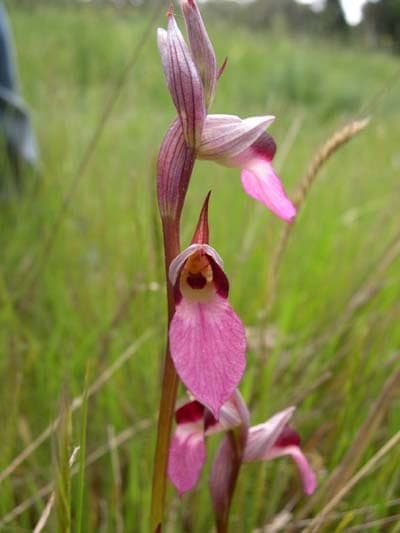
Francesc Xavier Yuste Medina, User: Xyuste / CC BY-SA 4.0, via Wikimedia Commons
Tongue-orchid: complete guide
Serapias lingua
¿Quieres ver Tongue-orchid: complete guide en tu jardín?
1 minuto, sin tarjeta de crédito
Overview
The tongue-orchid (Serapias lingua) is a fascinating Mediterranean orchid species distributed across southern Europe including Italy, Greece, Spain, and North Africa. This plant is renowned for its distinctive red-purple flowers featuring a uniquely shaped tongue-like lip that is remarkably prominent. Despite its botanical elegance, this orchid remains relatively unknown in northern European gardens, offering significant potential for collectors seeking rarity.
This orchid is ideal for Mediterranean gardens, terracotta containers, or specially designed orchid sections. It naturally inhabits open meadows and dry hillsides.
Appearance and Bloom
The tongue-orchid reaches approximately 30-40 cm in height with slender, upright growth habit. The flowers are particularly striking: the sepals and petals are dark red to purple-red, while the lip (labellum) displays the characteristic tongue shape from which the species name 'lingua' derives.
Flowers appear April through June in dense spikes containing six to twelve blooms per plant, making this an attention-grabbing spring presence.
Ideal Location
Select a very sunny location receiving minimum six to eight hours direct sunlight daily. This Mediterranean orchid tolerates no shade. Position the plant where warm air circulates freely, as this prevents moisture-related complications.
Wind-exposed locations may require protection, particularly in early spring when new growth remains fragile.
Soil
Tongue-orchid naturally grows in alkaline, extremely well-draining soils. Use specialized orchid compost or a mixture of orchid bark, sand, and small amounts of perlite. Soil pH should be slightly alkaline (7.0-8.0), and adding limestone-based amendments is recommended.
Waterlogged, heavy soils are absolutely prohibited for this species.
Diseño gratis
¿Quieres ver Tongue-orchid: complete guide en tu jardín? Crea un diseño gratis ahora.
Watering
The tongue-orchid prefers dry conditions. Water extremely sparingly, only when soil has completely dried. This typically occurs once or twice monthly during growing season (spring and early summer).
During dormancy (late summer through early spring), provide almost no water unless soil becomes completely desiccated.
Pruning
Minimal pruning is needed. Remove only dead foliage and withered flower stems to maintain neat appearance. The plant will naturally withdraw following blooming.
Maintenance Calendar
- Spring: Water moderately when new growth begins, ensure bright light
- Summer: Prefer warm conditions, minimal watering
- Autumn: Gradually decrease water frequency
- Winter: Keep dry, plant is dormant
Winter Hardiness
The tongue-orchid is hardy to approximately -5 degrees Celsius. In cold regions, this plant requires indoor overwintering in cool, dry conditions (conservatory or unheated greenhouse).
Companion Plants
Perfect partners are other Mediterranean plants including lavender, rosemary, and drought-tolerant orchid species. This plant works well in specialized Mediterranean borders alongside fine-textured grasses.
Closing
Tongue-orchid is for those seeking an exclusive, striking orchid with clear Mediterranean character. The distinctive tongue-shaped flowers make this plant incomparable. Although challenging to locate, this species is certainly worth the effort for orchid enthusiasts.
Consult specialized orchid suppliers or visit gardenworld.app/nl and gardenworld.app/en for more information about this exceptional plant!
¿Quieres ver Tongue-orchid: complete guide en tu jardín? Crea un diseño gratis ahora.
Sube una foto, elige un estilo y obtén un diseño fotorrealista con lista de plantas en menos de un minuto.
Más de 10.000 jardines diseñados
Sin tarjeta de crédito


Plantas similares
Ram's-head lady's slipper: complete guide
Cypripedium arietinum
Everything you need to know about growing Cypripedium arietinum, a rare woodland orchid for cool, moist garden settings. Soil, care and planting tips.
Sparrow's-egg lady's slipper: complete guide
Cypripedium passerinum
Everything about growing Cypripedium passerinum, a cold-hardy subarctic orchid suited to cool, moist, shaded garden spots. Soil, care and companion plants.
Algerian Butterfly-orchid: complete guide
Platanthera algeriensis
Everything about Platanthera algeriensis, the rare Mediterranean orchid with greenish flowers native to Algeria, Morocco, Corsica and Spain.