
Wikimedia Commons / CC BY-SA 3.0, via Wikimedia Commons
Heart-flowered serapias: complete guide
Serapias cordigera
¿Quieres ver Heart-flowered serapias: complete guide en tu jardín?
1 minuto, sin tarjeta de crédito
Overview
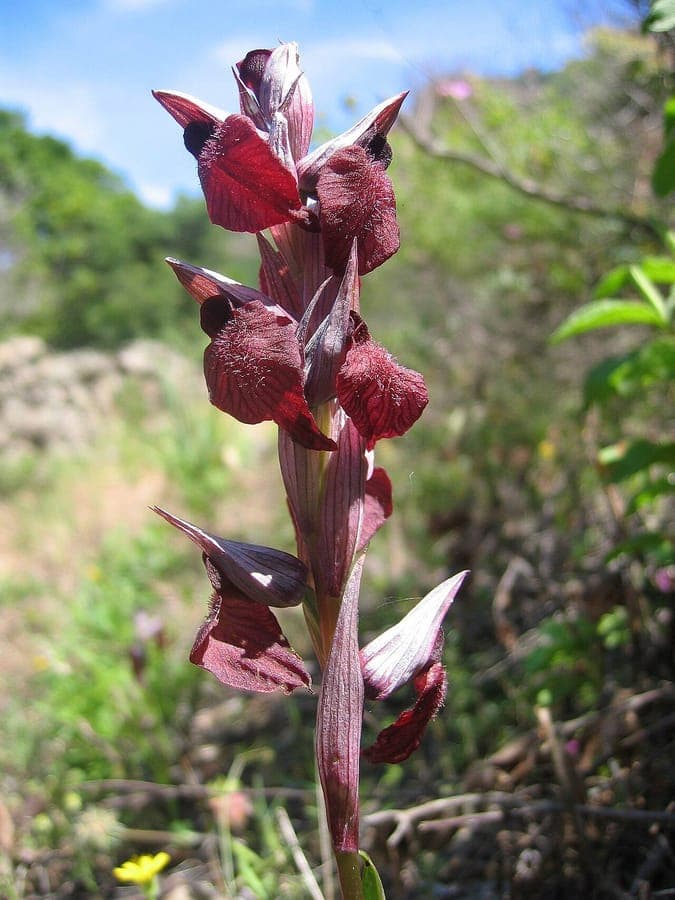
Heart-flowered Serapias (Serapias cordigera) is a jewel among Mediterranean wild orchids. This orchid blooms from April to May with unique dark reddish, tongue-like flowers that deceive insects into pollinating them. The plant naturally occurs in Mediterranean garrigues and macchia, especially on limestone substrates.
Appearance and Bloom
The plant reaches 20-50 cm height with 2-5 narrow, lance-shaped leaves at the base. The flowers are highly distinctive with a dark brown to red lip (labellum) resembling an insect body. This visual trick attracts male bees that pollinate the flower. The remaining petals are yellowish-green to reddish.
Ideal Location
Serapias cordigera naturally grows on sunny, steep slopes in dry Mediterranean climates. In gardens, the plant prefers full sun and warm, dry summers. Suitable for Mediterranean gardens, rock gardens and sloping ground.
Soil
The plant grows on calcareous, well-drained soil. A mixture of 50% sand, 40% garden soil and 10% perlite provides optimal drainage. pH should be between 7 and 8. Moisture excess is fatal for this species.
Watering
Serapias cordigera tolerates drought very well. Water only during very dry periods. During growing season (October-May) keep lightly moist, but absolutely dry in summer. Excessive moisture causes root rot.
Diseño gratis
¿Quieres ver Heart-flowered serapias: complete guide en tu jardín? Crea un diseño gratis ahora.
Pruning
No pruning is necessary, but spent flowers can be removed. After blooming, leave stems with seed heads for seed dispersal. Remove dead leaves if they become brown.
Maintenance Calendar
October: Plant tubers in suitable location. November-April: Light watering during dry periods. April-May: Bloom period. June: Harvest seeds. July-September: Keep completely dry.
Winter Hardiness
Serapias cordigera is moderately hardy and tolerates frost days to -5 degrees Celsius. In cold climates, the plant overwinters as a tuber underground. Leaf mulch provides extra protection in severe winters.
Companion Plants
Plant Heart-flowered Serapias alongside other Mediterranean orchids, xerophytes or rock plants. The plant requires no companion vegetation and performs best as a solitary specimen in suitable dry soils. Visit gardenworld.app/en for more ideas.
Closing
Heart-flowered Serapias is a fascinating wild orchid for enthusiasts and lovers of special plants. With adherence to dry growing conditions and proper care, this unique species can bloom for many years. Available from specialized orchid nurseries and specialized suppliers.
¿Quieres ver Heart-flowered serapias: complete guide en tu jardín? Crea un diseño gratis ahora.
Sube una foto, elige un estilo y obtén un diseño fotorrealista con lista de plantas en menos de un minuto.
Más de 10.000 jardines diseñados
Sin tarjeta de crédito


Plantas similares
Ram's-head lady's slipper: complete guide
Cypripedium arietinum
Everything you need to know about growing Cypripedium arietinum, a rare woodland orchid for cool, moist garden settings. Soil, care and planting tips.
Sparrow's-egg lady's slipper: complete guide
Cypripedium passerinum
Everything about growing Cypripedium passerinum, a cold-hardy subarctic orchid suited to cool, moist, shaded garden spots. Soil, care and companion plants.
Algerian Butterfly-orchid: complete guide
Platanthera algeriensis
Everything about Platanthera algeriensis, the rare Mediterranean orchid with greenish flowers native to Algeria, Morocco, Corsica and Spain.