
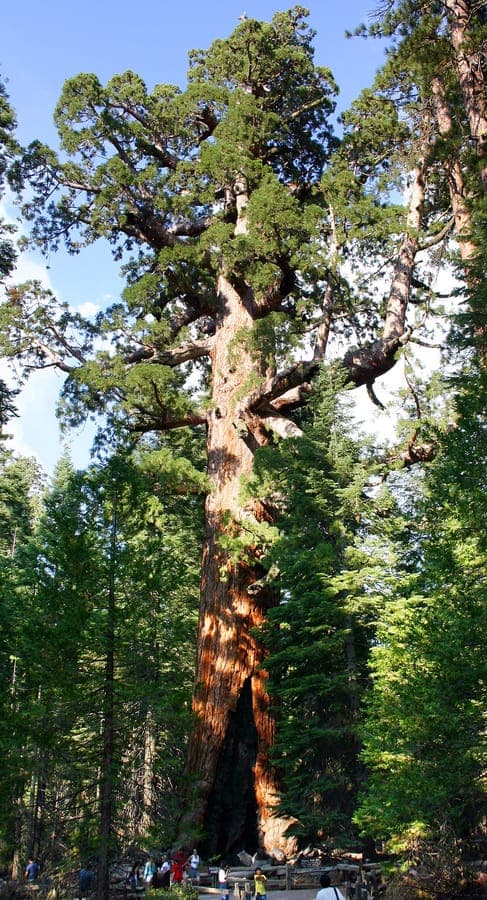
Mike Murphy (talk · contribs) / CC BY-SA 3.0, via Wikimedia Commons
Giant Sequoia: complete guide
Sequoiadendron giganteum
¿Quieres ver Giant Sequoia: complete guide en tu jardín?
1 minuto, sin tarjeta de crédito
Overview
The giant sequoia (Sequoiadendron giganteum) is one of the largest and most impressive trees on Earth. Native to California's Sierra Nevada mountains, this colossal conifer can exceed 80 meters in height and live for thousands of years. This is actually the largest living organism on Earth by volume, making it a truly unique addition to any landscape. In Europe, the giant sequoia is gaining popularity in parks and larger gardens for its spectacular appearance and rapid growth rate.
With its distinctive reddish-brown, thick bark and slender, pyramidal crown, the giant sequoia creates an immediate landscape impact. It thrives in climates with moderate to abundant moisture, making it suitable for many European regions. The majestic presence of this tree makes it a perfect choice for large-scale garden projects where imposing statuesque elements are desired.
The giant sequoia grows rapidly during its youth, potentially reaching 60 to 90 centimeters per year under optimal conditions. This rapid growth means you achieve impressive height relatively quickly. A twenty-year-old tree can already be 20 to 25 meters tall, creating spectacular landscape effects. No other tree in Europe grows so quickly to such monumental dimensions.
Appearance and Bloom
The giant sequoia features fine, scale-like foliage that remains green year-round. These needles are more compact than those of many other conifers, giving the tree a characteristic fine texture. The trunk is reddish-brown, deeply furrowed, with remarkably thick bark that is virtually fire-resistant. This makes the tree exceptionally resistant to natural forest fires and environmental stresses.
The bark can become 60 centimeters thick, providing excellent insulation against temperature fluctuations. This is one reason these trees live so long and are so resistant to drought and insect pests. Female cones are small and inconspicuous, about 5-8 centimeters long, ripening to brown tones. The flowers themselves are tiny and yellow, visible in spring. The tree reaches full maturity only after 200-400 years of growth.
Interestingly, it is not uncommon for giant sequoias to live longer than 3000 years. The oldest known giant sequoia is more than 3200 years old. This lifespan means planting a giant sequoia is not just an investment for yourself but for many generations to come.
Ideal Location
Giant sequoias thrive in full sun and require considerable space. This tree needs room to develop both vertically and horizontally. Do not plant near structures, as its underground root system can become quite extensive. The root system can spread to two or three times the crown width.
Ensure a free-standing position with good air circulation. In smaller gardens this may be challenging, but with sufficient space, the giant sequoia creates a magnificent focal point in any landscape. The best location would be at least 15-20 meters away from houses and other structures. This gives the tree room to grow optimally.
Diseño gratis
¿Quieres ver Giant Sequoia: complete guide en tu jardín? Crea un diseño gratis ahora.
Soil Requirements
Giant sequoias prefer nutrient-rich, well-draining soil with a pH between 5.5 and 7.5. They are not particularly fussy about soil composition but perform best in soils that retain some moisture without waterlogging. The tree grows best in soils containing some acidic components, which helps it absorb water and nutrients.
Ensure your young tree is planted in soil rich in organic material. Add mulch around the base of young trees to help retain moisture and protect roots from temperature extremes. Using 5-10 centimeters of mulch can be very beneficial for growth in early years. This mulch layer also helps suppress weeds and regulates soil temperature.
Watering
Young giant sequoias require regular watering, especially during their first growing season. Keep soil consistently moist but never waterlogged. Excessive moisture can lead to serious root rot. During dry periods, the tree may need 50 to 100 liters of water per week, depending on soil type and air temperature.
Once established, the tree becomes reasonably drought-tolerant and needs minimal supplemental water. During very dry periods, irrigation may help, particularly in warmer regions. Once well-established (usually after 3-5 years), the tree will sustain itself even in drier seasons. It is better to start cautiously and gradually reduce watering frequency.
Pruning
Giant sequoias require minimal pruning. Their natural pyramidal form is so elegant that further shaping is usually unnecessary. Simply remove dead or damaged branches as needed. This may be necessary after heavy snowfall or wind events.
If you prefer a more compact form, light pruning in the early years is possible but not recommended. Allow the tree to grow naturally for the best aesthetic effect. Excessive pruning can damage the tree and slow growth. The tree recovers slowly from serious pruning.
Maintenance Calendar
Spring: Check for winter damage and replenish mulch. Summer: Water regularly, especially young trees, up to twice weekly in hot periods. Autumn: Monitor crown and remove any damaged branches. Winter: Protect young trees with burlap in extremely cold regions, especially in early years.
Winter Hardiness
The giant sequoia is exceptionally cold-hardy and grows well in zones 4-7. It tolerates temperatures down to -25 degrees Celsius without difficulty. Young trees may benefit from protective mulch during their first winter in very cold climates. The tree enjoys areas with regular precipitation and moderate winters. Protection against extreme cold is rarely needed after the first year.
Companion Plants
Giant sequoias work well alongside other hardy conifers such as Douglas fir, silver fir, and Sitka spruce. Underplanting is rarely practical given the shade and root competition these large trees create. The tree actually creates its own microclimate around its base.
Consider screen plantings or protective shrubs at the base, as the deep root system draws nutrients from deep in the soil profile. Low-growing groundcovers can add interest at the base. Some gardeners use shade-tolerant plants like ivy or ferns at the tree's foot.
Closing
The giant sequoia is an excellent choice for those seeking a spectacular, long-lived addition to their landscape. With minimal care once established, this tree will provide enjoyment for generations. Find quality plants at your local garden centres. More garden inspiration at gardenworld.app and gardenworld.app!
¿Quieres ver Giant Sequoia: complete guide en tu jardín? Crea un diseño gratis ahora.
Sube una foto, elige un estilo y obtén un diseño fotorrealista con lista de plantas en menos de un minuto.
Más de 10.000 jardines diseñados
Sin tarjeta de crédito


Plantas similares
Cupressus macnabiana: complete guide
Cupressus macnabiana
The Fragrant Cypress offers elegant growth with fine, aromatic foliage. Perfect for temperate climates and as specimen trees in contemporary gardens.
Cupressus guadalupensis: complete guide
Cupressus guadalupensis
The Guadalupe cypress: an elegant conifer for gardens. Complete cultivation guide for this Mexican cypress. Information about care, location, form and maintenance.
Austrocedrus chilensis: complete guide
Austrocedrus chilensis
Discover Austrocedrus chilensis, the Chilean Cedar ornamental conifer. Elegant specimen with fine foliage and columnar form for permanent structure.