
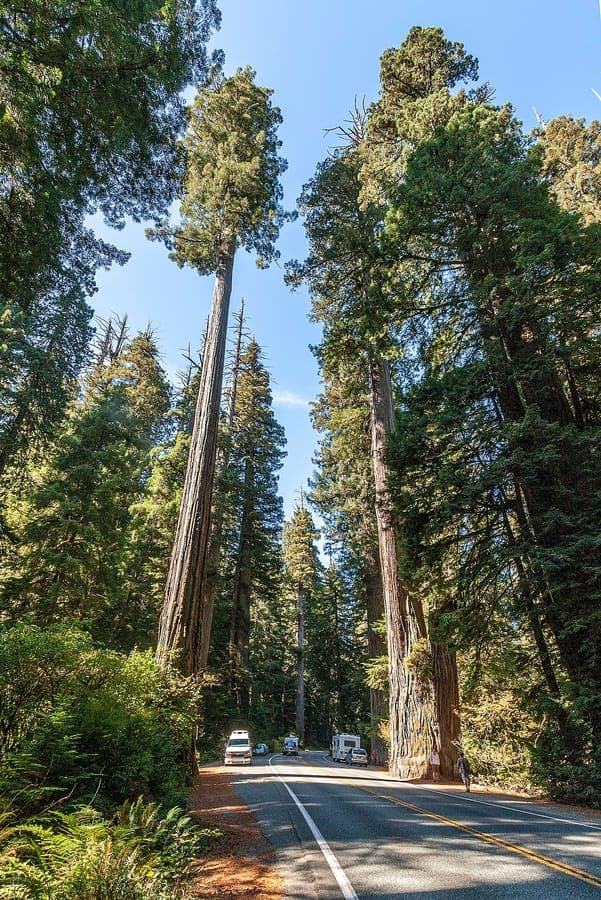
Acroterion / CC BY-SA 4.0, via Wikimedia Commons
Coast Redwood (Sequoia sempervirens): complete guide
Sequoia sempervirens
¿Quieres ver Coast Redwood (Sequoia sempervirens): complete guide en tu jardín?
1 minuto, sin tarjeta de crédito
Overview
The Coast Redwood (Sequoia sempervirens), also called California Redwood, is the tallest living tree on Earth. This monumental conifer originates from the foggy coastal regions of California and southern Oregon and is famous for its extraordinary growth rate and grandeur. Reaching heights exceeding 100 meters, Sequoia sempervirens is not merely a botanical marvel but a testament to nature's architectural capabilities.
Appearance & blooming
The Coast Redwood grows as a slender, columnar tree with densely arranged branches. The needles are linear and fine, displaying a fresh green hue that may shift to reddish-brown in winter. The heartwood is characteristically reddish-brown to deep chocolate tones, giving the tree its common name. The bark is thick, soft, and remarkably fire-resistant compared to many other timbers.
Male flowers appear as small, yellowish-green spheres on branch tips during spring. Female flowers develop into pointed, brown seed cones that are not particularly showy but distinctly characteristic.
Ideal location
Coast Redwoods thrive in locations with abundant light and consistently cool, humid air. In warmer climates, partial shade benefits the tree by preventing sunscald. Ensure adequate air circulation to minimize disease risk. In northern European regions, young trees may need wind protection during their first year. Select a planting site offering sufficient space for the tree to achieve its full potential.
Soil
The soil must be well-draining with a pH between 5 and 7. In its native habitat, this tree grows in deep, nutrient-rich alluvial soils near rivers. Incorporate compost or garden loam when planting. Avoid waterlogging and heavy clay soils, which invite root rot.
Watering
During the first two growing seasons, consistent moisture is critical. Water deeply but not frequently, allowing the soil to dry slightly between waterings. In dry periods, water several times weekly. Once established, the tree becomes moderately drought-resistant, though it performs best in regions with regular rainfall. In warm summers, you may water regularly until August.
Diseño gratis
¿Quieres ver Coast Redwood (Sequoia sempervirens): complete guide en tu jardín? Crea un diseño gratis ahora.
Pruning
Coast Redwoods require minimal pruning. Remove only dead or damaged branches. Because the tree grows exceptionally fast, it tolerates heavy pruning poorly. For young tree formation, you may make some directional cuts, but respecting the natural form is ideal. Interior branches receiving deep shade naturally die back and shed.
Maintenance calendar
Spring (March to May): Plant young specimens and apply first slow-release fertilizer dose. Check for pests and fungi following wet winters.
Summer (June to August): Water regularly during dry spells. Monitor for spider mites during hot, dry years.
Fall (September to October): Reduce watering as temperatures decline. Rake fallen debris from around the base.
Winter (November to February): No fertilization needed. Severe frost may require burlap protection for young trees.
Winter hardiness
Coast Redwoods are hardy to USDA zones 7-8 (temperatures to approximately minus 15 degrees Celsius). In northern Europe, they grow well in most regions, preferring protection against severe winter winds in their first season. Warmer regions throughout Germany and Britain are suitable. Avoid sites exposed to strong, drying winter winds.
Companion plants
For understory planting beneath Coast Redwoods, shade-tolerant species excel: Hedera helix (English ivy), Polystichum setiferum (soft shield fern), and Buxus sempervirens (boxwood) create elegant lower layers. Combine with other conifers such as Taxus baccata (European yew) for added interest. Grouped with Sequoiadendron giganteum (Giant Sequoia), these create a spectacular forest effect.
Conclusion
The Coast Redwood is a breathtaking choice for spacious gardens and estates in temperate climates. With patience, proper moisture management, and minimal maintenance, this forest giant develops into a living monument. Visit local tree nurseries for carefully selected young specimens. Care well for young trees in their first year, and you will enjoy this natural wonder for generations. Invest in this heirloom for your legacy and future generations' inspiration.
¿Quieres ver Coast Redwood (Sequoia sempervirens): complete guide en tu jardín? Crea un diseño gratis ahora.
Sube una foto, elige un estilo y obtén un diseño fotorrealista con lista de plantas en menos de un minuto.
Sin tarjeta de crédito


Plantas similares
Cupressus macnabiana: complete guide
Cupressus macnabiana
The Fragrant Cypress offers elegant growth with fine, aromatic foliage. Perfect for temperate climates and as specimen trees in contemporary gardens.
Cupressus guadalupensis: complete guide
Cupressus guadalupensis
The Guadalupe cypress: an elegant conifer for gardens. Complete cultivation guide for this Mexican cypress. Information about care, location, form and maintenance.
Austrocedrus chilensis: complete guide
Austrocedrus chilensis
Discover Austrocedrus chilensis, the Chilean Cedar ornamental conifer. Elegant specimen with fine foliage and columnar form for permanent structure.