
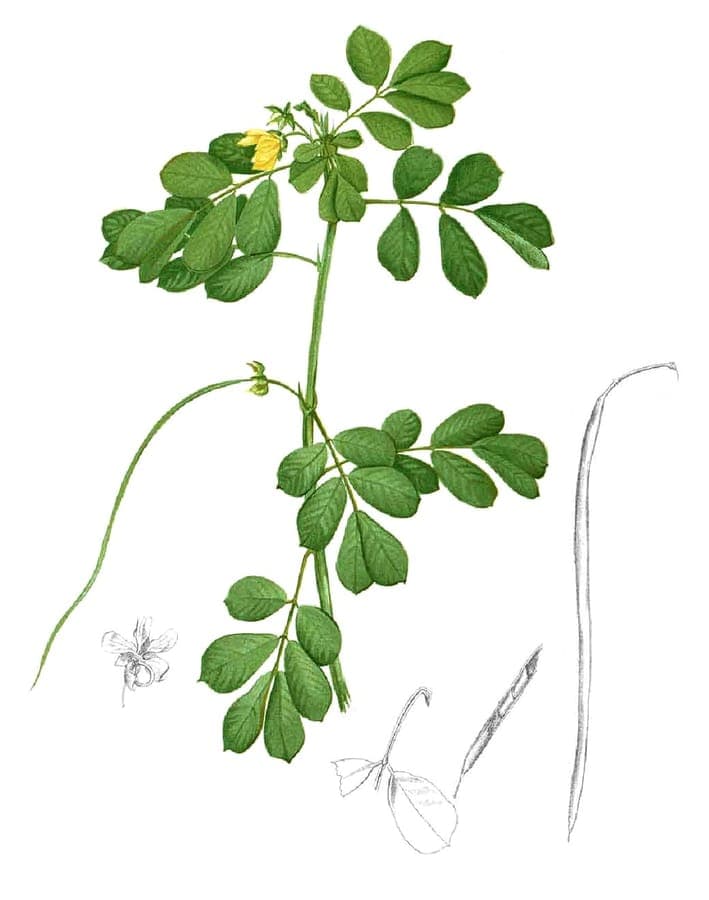
Francisco Manuel Blanco (O.S.A.) / Public domain, via Wikimedia Commons
Senna tora: Fast-Growing Tropical Plant with Golden Blooms
Senna tora
¿Quieres ver Senna tora: Fast-Growing Tropical Plant with Golden Blooms en tu jardín?
1 minuto, sin tarjeta de crédito
Overview
Senna tora, commonly known as Sicklepod, Foetid Cassia, or Java-bean, is a rapidly growing herbaceous plant from the Fabaceae family (legumes). This remarkable plant typically reaches 60 to 150 centimeters in height and originates from Central America, though it is now widely distributed across tropical and subtropical regions worldwide, including Africa, Asia, and Australia.
This wonderful plant is particularly popular because it offers not only visual appeal with its golden yellow flowers and graceful foliage but also exceptional speed of growth and relative ease of cultivation. In warm climates, Senna tora can reach substantial sizes within a single growing season. The plant is renowned for its resilience and adaptability to various growing conditions, making it an ideal choice for gardeners seeking a fast-growing, colorful element for their gardens.
GardenWorld.app recommends Senna tora for gardeners who want low-maintenance plants that deliver rapid results. It offers visual beauty without excessive management and fits perfectly into both modern and traditional garden designs.
Appearance and Bloom
Senna tora is a striking plant with fine, lance-shaped leaflets arranged in pairs along the stems, creating a light and elegant appearance. The foliage has a soft green color and appears semi-translucent in certain light conditions. The plant grows upright with stiffly erect stems.
The flowers of Senna tora are truly the stars of this plant. They are bright golden yellow in color, approximately 1 to 1.5 centimeters in diameter, and appear in simple terminal flower clusters (at the branch ends). The flowering period is quite extended, typically from July to October in temperate climates, though in tropical regions blooming can occur nearly year-round.
After flowering, attractive flat seed pods develop that begin green and turn brown-gray as they mature. These legume pods are typically 5 to 8 centimeters long and give the plant an interesting two-stage visual appeal, first with flowers and later with decorative seeds. These seed pods are nearly as ornamental as the flowers and provide additional visual interest during autumn.
Ideal Location
Senna tora thrives best in full sun locations where it receives at least six to eight hours of direct sunlight daily. While the plant can tolerate some shade, excessive shade will result in reduced flowering and thinner growth patterns. Position it accordingly in a south or west-facing aspect for optimal results.
Watch out for wind exposure, as young, tender growth can break or become damaged by strong winds. If you live in a windy area, place the plant where it is somewhat protected, perhaps against a wall or surrounded by other shrubs.
For container cultivation, positioning near a south-facing window is ideal. The plant also grows well on balconies and patios, provided it receives adequate sunshine. In climates with very hot summers, some afternoon shade may be beneficial to prevent leaf scorch.
Soil
Senna tora is not particularly fussy about soil type, but performs best in well-draining, nutrient-rich soil. A mixture of garden soil with some sand and organic material (compost or leaf mold) yields optimal results.
The plant can tolerate soil pH levels between 5.5 and 8.0, so both slightly acidic and neutral to slightly alkaline soils are acceptable. For container cultivation, general-purpose potting soil with some perlite or sand for improved drainage works very well.
When planting in the garden, it is helpful to add compost or well-rotted animal manure to the planting hole to improve nutrition. This is particularly important because Senna tora is fast-growing and consumes considerable nutrients.
Watering Needs
Senna tora requires regular but not excessive watering. During the growing season (spring and summer), the soil should maintain consistent moisture but not become waterlogged. A good rule of thumb is to water when the soil feels dry about 2 centimeters below the surface.
In the initial weeks following planting, frequent watering is essential to establish a strong root system. Once established, the plant can tolerate some drought, though extended stress will impact growth and flowering.
During fall and winter, watering should be significantly reduced, especially if the plant grows outdoors or if temperatures decline. For potted plants, water until it runs from the drainage holes, then wait until the top centimeter of soil feels dry before watering again.
Avoid waterlogging, especially in container cultivation, as this can cause root rot. Always ensure good drainage in pots and garden beds.
Diseño gratis
¿Quieres ver Senna tora: Fast-Growing Tropical Plant with Golden Blooms en tu jardín? Crea un diseño gratis ahora.
Pruning and Maintenance
Senna tora responds excellently to regular pruning and actually simplifies the growth pattern. Regularly pinching young branch tips encourages branching and promotes a fuller, more compact plant rather than a tall, leggy form.
Pruning is best done in spring when the plant begins to grow. Remove any weak, diseased, or damaged stems entirely back to the base. Cutting back to approximately one-third of the height encourages complete regrowth.
During the growing season, spent flowers can be removed (deadheading) to encourage further blooming, though this is not strictly necessary as the plant continues to bloom abundantly.
If the plant becomes too large, it can be pruned more aggressively. Senna tora can even be cut back to approximately 15 centimeters above ground, and it will typically regrow robustly.
Fertilization is important for this fast-growing plant. Apply fertilizer every two weeks during the growing season with a balanced general plant food or something slightly higher in phosphorus for enhanced flowering.
Maintenance Calendar
January-February: In warmer regions, you can do light pruning. In cold areas, protect the plant from frost.
March-April: This is planting time! Ensure adequate watering when planting Senna tora in the ground. Begin fertilizing once new growth is visible.
May-June: Water regularly, apply fertilizer weekly. Move containerized plants outdoors to their permanent summer location.
July-August: Pinch branch tips for bushiness. Fertilize twice weekly. Continue feeding as blooming requires significant nutrients.
September-October: Flowering reaches peak. Fertilization can be gradually reduced.
November-December: Reduce watering. Stop fertilizing. Protect from frost.
Frost Hardiness
Senna tora is a frost-tender plant. It cannot survive freezing below approximately 10 degrees Celsius, and will die if exposed to frost. This makes it particularly suitable for USDA hardiness zones 9b through 11.
In cold climates, the plant should either be grown as an annual and removed from the garden before winter, or overwintered indoors (in a greenhouse or warm conservatory).
If you wish to overwinter the plant, bring it to indoor conditions before the first frosts with bright light and moderate water. Many maintenance requirements can be reduced.
If you live in a warm climate where the plant can be permanently established outdoors, ensure it is protected against unexpected cold snaps by covering it with fabric or applying mulch around the base.
Companion Planting
Senna tora combines beautifully with other tropical or subtropical plants. The yellow flowers work well with:
- Red or purple flowers: Ribes lobbii (red), Hibiscus laevis (red), Salvia greggii (red), or Opuntia stricta with red blooms
- Silver foliage: Senecio elegans has silvery leaves that contrast beautifully with Senna tora's bright green foliage
- Dark green structural plants: Use as background or framing
- White flowers: For fresh contrast against yellow blooms
Combine in groups of 3 or 5 for impact. Position Senna tora where the tallest plant does not shade other medium-height plants.
Conclusion
Senna tora is a fantastic choice for gardeners seeking rapid growth, beautiful yellow flowers, and relatively straightforward maintenance. Whether you live in a warm climate where you can grow it year-round outdoors, or replant it annually, you will appreciate how quickly it grows and how abundantly it flowers.
With regular pruning, fertilization, and watering, you will have a full, flourishing plant that blooms continuously and produces decorative seed pods. GardenWorld.app advises owners of particularly warm gardens or those with greenhouses to definitely give Senna tora a chance in their plant collections.
Online and in-store retailers such as Intratuin and Gamma offer seeds and starter plants for years of gardening enjoyment.
¿Quieres ver Senna tora: Fast-Growing Tropical Plant with Golden Blooms en tu jardín? Crea un diseño gratis ahora.
Sube una foto, elige un estilo y obtén un diseño fotorrealista con lista de plantas en menos de un minuto.
Más de 10.000 jardines diseñados
Sin tarjeta de crédito


Plantas similares
Senna siamea: complete guide
Senna siamea
Senna siamea is a graceful tree with yellow flowers and fine foliage. Learn how to cultivate this tropical beauty in your front yard.
Ribes lobbii: complete guide
Ribes lobbii
Discover sticky gooseberry, a unique and aromatic shrub from Pacific North-West. Sticky leaves, thorny stems, and spring flowers for specialist gardens.
Salvia greggii: complete guide
Salvia greggii
Discover the benefits of Salvia greggii, a vibrant autumn sage with attractive flowers and minimal maintenance needs. Perfect bird plant for Mediterranean gardens.