
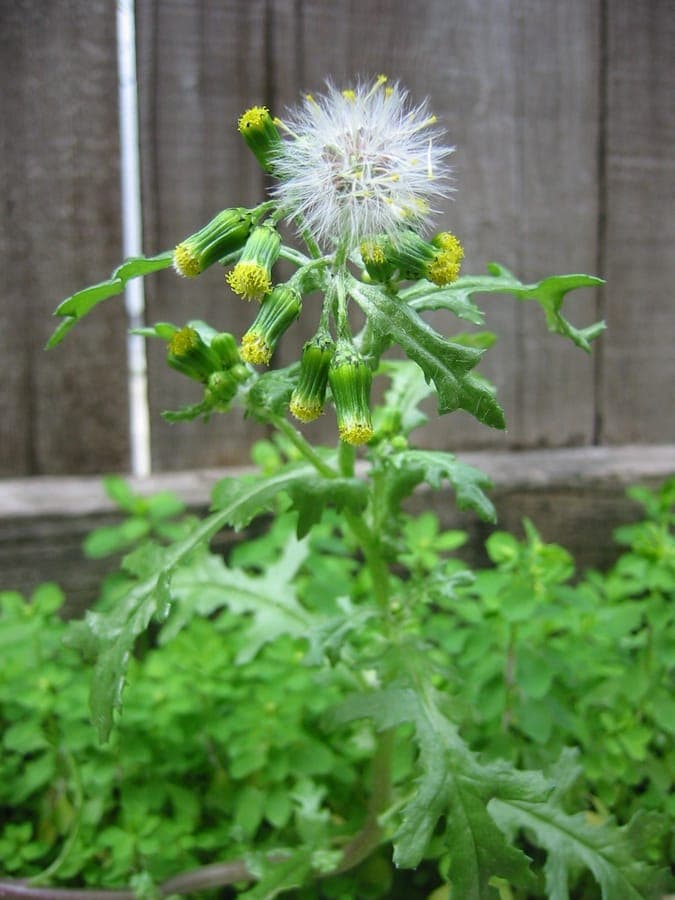
carol / CC BY-SA 3.0, via Wikimedia Commons
Common fireweed: complete guide
Senecio vulgaris
¿Quieres ver Common fireweed: complete guide en tu jardín?
1 minuto, sin tarjeta de crédito
Overview
Common fireweed (Senecio vulgaris), also known as groundsel, is an annual plant belonging to the Asteraceae family. Despite its innocent appearance and compact growth, this herb is globally distributed and found on nearly every continent. The plant grows quickly and flowers readily, making it a versatile, if often unwanted, inhabitant of gardens.
In the wild and in gardens, common fireweed prefers disturbed soils, nutrient-rich locations, and roadsides. It sometimes self-seeds voluntarily and can be considered a weed, although it can also be appreciated as a pioneer plant in new gardens or as food for specific insects.
Incorporating common fireweed into your garden design requires thoughtful integration. At gardenworld.app, you can discover designs where such plants are included in useful and advantageous ways. The plant is known for its potential as food for certain butterflies and other pollinators.
Appearance and bloom time
Common fireweed typically reaches 20 to 50 centimeters in height, with a slender, upright growth habit. The leaves are light green, hairy, and often shallowly lobed with serrated margins. The plant produces bright yellow flowers in small flower heads that appear in thick clusters at the top of the plant.
The flowering period runs from May to October, keeping the plant visible in your garden for an extended period. After blooming, light, feathery seed heads form and are easily dispersed by wind. This is one of the reasons common fireweed reproduces so efficiently.
The overall shape is somewhat textured and dense, making it suitable for less formal garden designs. When fully grown, the plant has a full, bushy appearance with dense foliage.
Ideal location
Common fireweed grows well in full sun to partial shade. Ensure the plant receives at least 3 to 4 hours of direct sunlight daily. The plant is flexible and can also thrive in areas with less sun, although flowering and growth are less prominent.
The plant shows no preference for special locations and grows well almost anywhere. It functions well along borders, in pots on balconies, or in wild corners of your garden. It handles windy conditions without problems.
Common fireweed is suitable for experimental gardens and can be used as a food plant for certain insect populations. It also works well in natural gardens where self-seeding plants are desired.
Soil requirements
Common fireweed grows in almost any soil type and is not fussy. However, it thrives best in well-draining, nutrient-rich soil. Heavy clay can be improved with sand and organic matter. The plant also tolerates poor soil and can thrive in very minimal nutrient environments.
The pH can range from acidic to neutral, although slightly acidic (pH 6.5-7) is optimal. Adding compost when planting can improve structure but is not essential.
In containers, standard potting soil can be used. The plant grows quickly in potting soil and can benefit from regular watering and feeding.
Diseño gratis
¿Quieres ver Common fireweed: complete guide en tu jardín? Crea un diseño gratis ahora.
Watering
Common fireweed tolerates drought reasonably well but grows faster with regular watering. Water when the top centimeter of soil feels dry. Excessive watering need not be feared, as the plant is quite robust.
During growth periods (spring and summer), regular watering is beneficial for faster growth and more flowers. During dry spells, extra water may be needed. In fall and winter, watering can be reduced.
Water preferably at the base of the plant, but common fireweed is not sensitive to wet foliage.
Pruning
Pruning is not strictly necessary but can keep the plant more compact and fuller. Remove spent flowers (deadheading) to extend the flowering period and discourage self-seeding.
If the plant becomes too large, it can be carefully pruned back. This encourages more side branches and fuller growth. Avoid very drastic pruning.
In late season, the plant can be entirely removed and composted, especially if managed as an annual.
Maintenance calendar
Spring: Sow seed directly outdoors or set out grown seedlings. Growth will be rapid. Summer: Water regularly, remove spent flowers, monitor the plant. Fall: Allow some flowers to set seed or remove completely. Winter: Plant is annual; clean up and remove after hard frost.
Winter hardiness
Common fireweed is an annual plant in most climates. In very mild winter regions (USDA 9+), it may have overwintering potential, but this is unusual. It typically self-seeds from the previous season in the following year.
In cold regions, the plant will die at the first hard frost. This is normal and expected. You can save seed from healthy plants to resow in the next season.
Companion plants
Common fireweed combines well with other fast-growing, food-bearing plants in experimental gardens. It works with other yellow-flowering plants for visual cohesion. In wild corners, it fits well with other self-seeding plantwork.
Avoid pairing with very nutrient-demanding plants, as common fireweed also consumes significant nutrients. It functions better as a solitary planting or mixed with other Asteraceae.
Conclusion
Common fireweed is a versatile plant that offers many possibilities for experimental gardening. Although often considered a weed, it can be thoughtfully integrated into your garden. It provides food for insects and has an attractive, cheerful flower.
At gardenworld.app, you'll find inspiration for gardens where such plants are usefully incorporated. Our designers are happy to help you create functional gardens. gardenworld.app also offers a detailed plant catalog and advice for such experimental solutions. Find plants at local garden centers.
¿Quieres ver Common fireweed: complete guide en tu jardín? Crea un diseño gratis ahora.
Sube una foto, elige un estilo y obtén un diseño fotorrealista con lista de plantas en menos de un minuto.
Más de 10.000 jardines diseñados
Sin tarjeta de crédito


Plantas similares
Calendula stellata: complete guide
Calendula stellata
Complete guide to Calendula stellata, the star-flowered marigold from Sicily: location, soil, watering and companion planting tips.
Korean chrysanthemum: complete guide
Chrysanthemum x rubellum
Chrysanthemum x rubellum is a hardy autumn perennial with single pink to copper flowers from August to November. Care and combinations.
Helianthus divaricatus: complete guide
Helianthus divaricatus
Helianthus divaricatus is a North American woodland sunflower with yellow summer blooms, ideal for naturalistic borders and shady edges.