
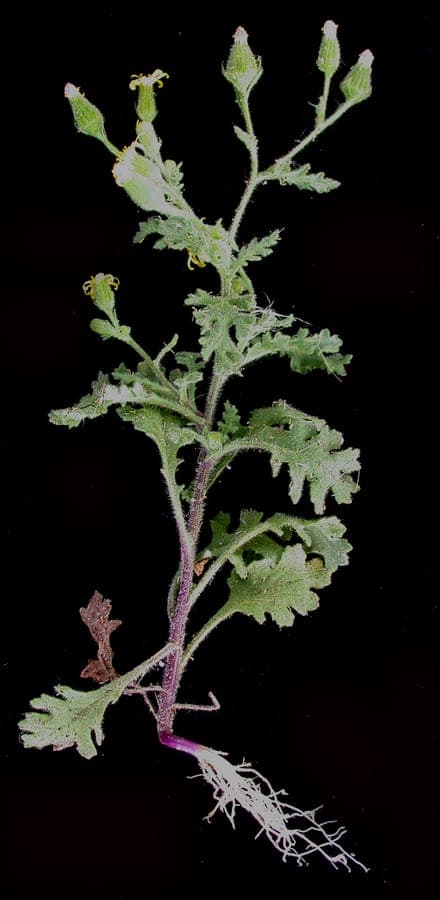
Ayotte, Gilles, 1948- / CC BY-SA 4.0, via Wikimedia Commons
Sticky groundsel: complete guide
Senecio viscosus
¿Quieres ver Sticky groundsel: complete guide en tu jardín?
1 minuto, sin tarjeta de crédito
Overview
Sticky groundsel (Senecio viscosus) is a fascinating perennial herb belonging to the Asteraceae family, commonly known as the aster or daisy family. This plant earns its name from the distinctive sticky coating on its leaves and stems, which feels like a subtle adhesive when touched. Originally native to Europe, from the Mediterranean region to the Caucasus, sticky groundsel has since spread to many other parts of the world, adapting well to diverse climates.
The plant is recognized in botanical circles for its interesting morphology and ability to thrive in various habitats. In gardens, it is valued for its delicate, bright yellow flowers that bloom from July through autumn. With a typical height of 30 to 60 centimeters, it is not a dominant plant but rather a charming filler in borders or wild corners of your garden.
If you're interested in growing unusual plants with character, sticky groundsel is absolutely worth considering. At gardenworld.app, you'll find garden designs where plants like this fit perfectly into contemporary landscapes. The plant also provides food for bees and other pollinators, adding an extra dimension to your garden's ecosystem.
Appearance and bloom time
The leaves of sticky groundsel are its most striking feature. They are deeply lobed, grayish-green in color, and covered with short glandular hairs that produce a sticky secretion. This viscosity is not merely a curious characteristic but also a natural insect deterrent.
The flowers appear in small, yellow flower heads, typical of the Senecio genus. They grow in loose panicles at the top of the plant. The flowering period extends from July to October, depending on climate and growing conditions. After blooming, characteristic feathery seed heads form, which are dispersed by wind.
The plant typically reaches 30 to 60 centimeters in height, sometimes more under ideal conditions. Growth is relatively quick, especially in the first season. The appearance of sticky groundsel is somewhat textured and wild, making it perfect for natural, unpolished garden designs.
Ideal location
Sticky groundsel thrives best in full sun to partial shade. Provide the plant with at least 4 to 5 hours of direct sunlight daily for optimal flowering. In very hot climates, some afternoon shade can be beneficial to limit water loss.
The plant is flexible regarding location and tolerates windy conditions well, making it ideal for exposed borders or gardens along windy pathways. It works excellently in natural gardens, wildly planted borders, or even in containers on terraces and balconies.
Ensure adequate air circulation around the plant. This helps prevent fungal problems and promotes healthy growth. In hot, dry regions, some shade during the hottest part of the day can help maintain vigor.
Soil requirements
Sticky groundsel is not particular about soil type but performs best in well-draining soil. Heavy clay soils should be improved with sand and organic matter to prevent waterlogging. The plant tolerates poor soil better than many other garden plants, giving it an advantage for experimental gardening.
The optimal pH range is 6.5 to 7, meaning neutral to slightly acidic soil. Add compost or well-aged manure when planting to improve structure and supplement nutrients.
This plant grows well in containers using potting mix enhanced with extra perlite or sand for drainage. Ensure adequate drainage holes in the pot to prevent root rot.
Diseño gratis
¿Quieres ver Sticky groundsel: complete guide en tu jardín? Crea un diseño gratis ahora.
Watering
Once established, sticky groundsel is relatively drought-tolerant. Water when the top 2-3 centimeters of soil feel dry. Excessive water is the greatest enemy; the risk of root rot is real.
During growing seasons (spring and summer), more frequent watering may be necessary, especially during dry periods or when growing in containers. During fall and winter, watering can be drastically reduced or stopped.
Water at the base of the plant rather than overhead to prevent fungal development. Morning watering is better than evening watering, as it keeps the foliage dry throughout the day.
Pruning
Pruning is not strictly necessary but can encourage bushiness and increased flowering. Remove spent flowers (deadhead) to stimulate continued blooming throughout the season.
In early spring, a general cleanup pruning can be useful to remove dead branches. Heavy pruning is not recommended, as it can result in sparse growth.
If the plant becomes too large, you can gently cut it back after flowering, but do not expect vigorous regrowth.
Maintenance calendar
Spring: Plant from seed or cuttings. Site in full sun or partial shade. Begin regular watering. Summer: Watch for drought. Deadhead spent flowers. Monitor for fungal issues during wet periods. Fall: Reduce watering. Remove dying foliage. Winter: Minimal to no watering. Provide protection in very cold regions or keep indoors.
Winter hardiness
Sticky groundsel is not extremely winter hardy. In milder zones (USDA 8 and warmer), it can overwinter outdoors if well-protected from severe frost. In cold climates (USDA 7 and colder), it is usually treated as an annual or kept as a houseplant.
In areas with harsh winters, mulching around the plant in fall can help with protection. Alternatively, take cuttings before frost arrives, ensuring you always have plants for the next season.
Companion plants
Sticky groundsel combines well with other Mediterranean and drought-tolerant flowering plants such as lavender, salvias, and coneflowers. It also looks attractive alongside ornamental grasses and other loosely-structured plants.
In borders, it works nicely next to other Senecio species and complementary yellow-flowering plants for cohesion. Its fine structure provides lovely contrast with more robust plants featuring larger leaves.
Conclusion
Sticky groundsel is a unique plant that adds character and naturalness to your garden. With its sticky leaves, yellow flowers, and drought tolerance, it offers many advantages for the modern gardener. It is easy to grow, requires minimal maintenance, and contributes value to your garden's ecosystem.
Looking for more inspiration on plants that work well together? Visit gardenworld.app for professional garden designs featuring thousands of plant combinations. Our experts are happy to help you create a unique, functional garden that remains beautiful for years. gardenworld.app also offers a detailed plant catalog and advice on plant pairings. Purchase your plants from quality garden centers for the best selection.
¿Quieres ver Sticky groundsel: complete guide en tu jardín? Crea un diseño gratis ahora.
Sube una foto, elige un estilo y obtén un diseño fotorrealista con lista de plantas en menos de un minuto.
Más de 10.000 jardines diseñados
Sin tarjeta de crédito


Plantas similares
Calendula stellata: complete guide
Calendula stellata
Complete guide to Calendula stellata, the star-flowered marigold from Sicily: location, soil, watering and companion planting tips.
Korean chrysanthemum: complete guide
Chrysanthemum x rubellum
Chrysanthemum x rubellum is a hardy autumn perennial with single pink to copper flowers from August to November. Care and combinations.
Helianthus divaricatus: complete guide
Helianthus divaricatus
Helianthus divaricatus is a North American woodland sunflower with yellow summer blooms, ideal for naturalistic borders and shady edges.