
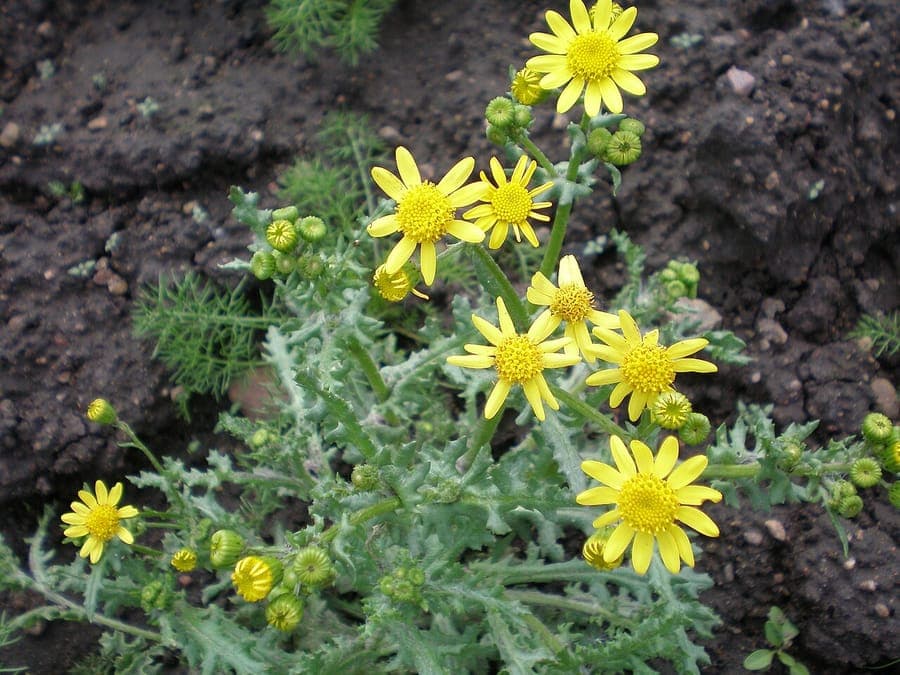
Hugo.arg / CC BY-SA 3.0, via Wikimedia Commons
Senecio vernalis: complete guide
Senecio vernalis
¿Quieres ver Senecio vernalis: complete guide en tu jardín?
1 minuto, sin tarjeta de crédito
Overview
Senecio vernalis, commonly known as spring groundsel or eastern groundsel, is a versatile plant in the Asteraceae family native to Europe and Central Asia. This early-spring bloomer is celebrated for its bright yellow flower umbels that emerge before most other plants wake up. With straightforward care requirements and attractive appearance, it makes an excellent choice for any front garden.
Appearance and Bloom
Senecio vernalis grows as an upright plant reaching 30 to 60 centimeters in height. The stems are greenish to slightly reddish and may be hairy. Leaves are lance-shaped to elongated with a grayish tint. The plant produces characteristic yellow flower clusters typical of the Senecio genus, appearing from March through May, providing true spring delight.
Ideal Location
Select a spot with full sun to partial shade for optimal growth. Senecio vernalis thrives best in open, well-drained locations. Avoid densely vegetated areas where air circulation is restricted, as this can promote fungal diseases. In warmer regions, afternoon shade is welcome.
Soil
This species is not fussy about soil composition. Well-draining, moderately fertile soil is ideal. Senecio vernalis prefers slightly alkaline to neutral soil (pH 7 to 7.5). Heavy clay soils should be amended with sand or peat moss to prevent waterlogging.
Watering
During the growing season, water regularly but avoid waterlogging. After flowering, reduce watering. Check frequently that soil doesn't dry out completely, especially for young plants. Less water is needed in autumn and winter.
Diseño gratis
¿Quieres ver Senecio vernalis: complete guide en tu jardín? Crea un diseño gratis ahora.
Pruning
Remove spent flower clusters soon after blooming to encourage more flowers and keep the plant tidy. In autumn, stems can be cut back to about 15 centimeters above ground level. This helps maintain a compact, bushy form.
Maintenance Calendar
March-May: Flowering period with regular checks for water and disease. June-August: Reduce watering, remove weak shoots. September-November: Prepare the plant for winter with light feeding. December-February: Winter rest with minimal watering.
Winter Hardiness
Senecio vernalis is fairly winter hardy, tolerating temperatures down to -5 degrees Celsius. In colder regions, mulch protection is recommended. Well-drained soil is essential for overwintering in wet climates.
Companion Plants
Combine Senecio vernalis with other spring bloomers like Helleborus, Primula, and Scilla for a full spring display. The yellow flowers harmonize perfectly with purple and blue tones. It also works well as an underplanting for taller woody shrubs.
Closing Thoughts
Senecio vernalis is an excellent choice for those seeking a reliable, fast-growing plant with vibrant spring flowers. It requires minimal maintenance, grows quickly, and offers early flowering beauty. With the right location and basic care, this fascinating plant will provide years of enjoyment. Visit gardenworld.app for design inspiration or check local garden centers for seedlings and expert advice.
¿Quieres ver Senecio vernalis: complete guide en tu jardín? Crea un diseño gratis ahora.
Sube una foto, elige un estilo y obtén un diseño fotorrealista con lista de plantas en menos de un minuto.
Más de 10.000 jardines diseñados
Sin tarjeta de crédito


Plantas similares
Calendula stellata: complete guide
Calendula stellata
Complete guide to Calendula stellata, the star-flowered marigold from Sicily: location, soil, watering and companion planting tips.
Korean chrysanthemum: complete guide
Chrysanthemum x rubellum
Chrysanthemum x rubellum is a hardy autumn perennial with single pink to copper flowers from August to November. Care and combinations.
Helianthus divaricatus: complete guide
Helianthus divaricatus
Helianthus divaricatus is a North American woodland sunflower with yellow summer blooms, ideal for naturalistic borders and shady edges.