
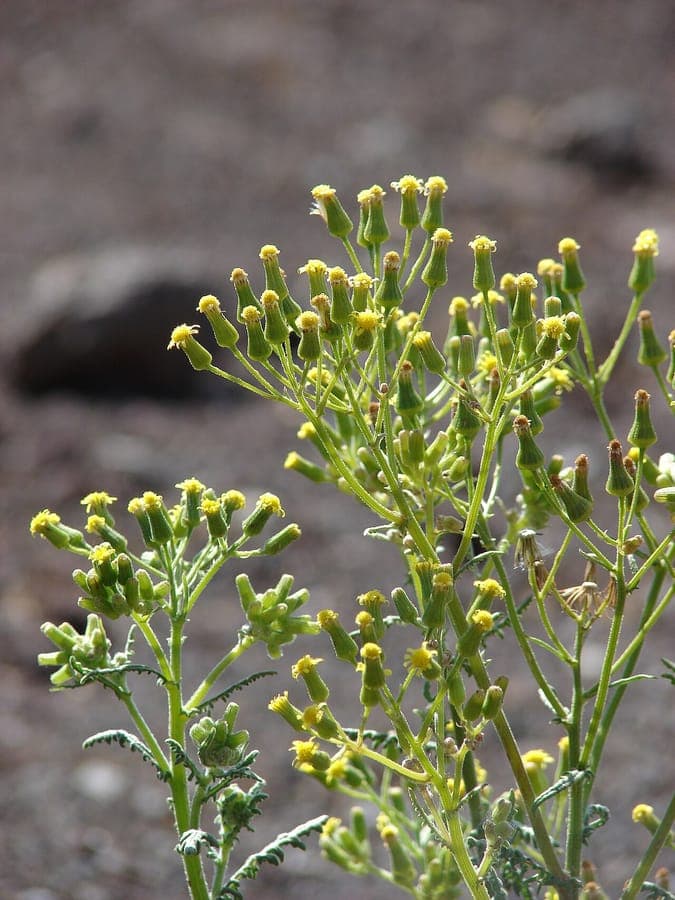
Forest & Kim Starr / CC BY 3.0, via Wikimedia Commons
Senecio sylvaticus: complete guide
Senecio sylvaticus
¿Quieres ver Senecio sylvaticus: complete guide en tu jardín?
1 minuto, sin tarjeta de crédito
Overview
Senecio sylvaticus, better known as heath groundsel or woodland ragwort, is a fascinating native European perennial that naturally occurs in woodlands, heathlands, and other partially shaded habitats. This Asteraceae family member characterizes itself through finely divided leaves and preference for more moist conditions than many other Senecio species. The plant proves perfect for woodland gardens and shaded areas.
The plant grows as a slender perennial reaching forty to eighty centimeters height. The leaves are finely divided, almost fern-like in appearance, granting the plant a delicate, woodland-like aesthetic. From May through October, yellow flowers form in small, delicate clusters. The plant proves highly attractive to insects.
Appearance and Bloom
Heath groundsel distinguishes itself through characteristically finely divided, almost fern-like leaves that impart an elegant, delicate appearance. The leaves display green coloration, sometimes with reddish tones, and grow along thin, slender stems. The plant possesses a natural woodland appearance.
Flowers appear from May through October in yellow, small daisy-like clusters. Each floret features ten to twelve ray florets arranged radiately around a yellow disc. The flower production proves abundant and highly attractive to honeybees, hoverflies, and other pollinators. Following blooming, fluffy seeds form, enabling natural seed dispersal.
Ideal Location
Senecio sylvaticus thrives optimally in partial shade to deep shade beneath trees, along woodland edges, and in other shaded garden areas. The plant tolerates at least three to four hours of indirect sunlight but flowers abundantly even in deeper shade. The plant naturally grows in woodlands and heathlands.
Actual sunshine proves welcome, though intense midday sun can cause leaf scorch. The plant appreciates wind shelter.
Soil Requirements
Heath groundsel makes reasonable soil demands. A well-draining, nutrient-rich soil proves preferred. Humus-rich woodland soil proves ideal. The plant also grows reasonably well in more acidic soils, with pH between four point five and seven.
The plant appreciates moisture but not waterlogging. Organic compost or leaf mold may be incorporated each spring. The plant also tolerates dryness better than expected, though it flowers better in properly moistened conditions.
Diseño gratis
¿Quieres ver Senecio sylvaticus: complete guide en tu jardín? Crea un diseño gratis ahora.
Watering and Moisture Needs
Senecio sylvaticus enjoys regular water, particularly during growth and flowering periods. The soil should never completely dry out, though the plant tolerates more dryness than many other woodland understory plants. During warm summers, watering becomes more frequent if rainfall is limited.
In shade, water evaporates more slowly. The plant appreciates consistent moisture without soggy conditions. Winter watering may be limited, but avoid leaving the soil completely dry.
Pruning Methods
Heath groundsel may be lightly cut back after flowering to maintain compact form. Prune in late spring, around March to April. Remove dead stems completely and reduce approximately one-third of previous season's growth to healthy buds.
Faded flowers may be removed throughout the season to encourage continued flowering.
Maintenance Calendar
February-April: Complete pruning, remove dead material. Add compost. Cuttings may be taken from healthy shoots.
May-June: Water regularly, especially during dry weather. Plant may require support if becoming very large.
July-October: Flowering reaches peak. Water regularly. Remove spent flowers for extended bloom.
November-January: Minimal maintenance. Check moisture levels. Avoid winter pruning until flowering is complete.
Winter Hardiness
Senecio sylvaticus is a native European plant and exceptionally winter hardy. In nearly all European climates, it survives without problems. The plant tolerates temperatures to minus twenty degrees without damage. In extreme freezing conditions, some top growth may die back, but the base typically survives.
The plant may be protected with leaf mulch in very cold regions, though this rarely becomes necessary.
Companion Plants
Heath groundsel combines beautifully in shaded woodland plant combinations:
- Hellebores (Helleborus)
- Ferns (Polystichum, Dryopteris)
- Solomon's seal (Polygonatum)
- Violets (Viola)
- Lily of the valley (Convallaria)
Conclusion
Senecio sylvaticus represents a valuable specimen for woodland gardens and shaded corners. Native status makes it perfect for natural garden design. The extended flowering from May through October and preference for shaded conditions make it suitable for many garden situations. Perfect for woodland-style gardens or shaded corners. Discover woodland garden inspiration at gardenworld.app/en.
Visit gardenworld.app/en to plan shaded woodland areas perfectly using our garden design tool.
¿Quieres ver Senecio sylvaticus: complete guide en tu jardín? Crea un diseño gratis ahora.
Sube una foto, elige un estilo y obtén un diseño fotorrealista con lista de plantas en menos de un minuto.
Sin tarjeta de crédito


Plantas similares
Calendula stellata: complete guide
Calendula stellata
Complete guide to Calendula stellata, the star-flowered marigold from Sicily: location, soil, watering and companion planting tips.
Korean chrysanthemum: complete guide
Chrysanthemum x rubellum
Chrysanthemum x rubellum is a hardy autumn perennial with single pink to copper flowers from August to November. Care and combinations.
Helianthus divaricatus: complete guide
Helianthus divaricatus
Helianthus divaricatus is a North American woodland sunflower with yellow summer blooms, ideal for naturalistic borders and shady edges.