
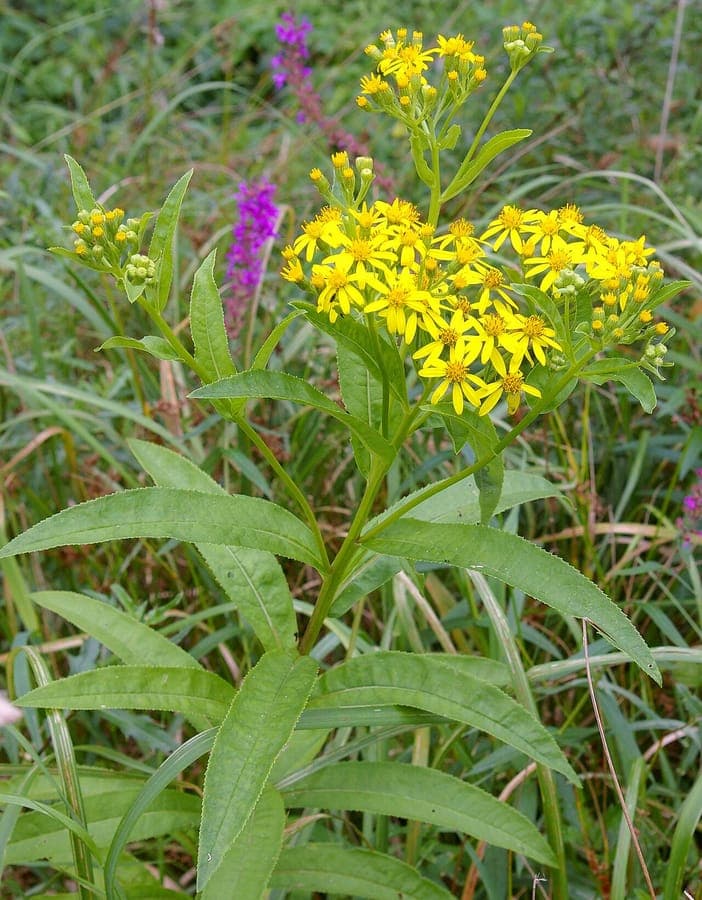
Christian Fischer / CC BY-SA 3.0, via Wikimedia Commons
Senecio sarracenicus: complete guide
Senecio sarracenicus
¿Quieres ver Senecio sarracenicus: complete guide en tu jardín?
1 minuto, sin tarjeta de crédito
Overview
Senecio sarracenicus, better known as Saracen's woundwort or broad-leaved ragwort, is a fascinating European perennial specially adapted to water-rich environments. This Asteraceae family member characterizes itself by broad, lanceolate leaves and strong preference for moist to wet soils. The plant proves ideal for garden water features, wetlands, and all locations where water remains regularly present.
The plant grows as an upright perennial reaching seventy-five to one hundred twenty centimeters height, sometimes taller in highly favorable conditions. The broad, lance-shaped leaves grant the plant a distinctive appearance differing markedly from finer-leaved species. From July through October, yellow flowers form in luxuriant plumes.
Appearance and Bloom
The broad-leaved ragwort distinguishes itself through relatively broad, lanceolate leaves displaying pale to mid-green coloration. The leaves lack hair and grant the plant a smooth, neat appearance. Growth pattern remains strongly upright, with thick, robust stems forming at the plant base.
Flower plumes appear from July through October in yellow, umbel-like clusters. Each flower features ten to twelve ray florets arranged around a yellow disc. The flower clusters grow on long stems, forming a magnificent column of yellow at bloom time. The plant attracts butterflies, bees, and other pollinators abundantly.
Ideal Location
Senecio sarracenicus thrives optimally in full sun to partial shade along water margins, in wetlands, and in lowland moist areas. The plant grows even with feet in water or in ground that floods regularly. Ideal locations include pond edges, small waterways, ditch margins, and permanent moist depressions.
The plant tolerates shade better than many other Senecio species, though full sun promotes flowering. Wind presents no limitation.
Soil Requirements
Broad-leaved ragwort requires continuously moist to wet soil. Ideal soil consists of silty, humus-rich clay with abundant organic matter. Pure clay functions well as long as organic matter amendments are made regularly. The plant even grows in permanent water bodies provided soil remains not completely anaerobic.
Organic matter such as garden compost or leaf mold must receive annual additions. The plant appreciates nutrient-rich soils and grows lush in fertile conditions.
Diseño gratis
¿Quieres ver Senecio sarracenicus: complete guide en tu jardín? Crea un diseño gratis ahora.
Watering and Moisture Needs
Senecio sarracenicus must be maintained constantly moist. In normal weather, soil should never completely dry out. Regular watering proves essential, daily during warm dry periods. The plant can even be completely submerged in shallow ponds or ditches.
During very wet seasons, water logging may occur, but this rarely proves problematic. Winter requires less water, though soil must remain moist.
Pruning Methods
Broad-leaved ragwort requires minimal pruning. Dead stems may be removed after flowering. Early spring allows pruning of damaged portions. The plant may simply be cut back to approximately thirty centimeters in March for more compact form.
Faded flowers may be removed throughout the season for extended bloom, though the plant may equally be left unpruned for self-seeding.
Maintenance Calendar
February-March: Spring maintenance. Prune previous season's growth. Add organic matter. Check moisture.
April-June: Growth accelerates during warm months. Water regularly, tolerate extreme wet periods.
July-October: Flowering peaks. Maintain continuous water availability. Remove spent flowers optionally.
November-January: Minimal activity. Remove dead foliage. Maintain moisture levels.
Winter Hardiness
Senecio sarracenicus proves extremely winter hardy and survives winters in nearly all European climates without protection. The plant tolerates temperatures to minus twenty degrees Celsius. In very extreme frosts, above-ground parts may die back, but the plant will re-sprout from roots.
The plant may be covered with snow in very cold regions for additional protection, though this rarely becomes necessary.
Companion Plants
Broad-leaved ragwort combines beautifully with other waterfall-loving and wetland plants:
- Rhubarb (Rheum)
- Peonies (Paeonia)
- Rodgersia
- Astilbe
- Meadowsweet (Filipendula)
Conclusion
Senecio sarracenicus represents an essential plant for garden water features and wetland areas. Its preference for wet soils makes it unique and valuable. The extended yellow flower display from July through October provides color when many water plants fade. Discover inspiration for water-rich gardens at gardenworld.app/en.
Visit gardenworld.app/en to plan water features optimally using our garden design tool.
¿Quieres ver Senecio sarracenicus: complete guide en tu jardín? Crea un diseño gratis ahora.
Sube una foto, elige un estilo y obtén un diseño fotorrealista con lista de plantas en menos de un minuto.
Más de 10.000 jardines diseñados
Sin tarjeta de crédito


Plantas similares
Calendula stellata: complete guide
Calendula stellata
Complete guide to Calendula stellata, the star-flowered marigold from Sicily: location, soil, watering and companion planting tips.
Korean chrysanthemum: complete guide
Chrysanthemum x rubellum
Chrysanthemum x rubellum is a hardy autumn perennial with single pink to copper flowers from August to November. Care and combinations.
Helianthus divaricatus: complete guide
Helianthus divaricatus
Helianthus divaricatus is a North American woodland sunflower with yellow summer blooms, ideal for naturalistic borders and shady edges.