
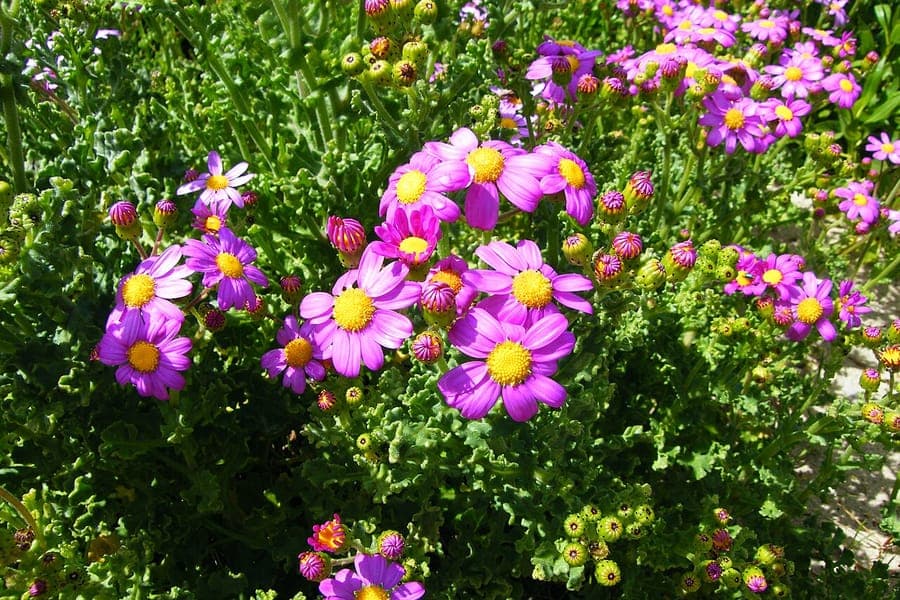
Andrew massyn / Public domain, via Wikimedia Commons
Senecio elegans: complete guide
Senecio elegans
¿Quieres ver Senecio elegans: complete guide en tu jardín?
1 minuto, sin tarjeta de crédito
Overview
Senecio elegans, also known as purple groundsel or Cape senecio, is a stunning herbaceous plant from South Africa. This refined plant belongs to the Asteraceae family and displays purple to red-purple flowers that manifest like delicate clouds in your front yard. Though originating from Cape regions, it has adapted to gardens in temperate and warm climates worldwide.
Senecio elegans is treasured for its elegant blooms and fine silvery-green foliage. The plant is valued as a border element, in containers, and even as a cut flower due to the flowers excellent vase life. Perfect for those seeking something beyond standard garden plants.
Appearance and bloom
Senecio elegans grows into a loose, graceful plant reaching 30-50 centimeters tall. The leaves are finely cut, silvery-green to greenish, giving the plant an airy appearance even outside the bloom period. The stems curve elegantly, almost gracefully in their growth habit.
The flowers are the main attraction: beautiful purple to red-purple daisies, approximately 1-2 centimeters wide, gathered in loose clusters. They bloom prolifically from summer through autumn, providing long-lasting color in your border. The scent is subtly fresh.
Ideal location
Senecio elegans grows best in a sunny location receiving at least 6 hours of direct sunlight daily. In warm climates, light afternoon shade can even prevent flower fading. The plant is unsuitable for deep shade - it becomes thin and sparse there.
Place it in borders with good visibility, along pathways where you can admire the flowers, or in containers on sunny terraces. The graceful growth habit makes it suitable as a container plant on windowsills or window boxes. In very hot regions, prefer morning sun.
Soil
Senecio elegans thrives in well-draining, light soil. Heavy clay soil is tolerated poorly and leads to root rot. Mix your soil with sand, gravel, or compost to optimize drainage. Average fertile soil is sufficient.
The plant prefers neutral to slightly acidic soils. In chalky soils, it may appear somewhat paler but usually still grows well. For containers, use a mixture of potting soil and sand 1:1, add some gravel at the bottom against waterlogging.
Diseño gratis
¿Quieres ver Senecio elegans: complete guide en tu jardín? Crea un diseño gratis ahora.
Watering
Senecio elegans has moderate water needs. Water regularly during growth and bloom periods, but allow soil to dry slightly between waterings. Too much water causes fungal problems and stem rot. Moisture measurement to 2cm depth helps: if you feel moisture there, wait a bit longer.
During bloom time (summer-autumn), water approximately twice weekly. In spring and early summer, water slightly less. If the plant suffers on rainy days, check drainage carefully. In winter, watering reaches minimum: only if soil feels very dry.
Pruning and maintenance
Senecio elegans responds well to regular deadheading. Remove spent flower clusters continuously - this stimulates further blooming and prevents seed development. If the plant becomes too tall, prune carefully into the main stem, but avoid radical cuts.
Remove yellowed or damaged leaves from the base. Once yearly, in early spring, prune gently for shape. Cut out dead stems. Ensure good air circulation to prevent fungal diseases.
Maintenance calendar
Spring: Light cleaning, remove withered parts, begin moderate fertilizing. Summer: Regular watering, fertilize twice weekly, deadhead. Autumn: Continue watering, reduce fertilization. Winter: Minimal watering, no fertilizing, check for diseases.
Winter hardiness
Senecio elegans is not frost hardy in most climates. In very mild areas (minimum 5 degrees Celsius), it can remain outdoors if well protected. Elsewhere, it is best brought inside for winter.
In containers, overwinter in bright, cool locations (10-15 degrees). Keep watering minimal. For long-term plantings, it is sometimes easier to raise new seedlings from seed in early spring each year.
Companion plants
Senecio elegans combines beautifully with white-leafed Dusty Miller types, yellow herbaceous flowering plants like Coreopsis, and silvery-gray Artemisia varieties. The purple flowers contrast beautifully with yellow neighbors. For white-flowering effect, combine with white Gaura or Lobularia.
In borders, create nice layers by placing larger purple flowering plants behind (Perovskia, Salvia) with Senecio elegans in front. For containers, mix with trailing silver-leafed plants.
Conclusion
Senecio elegans is an elegant choice for gardeners seeking refinement and color. With its purple blooms, silvery foliage, and graceful growth, this plant adds dimension and elegance to any front yard. Order your plant now from quality garden centers, and enjoy months of blooms. Read more plant guides on gardenworld.app!
¿Quieres ver Senecio elegans: complete guide en tu jardín? Crea un diseño gratis ahora.
Sube una foto, elige un estilo y obtén un diseño fotorrealista con lista de plantas en menos de un minuto.
Más de 10.000 jardines diseñados
Sin tarjeta de crédito


Plantas similares
Calendula stellata: complete guide
Calendula stellata
Complete guide to Calendula stellata, the star-flowered marigold from Sicily: location, soil, watering and companion planting tips.
Korean chrysanthemum: complete guide
Chrysanthemum x rubellum
Chrysanthemum x rubellum is a hardy autumn perennial with single pink to copper flowers from August to November. Care and combinations.
Helianthus divaricatus: complete guide
Helianthus divaricatus
Helianthus divaricatus is a North American woodland sunflower with yellow summer blooms, ideal for naturalistic borders and shady edges.