
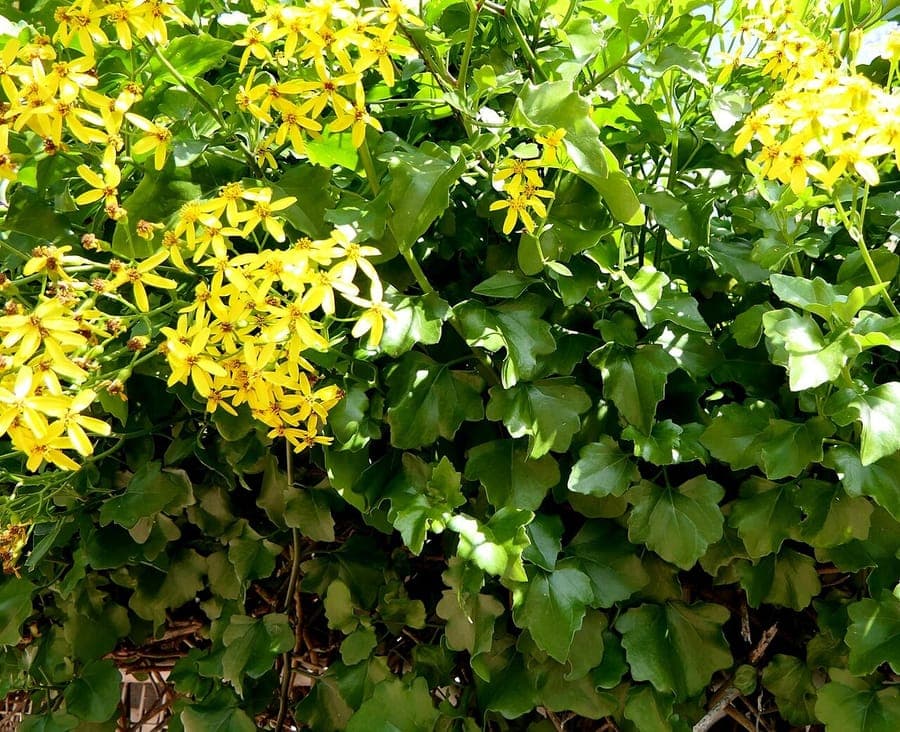
Qumarchi / CC BY-SA 4.0, via Wikimedia Commons
Senecio angulatus: complete guide
Senecio angulatus
¿Quieres ver Senecio angulatus: complete guide en tu jardín?
1 minuto, sin tarjeta de crédito
Overview
Senecio angulatus, commonly known as Cape-ivy or angular groundsel, is an elegant and fast-growing climbing plant native to South Africa. This plant is particularly renowned for its beautiful golden-yellow flowers and efficient growth, making it excellent for covering walls, pergolas, and garden structures.
Although this plant originates from warm regions, it also grows well in temperate climates when cultivated protectively. The plant is particularly popular in Southern Europe and increasingly appreciated by gardeners in more temperate zones.
Appearance and Bloom
Senecio angulatus grows as an elegant twining plant with slender, thin stems producing hundreds of flowers. The plant develops oblong, arrow-shaped leaves with reed-like texture, usually 3 to 7 centimeters long, in green to light blue-green tones.
The flowers are the most characteristic feature. They grow in loose, open clusters with a vibrant golden-yellow color. Each flower consists of a central disk surrounded by ray flowers, giving the classic daisy-like appearance. The blooming period extends from spring to early autumn, providing long-lasting ornamental value.
Ideal Location
Senecio angulatus thrives best in a very sunny location. The plant requires a minimum of six to eight hours of direct sunlight daily for optimal growth and full flowering. In warmer climates, some afternoon shade may prevent leaf scorch during extreme heat.
The plant grows excellently against south or west-facing walls, over pergolas, or as climbing coverage. Ensure the plant has support in the form of trellises, nets, or other climbing structures. The plant tolerates full wind exposure fairly well, thanks to its flexible stems.
Soil
Senecio angulatus grows well in well-draining, fertile soil. Sandy to loamy soil is ideal. Once established, the plant tolerates drier conditions, but grows much better in regularly moistened soil.
The pH can range from slightly acidic to neutral (6.5 to 7.5). Mix the soil with compost or aged plant material to improve nutrition and water retention. In containers, a mixture of potting soil with extra perlite or sand works well.
Diseño gratis
¿Quieres ver Senecio angulatus: complete guide en tu jardín? Crea un diseño gratis ahora.
Watering
During the growing season, provide regular but moderate watering. Allow the top centimeter of soil to dry before watering again. The plant tolerates dryness better than wet conditions, so it is better to be under-watered than over-watered.
In summer, more frequent watering may be needed, especially during hot periods. In winter, as growth slows, watering can be significantly reduced. Ensure water drains properly.
Pruning
Regular pruning is recommended to maintain a full, compact form. In early spring, apply strong cuts to remove old growth. During the growing season, you can regularly pinch back the tips of young stems to encourage branching.
After autumn bloom, you can remove excessive growth. The plant accepts pruning well and regrows quickly.
Maintenance Calendar
FEBRUARY-MARCH: Strong spring pruning. Remove old, dead, or weak growth.
APRIL-MAY: Begin regular watering. Active growth period. Pinch back overgrowing sections.
JUNE-JULY: Full watering. Flowering begins. Spent flowers can be removed.
AUGUST-SEPTEMBER: Full flowering period. Enjoy the yellow blooms.
OCTOBER-NOVEMBER: Reduce watering as growth slows. Pruning continues.
DECEMBER-JANUARY: Rest period. Minimal watering. Protect against severe frost.
Winter Hardiness
Senecio angulatus is quite frost-sensitive and can suffer serious damage at temperatures below 0 degrees Celsius. In temperate climates, the plant can overwinter outdoors only in very protected microclimates, such as against south or west-facing warm walls.
In more northern regions, it is advisable to grow the plant in containers and move these indoors, to a greenhouse, or to a protected shed during winter. The plant can be kept compact through pruning and will regrow rapidly in spring.
Companion Plants
Senecio angulatus pairs well with other warm-loving climbers and climbing groundcovers such as Clematis, small varieties of Hedera (ivy), and other xerophytic plants. A combination of golden Senecio angulatus with blue-flowering climbers creates nice color contrast.
When planted against walls, low-growing sedums or other succulents work excellently underneath.
Conclusion
Senecio angulatus is a useful climbing plant for warm locations in temperate climates. With full sun, well-draining soil, and regular summer watering, this plant will produce full clusters of yellow flowers for years. The plant is ideal for modern city gardens and for anyone wishing to fill space with ornamental value. Visit gardenworld.app for more garden design inspiration.
¿Quieres ver Senecio angulatus: complete guide en tu jardín? Crea un diseño gratis ahora.
Sube una foto, elige un estilo y obtén un diseño fotorrealista con lista de plantas en menos de un minuto.
Más de 10.000 jardines diseñados
Sin tarjeta de crédito


Plantas similares
Calendula stellata: complete guide
Calendula stellata
Complete guide to Calendula stellata, the star-flowered marigold from Sicily: location, soil, watering and companion planting tips.
Korean chrysanthemum: complete guide
Chrysanthemum x rubellum
Chrysanthemum x rubellum is a hardy autumn perennial with single pink to copper flowers from August to November. Care and combinations.
Helianthus divaricatus: complete guide
Helianthus divaricatus
Helianthus divaricatus is a North American woodland sunflower with yellow summer blooms, ideal for naturalistic borders and shady edges.