
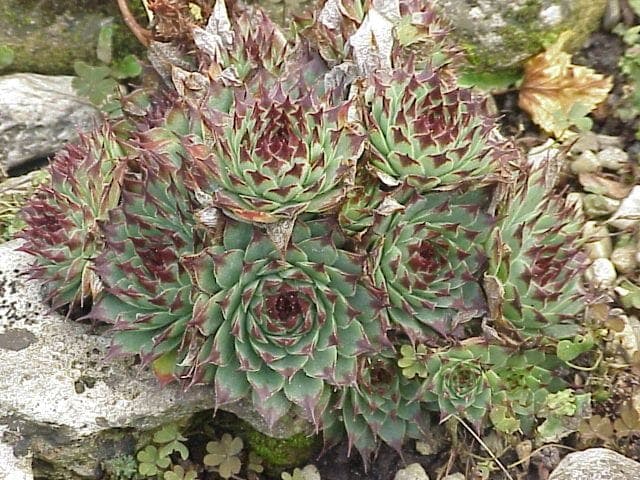
Kurt Stueber / CC BY-SA 2.5, via Wikimedia Commons
Limestone Houseleek: complete guide
Sempervivum calcareum
¿Quieres ver Limestone Houseleek: complete guide en tu jardín?
1 minuto, sin tarjeta de crédito
Overview
The Limestone Houseleek (Sempervivum calcareum), native to the Alpine regions of France and Italy, is an exceptionally beautiful succulent for dry, sunny gardens. This sempervivum is famous for its compact rosettes featuring characteristic red-tipped leaves. As a member of the Crassulaceae family, it is extremely drought-tolerant and easy to cultivate, making it ideal for busy gardeners.
Appearance and Bloom
The Limestone Houseleek forms tight, spherical rosettes approximately 4 to 6 centimeters in diameter. The leaves are thick and fleshy, typically green with deep purple to red-colored tips. During summer, upright flower clusters appear with purple-pink star-shaped flowers. Flowering lasts from June through August. After flowering, the mother rosette dies, but numerous baby plants ensure continuity.
Ideal Location
Select a location with full sun for the best coloring. At least six hours of direct sunlight is essential. The plant also tolerates half-shaded spots, though leaf coloring becomes less intense. Ensure good air circulation to prevent rotting. Ideal locations include roofs, raised beds, or rock gardens.
Soil
The Limestone Houseleek strongly prefers well-draining soil. Use specialized succulent mix or create your own with two parts sand and one part potting soil. pH can range from 6 to 8, though alkaline soil naturally aligns with the plant's name. Ensure adequate drainage: waterlogging is the greatest threat.
Watering
This is an extremely drought-loving plant! Watering once every two weeks during the growing season is usually sufficient. In winter, barely water at all. When in doubt, withhold water, as waterlogging causes more problems than drought. For potted plants, wait until soil is completely dry before watering.
Diseño gratis
¿Quieres ver Limestone Houseleek: complete guide en tu jardín? Crea un diseño gratis ahora.
Pruning
Minimal pruning required. Remove only dead rosettes after they die and wilted flower spikes. The plant maintains its form naturally. Clean misshapen leaves gently with a dry cloth.
Maintenance Calendar
Spring (March-May): Begin light watering. Check for frost damage. Seed propagation is now possible using seeds from the previous year.
Summer (June-August): Water once every two weeks. Monitor for slugs and beetles attracted to succulents. The plant now produces many offsets.
Autumn (September-October): Continue watering schedule. Prepare for winter cold with shelter.
Winter (November-February): Do not water. Protect against excessively wet winter conditions. The plant is dormant.
Winter Hardiness
Extremely hardy: down to -20 degrees Celsius. Much harder frost is also tolerated. Risk lies more in wet winter conditions. Ensure good drainage.
Companion Plants
The plant forms perfect combinations with:
- Geranium (Geranium) - complementary flowering
- Sunrose (Helianthemum) - same dry habitat
- Common Sage (Salvia officinalis) - Mediterranean counterpart
- Woolly Thyme (Thymus pseudolanuginosus) - excellent in dry conditions
Closing
The Limestone Houseleek is nearly ideal for dry gardens, roofs, and rock gardens. Via gardenworld.app you can find inspiration for how this plant shines in different garden contexts. This dual benefit of beauty and easy maintenance makes it a desired plant for beginners and experienced gardeners alike.
¿Quieres ver Limestone Houseleek: complete guide en tu jardín? Crea un diseño gratis ahora.
Sube una foto, elige un estilo y obtén un diseño fotorrealista con lista de plantas en menos de un minuto.
Sin tarjeta de crédito


Plantas similares
Sedum nevadense: complete guide
Sedum nevadense
Discover Sedum nevadense, the stunning alpine stonecrop from the Pyrenees. Expert care tips, growing requirements, and design ideas for rock gardens.
Aizoon stonecrop: complete guide
Phedimus aizoon
Everything about Phedimus aizoon - the frost-tolerant aizoon stonecrop from Siberia with bright yellow flowers. Planting, care and garden use.
Roseroot: complete guide
Rhodiola rosea
Everything about roseroot (Rhodiola rosea): a tough hardy succulent ideal for rock gardens, green roofs, and dry sunny positions.