
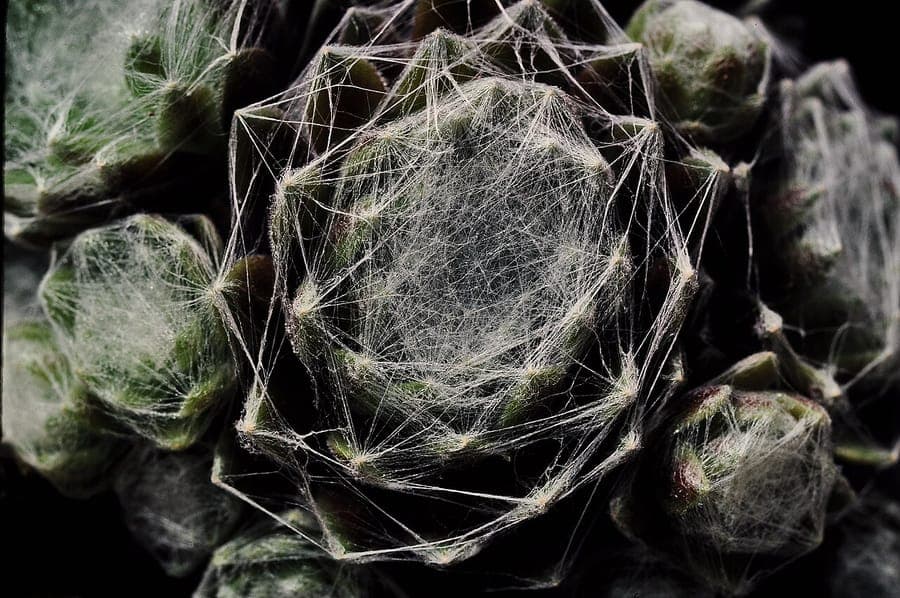
Schnobby / CC BY-SA 3.0, via Wikimedia Commons
Cobweb house-leek: complete guide
Sempervivum arachnoideum
¿Quieres ver Cobweb house-leek: complete guide en tu jardín?
1 minuto, sin tarjeta de crédito
Overview
Cobweb house-leek (Sempervivum arachnoideum) is a spectacular alpine succulent from the Crassulaceae family, native to northern Spain through the Alps to the Apennines. Renowned for its extraordinary appearance - delicate white filaments creating cobweb-like patterns between leaves - this plant brings intrigue and beauty to any alpine collection. It is perfect for stone troughs, rock gardens, alpine screes, and living roofs.
Appearance and bloom cycle
Cobweb house-leek grows as tight, densely packed rosettes measuring 2-3 cm diameter. Leaves are green with red tinges, covered with characteristic fine white filaments spanning between leaves, exactly mimicking spiderweb. This creates an otherworldly, almost surreal appearance. In June and July, red to purple flowers appear on 10-15 cm tall flower stems. After flowering, the mother rosette dies, while daughter offsets continue growing.
Ideal location
Cobweb house-leek performs best in full sun. At least 5-6 hours of direct sunlight daily is essential for good color development and to maintain the cobweb effect. In shade, the white webbing largely disappears. The plant tolerates mountain winds and cold air currents well. Protection from waterlogged conditions matters far more than frost protection.
Soil requirements
Cobweb house-leek demands excellent drainage and poor, infertile soil. Sandy, gravelly soils rich in grit are ideal. Heavy clay is entirely unsuitable. Drainage is critical: one wet winter can kill the plant. The plant thrives in extremely nutrient-poor soils. A soil pH between 6.0 and 7.5 is acceptable.
Diseño gratis
¿Quieres ver Cobweb house-leek: complete guide en tu jardín? Crea un diseño gratis ahora.
Watering
Cobweb house-leek is one of the most drought-tolerant succulents. Water is needed only in the first growing year after planting. Once established, the plant accepts very extended droughts. Heavy watering causes immediate root rot. In wet winters, drainage must be perfect. Never water is always better than regular watering.
Pruning
Pruning is virtually unnecessary. Dead or shriveled leaves can be gently removed. After flowering, the blooming rosette naturally dies, which is normal. Remove the dead rosette carefully to make room for new offsets. Occasional brushing can prevent moss accumulation on rosettes.
Maintenance calendar
Spring (April-May): Plant carefully, do not water unless extremely dry. Summer (June-July): Observe and enjoy, no care needed. Autumn (August-September): Remove dead flowering rosettes, check drainage. Winter (October-March): No maintenance; drainage is critical.
Winter hardiness
Cobweb house-leek is hardy in USDA zones 3-9, surviving temperatures to -20°C. The plant is evergreen and decorative in winter. Frost poses no threat; waterlogged conditions in winter are deadly. Good drainage matters far more than any other factor.
Companion plants
Cobweb house-leek pairs perfectly with other alpine sempervivum species and dry rock plants. Beautiful alongside sedums, saxifrages, and other choice alpines. In green roofs, combine with other low alpine foliage plants. Moisture-loving species are entirely unsuitable.
Closing
Cobweb house-leek is a truly unique ornament in any alpine collection or rock garden. Its distinctive white webbing makes it a conversation piece. Visit gardenworld.app for more ideas to integrate alpine succulents effectively into your garden design. With virtually zero care and years of decorative value, cobweb house-leek deserves a special place in every sunny rock garden or alpine trough.
¿Quieres ver Cobweb house-leek: complete guide en tu jardín? Crea un diseño gratis ahora.
Sube una foto, elige un estilo y obtén un diseño fotorrealista con lista de plantas en menos de un minuto.
Más de 10.000 jardines diseñados
Sin tarjeta de crédito


Plantas similares
Sedum nevadense: complete guide
Sedum nevadense
Discover Sedum nevadense, the stunning alpine stonecrop from the Pyrenees. Expert care tips, growing requirements, and design ideas for rock gardens.
Aizoon stonecrop: complete guide
Phedimus aizoon
Everything about Phedimus aizoon - the frost-tolerant aizoon stonecrop from Siberia with bright yellow flowers. Planting, care and garden use.
Roseroot: complete guide
Rhodiola rosea
Everything about roseroot (Rhodiola rosea): a tough hardy succulent ideal for rock gardens, green roofs, and dry sunny positions.