
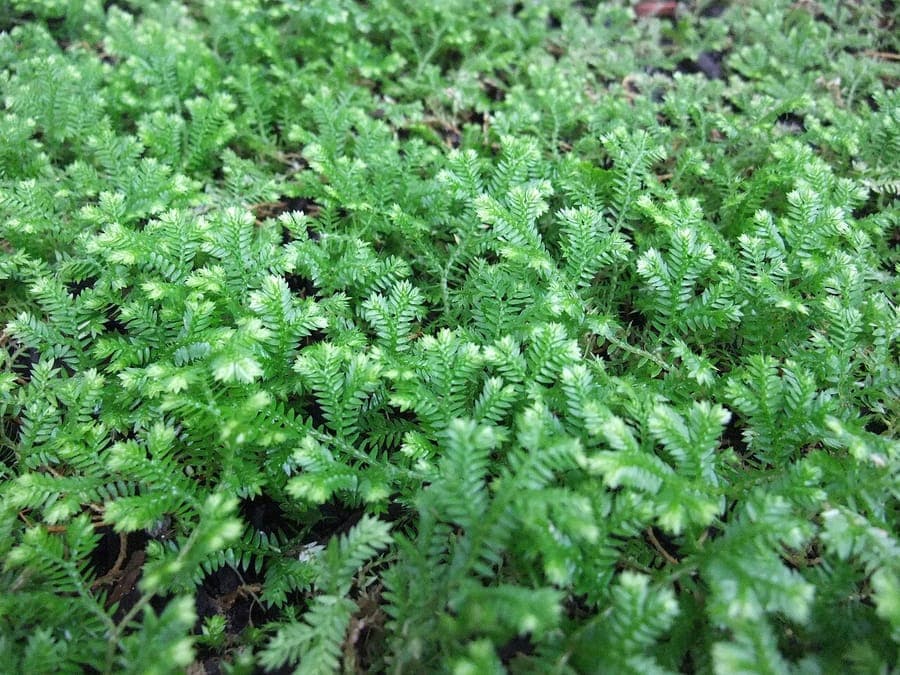
Chhe at English Wikipedia / Public domain, via Wikimedia Commons
Krauss Spikemoss (Selaginella kraussiana): complete guide
Selaginella kraussiana
¿Quieres ver Krauss Spikemoss (Selaginella kraussiana): complete guide en tu jardín?
1 minuto, sin tarjeta de crédito
Krauss Spikemoss (Selaginella kraussiana): Complete Guide
Overview
Krauss spikemoss, scientifically Selaginella kraussiana, is an elegant plant in the Selaginellaceae family that closely resembles moss but is actually a sophisticated vascular plant. This species is exceptionally well-suited for shade-rich gardens and indoor environments where conventional plants struggle.
Native to tropical and subtropical Africa and Macaronesia, this plant adapts to shaded, moisture-rich conditions. In cultivation, it thrives enthusiastically and requires minimal support, making it ideal for gardeners seeking unconventional ground covers and shade solutions.
Appearance and Growth
Krauss spikemoss forms a dense, carpet-like growth pattern that proves visually striking. Plants reach approximately 5-10 centimeters in height, spreading along ground level, making them perfect for ground cover beneath trees and in shady corners.
Leaves are minuscule, approximately 2-3 millimeters long, arranged in moss-like patterns. Color varies from golden-yellow to vibrant green depending on light and cultivar. Some cultivars display golden foliage that gleams spectacularly under indirect light.
The plant lacks true flowers and reproduces vegetatively via spores and creeping stems, making propagation straightforward.
Ideal Location
Krauss spikemoss thrives in moderate to deep shade and rarely tolerates full sun, where it becomes prone to desiccation. Ideal locations include beneath dense tree canopies or on the shaded side of buildings.
The plant accepts indirect interior light well, making it suitable for houseplant culture in rooms with limited natural light. Avoid locations with strong air movement, as the plant dislikes exposure to harsh wind.
Soil
Krauss spikemoss prefers slightly acidic, humus-rich soil with excellent moisture retention. Incorporate generous amounts of garden compost, leaf mold, or peat into potting mix. Optimal pH ranges from slightly acidic (5.5-6.5).
Good drainage remains essential despite moisture preference, as permanent waterlogging causes rot. Loose, aerative soil mixes perform better than heavy clay.
Diseño gratis
¿Quieres ver Krauss Spikemoss (Selaginella kraussiana): complete guide en tu jardín? Crea un diseño gratis ahora.
Watering
Krauss spikemoss is very moisture-loving and requires regular, often daily, water in warm seasons. Keep soil consistently moist but not waterlogged. In shaded locations, water evaporates more slowly, requiring careful adjustment.
Mist the plant regularly (ideally daily) in dry interior conditions or during warm spells. This maintains humidity levels and suppresses pest problems.
Pruning
Pruning is not essential as this plant naturally maintains compact form. Excessive growth can be removed if necessary, though this rarely becomes required. Dead or declining stems can be removed anytime.
Maintenance Calendar
Spring (March-May): Plant begins active growth. Increase watering as temperatures rise. Propagate by taking stem cuttings and placing in moist soil mix.
Summer (June-September): Peak growing period. Keep soil consistently moist and mist foliage regularly. In very warm conditions, water daily.
Fall (October-November): Growth slows. Gradually reduce watering but never allow soil to completely dry. Protect in frost-vulnerable locations.
Winter (December-February): Plant dormancy. Less water needed in cold but soil must never completely dry. In very cold climates, protect indoors.
Winter Hardiness
Krauss spikemoss is frost-sensitive and survives outdoors only in very mild climates (zones 9-10). In temperate regions, grow in containers and move indoors or to protected locations. Indoors, it thrives at room temperature.
Companion Plants
Krauss spikemoss combines beautifully with:
- Acorus gramineus: Grass-like structure for textural contrast
- Helleborus: Elegant flowers rising above moss carpet
- Heuchera: Variegated foliage colors contrast beautifully
- Ferns: Natural companions in shade environments
- Hosta: Large leaf forms contrast dramatically with minuscule spikemoss leaves
Closing Remarks
Krauss spikemoss is an excellent choice for gardeners with shade-rich areas seeking unconventional ground covers. Its moss-like texture and elegant growth pattern bring a natural appearance to gardens. Source young plants from garden centers in spring, or propagate cuttings from established specimens. This delicate plant will provide years of satisfaction in properly maintained shaded environments.
Visit gardenworld.app/en for design inspiration on combining shade plants like Krauss spikemoss in contemporary gardens. Discover more shade-tolerant plants at gardenworld.app/en.
¿Quieres ver Krauss Spikemoss (Selaginella kraussiana): complete guide en tu jardín? Crea un diseño gratis ahora.
Sube una foto, elige un estilo y obtén un diseño fotorrealista con lista de plantas en menos de un minuto.
Más de 10.000 jardines diseñados
Sin tarjeta de crédito


Plantas similares
Meadow Spikemoss: complete guide
Selaginella apoda
Everything about Selaginella apoda, meadow spikemoss: growing as ground cover, site requirements, moisture, pruning and winter hardiness.
Toothed-leaved clubmoss: complete guide to Selaginella denticulata
Selaginella denticulata
A full guide to growing Selaginella denticulata: location, soil, watering, care and use in shade gardens and terrariums.
Alpine Selaginella: complete guide
Selaginella helvetica
Discover how to cultivate this delicate shade-loving moss-like plant. Perfect for moist terrariums and woodland garden corners beneath dense canopy.