
Mason Brock (Masebrock) / Public domain, via Wikimedia Commons
Sedum ternatum: complete guide
Sedum ternatum
¿Quieres ver Sedum ternatum: complete guide en tu jardín?
1 minuto, sin tarjeta de crédito
Overview
Sedum ternatum, commonly known as Wild stonecrop or Woodland stonecrop, is a native North American succulent thriving from southeast Canada through the eastern United States. Belonging to the Crassulaceae family, this plant is renowned for its exceptional resilience and minimal care requirements. Sedum ternatum is a popular choice for gardeners seeking a dependable, beginner-friendly plant.
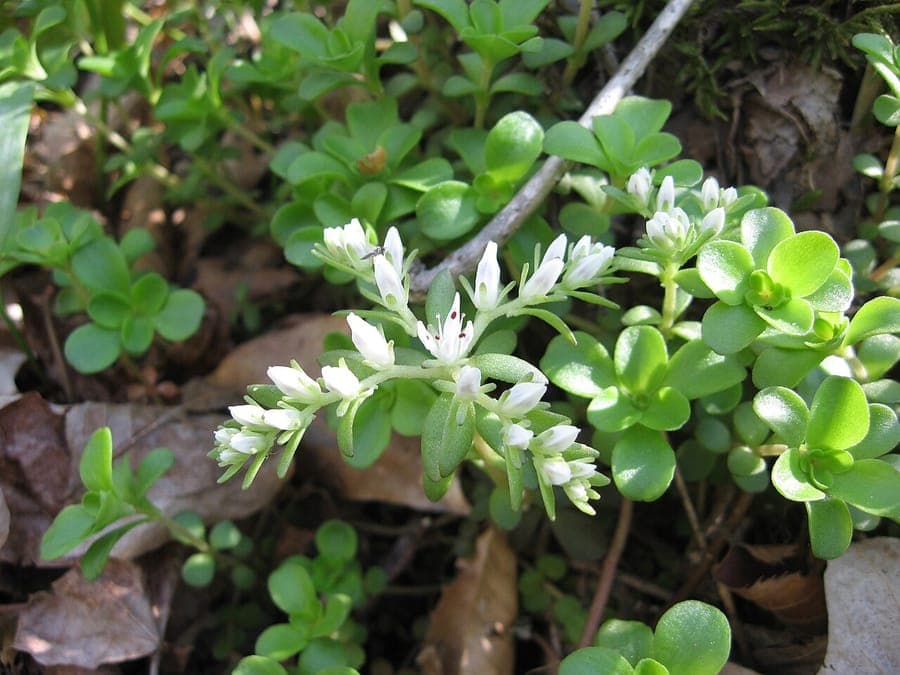
This compact succulent naturally grows on rocky slopes, hillsides, and shaded areas. In gardens, Sedum ternatum excels as a groundcover, border edging, and in succulent beds. The plant produces delicate white flowers from May to June, adding extra visual interest.
Appearance and Bloom
Sedum ternatum forms low, spreading mats of small, thick leaves that are typically green with occasionally reddish edges, especially in full sun. The leaves measure approximately 1 to 2 cm and grow in clusters of three (hence the name "ternatum"). This leaf arrangement gives the plant its distinctive, geometric appearance.
Flowers emerge in late spring (May to June) and are small, white, or sometimes pale pink. They grow in delicate sprays and attract pollinators including bees and butterflies. After blooming, the plant produces tiny seed capsules. Adult plant height typically reaches 5 to 15 cm, though they can spread up to 30 cm wide under ideal conditions.
Ideal Location
Sedum ternatum is notably flexible regarding light conditions, making it unique among succulents. While most Sedum species prefer full sun, Sedum ternatum tolerates both partial shade and dappled shade. In fact, it can even thrive in zones with significant shadowing, though flowering may be reduced.
Select a location with well-drained soil. Avoid low-lying areas where water accumulates. This plant excels in garden beds, rock gardens, containers, green roofs, and as understory growth beneath larger plants. Sedum ternatum's shade tolerance makes it ideal for gardens with limited sunlight.
Soil
Well-drained soil is absolutely critical for Sedum ternatum success. A mixture of standard garden soil with additions of gravel, perlite, or sand helps prevent water retention. For container gardening, use specialty succulent potting mix or create your own by blending garden soil 1 to 1 with mineral components.
Soil pH can range from neutral to slightly acidic. Avoid adding extra compost or organic matter, as this leads to excessive moisture and root rot. Sedum ternatum thrives in lean, loose soils with minimal nutrition.
Diseño gratis
¿Quieres ver Sedum ternatum: complete guide en tu jardín? Crea un diseño gratis ahora.
Watering
Water management is critical for growing Sedum ternatum successfully. This succulent stores water in its fleshy leaves and tolerates extended dry periods. Water deeply but infrequently: irrigate only when soil is completely dry. During the growing season (spring and summer), this may mean watering once every two to three weeks, depending on climate and rainfall.
In autumn and winter, when growth slows, reduce watering significantly. Overwatering is the most common problem with Sedum ternatum and can cause root rot. Check whether soil feels moist before watering again. During rainy periods, skip watering entirely.
Pruning
Sedum ternatum requires minimal pruning. Remove dead leaves and flowers to maintain a neat appearance. If the plant becomes overgrown or develops an irregular shape, you can gently trim stems to maintain form. Fortunately, this plant grows slowly and rarely becomes unruly.
Insert trimmed stems directly into dry soil to propagate new plants. This is a simple and reliable propagation method. Remove damaged stems immediately to prevent disease spread.
Maintenance Calendar
Spring (March to May): Water moderately as growth begins. Check for pests. Add a thin layer of gravel mulch.
Summer (June to August): Reduce watering in extreme heat. Shade can be beneficial in very hot climates. Monitor for drought stress.
Autumn (September to November): Reduce watering significantly as growth slows. No feeding needed.
Winter (December to February): Minimal watering. Protect from excessive rain in very wet climates.
Winter Hardiness
Sedum ternatum is extremely hardy and tolerates temperatures down to -30 degrees Celsius. In fact, it originates in cold mountain regions of North America. This makes it suitable for nearly all climate zones, from USDA zones 3 to 9.
The plant requires no special winter protection in most of North America and Europe. In very wet, cold winters where water freezes around plants, you could improve drainage by adding a gravel layer around the base.
Companion Plants
Sedum ternatum works exceptionally well beside other succulent-like plants and groundcovers. Excellent companions include:
Other Sedum species (Sedum album, Sedum floriferum) Anemone nemorosa (Snowdrop anemone) Phlox subulata (Creeping phlox) Arabis procurrens (Creeping rockcress) Silene acaulis (Moss campion)
These combinations create texture, color variation, and maintain shared care requirements. In green roofs and rock gardens, group Sedum ternatum with other alpine and rock-garden plants for layered visual impact.
Closing
Sedum ternatum is an exceptional choice for gardeners seeking a reliable, easy-to-grow succulent. With its shade tolerance, winter hardiness, and minimal maintenance needs, this plant fits nearly every garden scenario. Grow Sedum ternatum as groundcover, in containers, rock gardens, or green roofs and enjoy decades of beauty without fuss.
Available at major retailers. Gardenworld.app provides comprehensive plant advice and design services. Visit gardenworld.app for additional information.
¿Quieres ver Sedum ternatum: complete guide en tu jardín? Crea un diseño gratis ahora.
Sube una foto, elige un estilo y obtén un diseño fotorrealista con lista de plantas en menos de un minuto.
Más de 10.000 jardines diseñados
Sin tarjeta de crédito


Plantas similares
Sedum nevadense: complete guide
Sedum nevadense
Discover Sedum nevadense, the stunning alpine stonecrop from the Pyrenees. Expert care tips, growing requirements, and design ideas for rock gardens.
Aizoon stonecrop: complete guide
Phedimus aizoon
Everything about Phedimus aizoon - the frost-tolerant aizoon stonecrop from Siberia with bright yellow flowers. Planting, care and garden use.
Roseroot: complete guide
Rhodiola rosea
Everything about roseroot (Rhodiola rosea): a tough hardy succulent ideal for rock gardens, green roofs, and dry sunny positions.