
Unknown authorUnknown author / Public domain, via Wikimedia Commons
Sedum stenopetalum: complete guide
Sedum stenopetalum
¿Quieres ver Sedum stenopetalum: complete guide en tu jardín?
1 minuto, sin tarjeta de crédito
Overview
Sedum stenopetalum, commonly known as wormleaf stonecrop or narrow-petaled stonecrop, is a remarkably robust North American alpine succulent. Growing from western Canada to the western United States, particularly on dry rocky ridges, this compact sedum is celebrated for its exceptional cold hardiness and bright yellow summer flowers.
The plant represents an ideal choice for gardeners in cold climates seeking reliable alpine succulents.
Appearance and Bloom
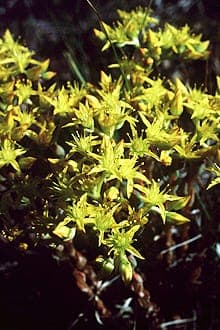
Sedum stenopetalum is an extremely compact plant, rarely exceeding 10-20 centimeters height, displaying stiffly upright growth. The leaves are very narrow, worm-like and greyish-green. Under strong sun or autumn conditions, foliage deepens to rich red or purple hues.
During summer, bright yellow flowers appear in fairly loose clusters. These blooms attract various bee species. Following flowering, small seeds develop. The plant is a true alpine workhorse.
Ideal Location
Full sun exposure is essential. Minimum six to eight hours daily direct sunlight produces finest flowering and colour development. Partial shade results in weaker plants with reduced flowers.
The plant tolerates strong winds and harsh alpine conditions without difficulty. In very warm climates, afternoon shade proves beneficial.
Soil Requirements
Sedum stenopetalum thrives on extremely lean, grit-rich soils. A mixture of seventy percent grit or sharp sand with thirty percent nutrient-poor garden soil proves ideal. The plant accommodates acidic soils readily.
Drainage excellence is critical. Any waterlogging causes problems. Stones or large gravels surrounding the plant enhance drainage further.
Diseño gratis
¿Quieres ver Sedum stenopetalum: complete guide en tu jardín? Crea un diseño gratis ahora.
Watering
Once established, watering becomes barely necessary. During very dry periods, light watering proves beneficial, but typically this alpine plant requires no supplemental water.
In wet climates, enhanced drainage around the plant becomes advisable.
Pruning
Pruning remains virtually unnecessary. The plant naturally maintains its compact form. Spent flowers and old rosettes can be removed for tidiness.
Respect its natural alpine form.
Maintenance Calendar
April-May - plant in grit-rich mixture. June-August - blooming and minimal care. September - seed collection. October-April - winter dormancy, minimal attention.
Every two to three years - rejuvenate plant or take cuttings.
Winter Hardiness
Sedum stenopetalum proves extremely winter-hardy. This species survives temperatures below -20 degrees Celsius without difficulty, provided soil remains dry. This makes it an ideal choice for extremely cold regions.
Wet, frost-free winters present greater challenges than very cold dry winters. Excellent drainage proves the key to success.
Companion Plants
This alpine sedum pairs beautifully with: Other alpine Sedum species, Alpine phlox, Saxifraga species, other alpine plants and Houseleek. Combine with other drought-lovers and alpine plants.
Conclusion
Sedum stenopetalum represents the ultimate choice for cold climate gardens. With its exceptional cold hardiness, compact habit, cheerful yellow flowers and drought tolerance, it stands as an essential addition to alpine rock gardens in temperate and cold regions.
Find this alpine sedum at specialized plant retailers and online. Visit gardenworld.app for alpine gardening inspiration. For rock garden techniques, explore gardenworld.app.
¿Quieres ver Sedum stenopetalum: complete guide en tu jardín? Crea un diseño gratis ahora.
Sube una foto, elige un estilo y obtén un diseño fotorrealista con lista de plantas en menos de un minuto.
Más de 10.000 jardines diseñados
Sin tarjeta de crédito


Plantas similares
Sedum nevadense: complete guide
Sedum nevadense
Discover Sedum nevadense, the stunning alpine stonecrop from the Pyrenees. Expert care tips, growing requirements, and design ideas for rock gardens.
Aizoon stonecrop: complete guide
Phedimus aizoon
Everything about Phedimus aizoon - the frost-tolerant aizoon stonecrop from Siberia with bright yellow flowers. Planting, care and garden use.
Roseroot: complete guide
Rhodiola rosea
Everything about roseroot (Rhodiola rosea): a tough hardy succulent ideal for rock gardens, green roofs, and dry sunny positions.