
brewbooks / CC BY-SA 2.0, via Wikimedia Commons
Sedum divergens: complete guide
Sedum divergens
¿Quieres ver Sedum divergens: complete guide en tu jardín?
1 minuto, sin tarjeta de crédito
Overview
Sedum divergens, also known as cascade stonecrop or spreading stonecrop, is a remarkable North American succulent from mountainous regions spanning Alaska to California. Celebrated for its spectacular red-orange foliage and cascading, spreading growth pattern, this species proves ideal for hanging containers and alpine arrangements.
The plant is exceptionally drought-tolerant and demands minimal care, making it perfect for novice gardeners and busy horticulturalists.
Appearance and Bloom
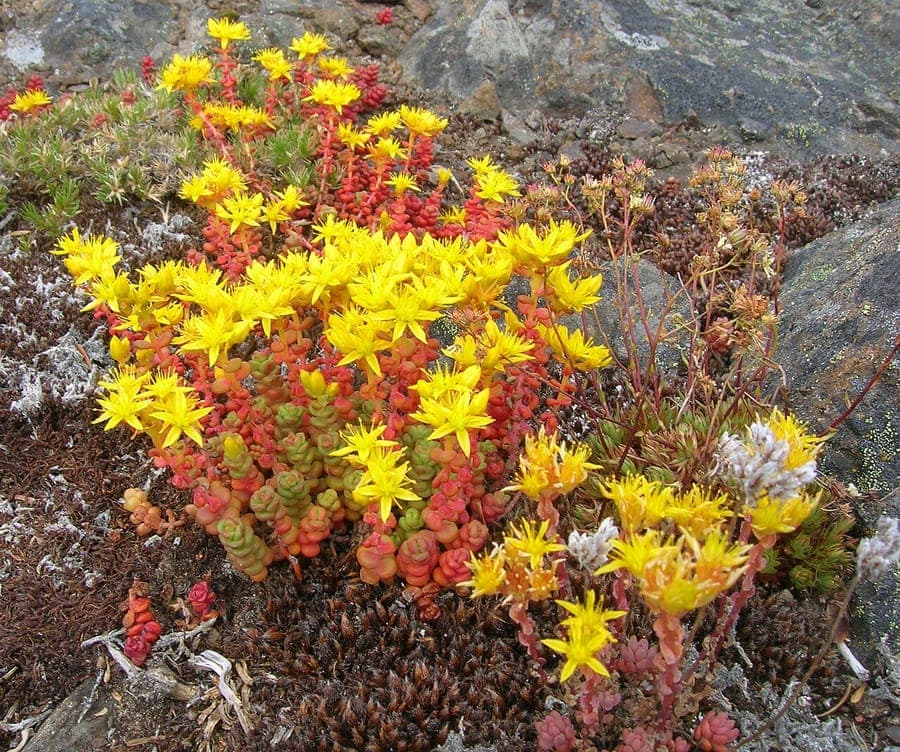
Sedum divergens is a low, spreading plant typically reaching only 10-15 centimeters height whilst spreading considerably wider. Under warm conditions or full sun, the otherwise green foliage transforms to striking red-orange colouration, especially at branch tips.
Late spring through summer produces tiny yellow flowers on short stems. These blooms attract various pollinators including bees. The plant maintains fairly consistent size with minimal annual growth.
Ideal Location
Full sun exposure proves essential for the finest red-orange colouring. Minimum six hours daily direct sunlight yields good results. Partial shade results in greener foliage and less vigorous spreading.
The plant thrives on windy locations and slopes. Winter rain protection proves beneficial in temperate climates.
Soil Requirements
Sedum divergens prospers in lean, grit-rich soils. A mixture of sixty percent grit or sharp sand combined with forty percent lean garden soil works ideally. Standard garden soil functions if thoroughly aerated.
Soil pH ranges from acidic to neutral. Soil nutrients remain non-essential; poor soils prevent lax growth.
Diseño gratis
¿Quieres ver Sedum divergens: complete guide en tu jardín? Crea un diseño gratis ahora.
Watering
Once well-established, watering becomes nearly unnecessary. The plant stores water in fleshy leaves and tolerates extended drought. During very hot periods, light watering proves beneficial.
In temperate and cool seasons, supplemental watering becomes unnecessary. Waterlogging prevention remains critical.
Pruning
Pruning rarely becomes necessary. The plant naturally maintains its own form. Spent flower stems may be removed. In overly dense situations, some older rosettes can be removed for rejuvenation.
Respect its natural cascading form.
Maintenance Calendar
May-June - plant in well-draining mixture. June-September - water only during extreme drought. October-April - keep dry in winters.
Every three years - take cuttings for propagation or use fresh potting mixture.
Winter Hardiness
Sedum divergens proves hardy to approximately -10 to -15 degrees Celsius under dry conditions. Wet-and-freezing combinations prove harmful. In very wet winters, rain protection or glass covering proves beneficial.
In drier climates, the plant overwinters outdoors without difficulty.
Companion Plants
This sedum combines beautifully with: Other Sedum species, Echeveria, Jade plant, Aloe and other succulents. Avoid moisture-loving plant companions.
Conclusion
Sedum divergens is a stunning, low-maintenance succulent perfect for those seeking impactful, colourful specimens requiring minimal effort. With its red-orange foliage, cascading form and exceptional drought tolerance, it stands as a jewel of North American origin.
Find this sedum at specialized plant retailers and online nurseries. Visit gardenworld.app for further succulent inspiration. For container gardening tips, explore gardenworld.app.
¿Quieres ver Sedum divergens: complete guide en tu jardín? Crea un diseño gratis ahora.
Sube una foto, elige un estilo y obtén un diseño fotorrealista con lista de plantas en menos de un minuto.
Más de 10.000 jardines diseñados
Sin tarjeta de crédito


Plantas similares
Sedum nevadense: complete guide
Sedum nevadense
Discover Sedum nevadense, the stunning alpine stonecrop from the Pyrenees. Expert care tips, growing requirements, and design ideas for rock gardens.
Aizoon stonecrop: complete guide
Phedimus aizoon
Everything about Phedimus aizoon - the frost-tolerant aizoon stonecrop from Siberia with bright yellow flowers. Planting, care and garden use.
Roseroot: complete guide
Rhodiola rosea
Everything about roseroot (Rhodiola rosea): a tough hardy succulent ideal for rock gardens, green roofs, and dry sunny positions.