
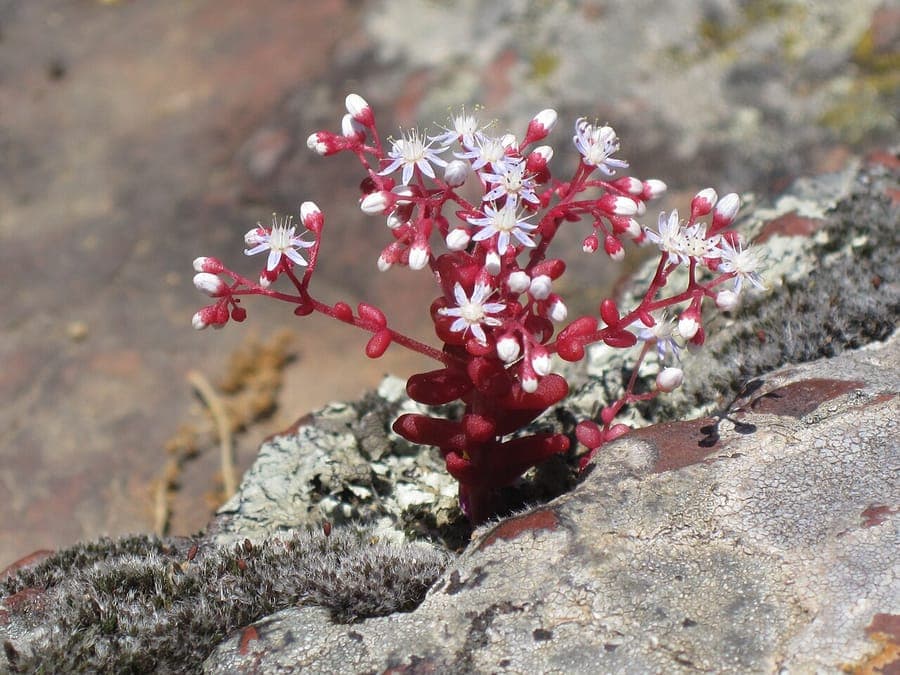
Bj.schoenmakers / CC0, via Wikimedia Commons
Azure Stonecrop: complete guide
Sedum caeruleum
¿Quieres ver Azure Stonecrop: complete guide en tu jardín?
1 minuto, sin tarjeta de crédito
Overview
Sedum caeruleum, commonly known as Azure stonecrop, is an elegant low-growing succulent from the Mediterranean region. This miniature sedum thrives on rocky slopes and dry hillsides, bringing subtle blue tones to your garden. Despite its delicate appearance, it is extremely tough and requires minimal care.
Appearance and Bloom
Azure stonecrop grows as dense, compact rosettes reaching 5-10 cm tall. The leaves are small, spatulate and display a striking blue-green color intensifying under full sun. From April to June, clusters of small six-petaled flowers emerge in brilliant blue to violet. These delicate blooms attract bees and butterflies while providing stunning contrast to grey-blue foliage.
Ideal Location
Choose a spot with full sun (minimum 6 hours direct light daily). This promotes the characteristic blue coloration and compact growth habit. Partial shade is tolerable but results in thinner, less colored plants. Protect from strong winds and excessive winter rainfall.
Soil
Well-drained, sandy or gritty soil is essential. Sedum caeruleum tolerates poor soils and thrives even on rock faces. Amend heavy garden soil with coarse sand to improve drainage. Neutral to slightly acidic pH is ideal. Clay soils must be substantially modified with added grit.
Watering
Minimal water once established. During growing season (spring/summer), water moderately allowing soil to dry between waterings. In autumn/winter, provide almost no water. Overwatering is the primary risk causing root rot. Drip irrigation is preferable to spraying to prevent moisture problems.
Diseño gratis
¿Quieres ver Azure Stonecrop: complete guide en tu jardín? Crea un diseño gratis ahora.
Pruning
Azure stonecrop requires virtually no pruning. Remove spent flowers and damaged leaves. In early spring, heavily neglected plants may be cut back to 5 cm to maintain compactness. Prune carefully to avoid rot.
Maintenance Calendar
Spring: Check drainage, ensure no water pooling. Summer: Water sparingly compared to typical plants, especially in dry spells. Autumn: Reduce watering significantly. Winter: Keep dry, provide protection if rainfall is excessive.
Winter Hardiness
Sedum caeruleum is hardy to approximately -5 to -8 degrees Celsius. In temperate climates it usually survives outdoors, especially on well-drained sites. In very wet winters frost damage risk increases from intracellular ice formation when tissues become waterlogged. Protective gravel or tiles help.
Companion Plants
Combine with other drought-tolerant groundcovers like Sempervivum, Thymus, or Festuca. Ornamental grasses add textural interest. In alpine stone gardens, it creates stunning combinations with Dianthus and Armeria.
Closing Thoughts
Sedum caeruleum is a miniature masterpiece of drought tolerance and elegance. Perfect for rock gardens, living roofs and gravel gardens. Once established it demands almost nothing while delivering year-round beauty. Find it at quality garden centers. More info at gardenworld.app/en and gardenworld.app/nl.
¿Quieres ver Azure Stonecrop: complete guide en tu jardín? Crea un diseño gratis ahora.
Sube una foto, elige un estilo y obtén un diseño fotorrealista con lista de plantas en menos de un minuto.
Más de 10.000 jardines diseñados
Sin tarjeta de crédito


Plantas similares
Sedum nevadense: complete guide
Sedum nevadense
Discover Sedum nevadense, the stunning alpine stonecrop from the Pyrenees. Expert care tips, growing requirements, and design ideas for rock gardens.
Aizoon stonecrop: complete guide
Phedimus aizoon
Everything about Phedimus aizoon - the frost-tolerant aizoon stonecrop from Siberia with bright yellow flowers. Planting, care and garden use.
Roseroot: complete guide
Rhodiola rosea
Everything about roseroot (Rhodiola rosea): a tough hardy succulent ideal for rock gardens, green roofs, and dry sunny positions.