
Ivar Leidus / CC BY-SA 4.0, via Wikimedia Commons
Biting stonecrop: complete guide
Sedum acre
¿Quieres ver Biting stonecrop: complete guide en tu jardín?
1 minuto, sin tarjeta de crédito
Overview
Biting stonecrop (Sedum acre), also called goldmoss stonecrop, is a diminutive succulent from the Crassulaceae family, native across Europe, the Mediterranean, and reaching the Caucasus. Renowned for extreme drought tolerance and vigorous growth on inhospitable sites, this charming plant produces golden flowers and spreads as a compact groundcover. It is perfect for green roofs, crevices, and stony gardens.
Appearance and bloom cycle
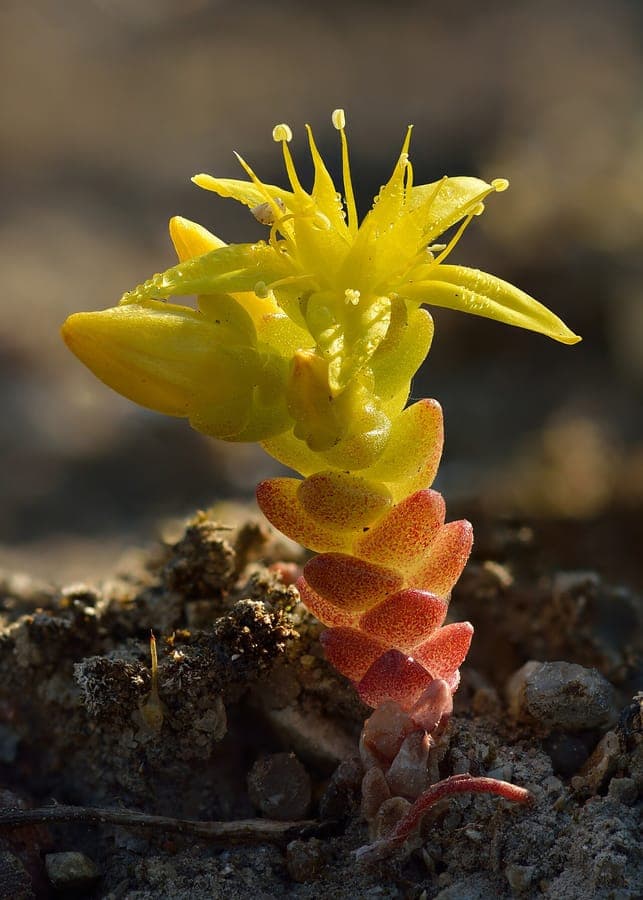
Biting stonecrop is a low, creeping succulent reaching just 5-10 cm in height. Leaves are tiny, densely arranged, and yellowish-green in color. In May and June, glossy golden-yellow flowers appear in small clustered cymes. The flowering period lasts 4-6 weeks, with blooms attracting bees and butterflies. The foliage remains attractive for months after flowering. Autumn brings reddish-orange tints to the leaves.
Ideal location
Biting stonecrop thrives in full sun, even on baking hot south-facing aspects. At least 6 hours of direct sunlight daily is optimal. In shadier positions, plants become lax and less densely clothed with foliage. The plant is equally suited to roof gardens and exposed ledges. Winter wetness is a greater concern than frost.
Soil requirements
Biting stonecrop makes minimal soil demands. Sandy, gravelly, nutrient-poor soils are perfect. Heavy clay must be dramatically improved with copious sand and gravel additions. The plant thrives even in extremely impoverished soils. Drainage is absolutely critical: waterlogging is fatal. A soil pH between 6.0 and 7.5 is acceptable.
Watering
Once established, biting stonecrop requires virtually no supplemental water. Extended droughts pose no problem. In exceptional heat waves, occasional watering may help, but it is never essential. Excessive moisture and boggy soils cause root rot. Only in the first planting season should watering be occasionally done. Overwatering is the commonest cause of failure with this species.
Diseño gratis
¿Quieres ver Biting stonecrop: complete guide en tu jardín? Crea un diseño gratis ahora.
Pruning
Pruning is virtually unnecessary for biting stonecrop. The plant naturally develops a compact habit. Spent flowers can be removed for neat appearance. Dead or damaged leaves may be gently brushed away. Occasional thinning is beneficial if growth becomes excessively dense, but generally, the plant should be left alone.
Maintenance calendar
Spring (April-May): Remove winter mulch carefully, water very sparingly. Summer (June-July): Remove faded flowers, water only in extreme drought. Autumn (August-September): No care needed, enjoy autumn leaf color. Winter (October-March): Check drainage, never water unless exceptionally dry.
Winter hardiness
Biting stonecrop is very hardy in USDA zones 3-9, surviving temperatures of -20°C and lower. The plant is evergreen, remaining visible throughout winter. Greater threat comes from wet feet than from frost. Excellent drainage matters more than frost protection.
Companion plants
Biting stonecrop pairs beautifully with other succulents including sempervivum, echeveria, and other sedum species. Also excellent alongside lavender, steppe plants, and cistus. In green roofs, combine with other low alpines. Moisture-loving plants are entirely unsuitable companions.
Closing
Biting stonecrop is arguably the ultimate no-fuss succulent for gardens of any size. Its golden flowers and ultra-low maintenance requirements make it ideal for gardeners seeking self-reliant plantings. Visit gardenworld.app to discover more ideas for arid, sun-baked gardens and design combinations featuring succulents. With virtually zero care and decades of reliable performance, biting stonecrop deserves prominent space in every sunny garden.
¿Quieres ver Biting stonecrop: complete guide en tu jardín? Crea un diseño gratis ahora.
Sube una foto, elige un estilo y obtén un diseño fotorrealista con lista de plantas en menos de un minuto.
Más de 10.000 jardines diseñados
Sin tarjeta de crédito


Plantas similares
Sedum nevadense: complete guide
Sedum nevadense
Discover Sedum nevadense, the stunning alpine stonecrop from the Pyrenees. Expert care tips, growing requirements, and design ideas for rock gardens.
Aizoon stonecrop: complete guide
Phedimus aizoon
Everything about Phedimus aizoon - the frost-tolerant aizoon stonecrop from Siberia with bright yellow flowers. Planting, care and garden use.
Roseroot: complete guide
Rhodiola rosea
Everything about roseroot (Rhodiola rosea): a tough hardy succulent ideal for rock gardens, green roofs, and dry sunny positions.