
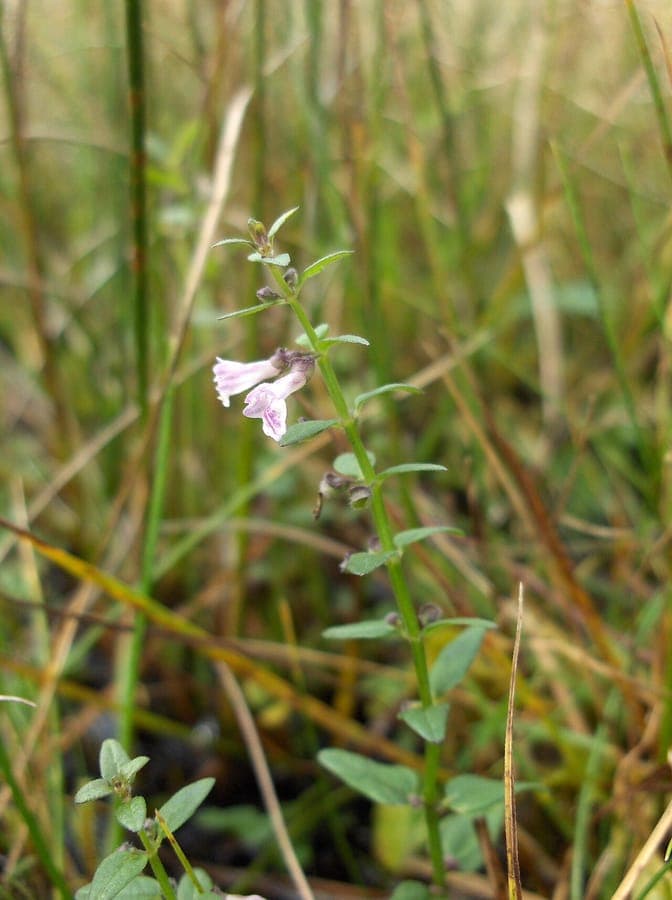
Stemonitis / CC BY-SA 3.0, via Wikimedia Commons
Lesser Skullcap (Scutellaria minor): complete guide
Scutellaria minor
¿Quieres ver Lesser Skullcap (Scutellaria minor): complete guide en tu jardín?
1 minuto, sin tarjeta de crédito
Lesser Skullcap (Scutellaria minor): Complete Guide
Overview
Lesser skullcap, scientifically Scutellaria minor, is a compact perennial in the Lamiaceae family characterized by its dwarf stature and rich violet-blue flowers. This low-maintenance plant is ideal for small gardens, alpine troughs, and rock gardens where taller perennials prove inappropriate.
Native to Western and Northwestern Europe and the Azores archipelago, this species thrives in marginal growing conditions. In cultivation, it requires minimal support and makes modest demands on placement and care.
Appearance and Bloom
Lesser skullcap distinguishes itself through compact, dense growth habit. Plants typically reach only 20-40 centimeters in height, making them perfect for tight spaces. Flowers are violet-blue and densely packed along ascending flower stems.
Blooming begins late summer (July-August) and extends through autumn (October-November), providing an unusually extended flowering period. This makes it particularly valuable for autumn color. The plant forms a sturdy, compact mound.
Minuscule leaves, approximately 5-10 millimeters long, contribute to the plant's diminutive appearance.
Ideal Location
Lesser skullcap performs best in full sun to light partial shade. Provide minimum five hours of direct sunlight daily for optimal growth and flowering. The plant tolerates partial shade better than many other skullcap species.
Given its compact stature, it suits rock gardens, alpine troughs, small courtyard gardens, and confined spaces where larger perennials prove impractical. The plant performs well in windy locations.
Soil
Lesser skullcap prefers poor, well-drained soil with acidic to neutral pH (4.0-7.0). This species actually thrives in lean soil, performing better in infertile substrates than in rich garden soil where excessive foliage growth occurs at the expense of flowers.
Incorporate sand or gravel into heavy clay soil to enhance drainage. The species tolerates dry soil well and even establishes in stony, impoverished conditions where conventional plants fail.
Diseño gratis
¿Quieres ver Lesser Skullcap (Scutellaria minor): complete guide en tu jardín? Crea un diseño gratis ahora.
Watering
Once established, lesser skullcap requires minimal water. Water regularly during the establishment phase but avoid waterlogging. Mature plants are drought-tolerant and rarely need supplemental watering except during severe dry spells.
In gardens receiving regular rainfall, supplemental watering becomes unnecessary. Water only when soil feels particularly dry.
Pruning
Pruning is not essential but light trimming after flowering encourages compact growth. Remove spent flower spikes and dead stems. In early spring, eliminate dead tissue from the previous season.
Be cautious with pruning as this species doesn't respond well to severe cutback.
Maintenance Calendar
Spring (March-May): Plant activates growth. Remove dead material from previous year. Sow seed indoors in March if desired.
Summer (June-August): Preparation for blooming. Maintain appropriate water conditions. Maintenance is minimal once established.
Fall (September-October): Peak flowering period. This represents the most spectacular season. Allow seed capsules to mature for self-sowing.
Winter (November-February): Plant dormancy. No watering needed. In extremely cold climates, mulch provides winter protection.
Winter Hardiness
Lesser skullcap is fully winter hardy in zones 5-8, tolerating average minimum temperatures from -20 to -10 degrees Celsius. The plant survives harsh winters in temperate regions. In very cold zones (zone 4 and colder), mulch application provides protection against extreme frost.
Companion Plants
Lesser skullcap combines beautifully with:
- Sedum species: Complementary compact growth
- Saxifraga: Other rock garden enthusiasts
- Thymus: Aromatic companion with matching requirements
- Teucrium: Similar shade and water preferences
- Armeria: Mounded pink flowers provide excellent contrast
Closing Remarks
Lesser skullcap is an excellent choice for small gardens, rock gardens, and containers where larger skullcap species prove unsuitable. Its late blooming and violet-blue colors bring autumn beauty to any garden. Source seed in March or young plants in spring. This compact perennial will thrive for decades with minimal care.
Visit gardenworld.app/en for design inspiration on combining compact plants like lesser skullcap. Discover more small-scale garden plants at gardenworld.app/en.
¿Quieres ver Lesser Skullcap (Scutellaria minor): complete guide en tu jardín? Crea un diseño gratis ahora.
Sube una foto, elige un estilo y obtén un diseño fotorrealista con lista de plantas en menos de un minuto.
Más de 10.000 jardines diseñados
Sin tarjeta de crédito


Plantas similares
Apple mint (Mentha x villosa): complete guide
Mentha x villosa
Meet apple mint (Mentha x villosa): a fruity-scented kitchen herb with woolly leaves, perfect for tea and mojitos.
Salvia peyronii: complete guide
Salvia peyronii
Discover Salvia peyronii, a rare Lebanese mountain sage. Growing tips, hardiness, and companion planting for a Mediterranean gravel garden.
Bigleaf mint (Mentha x rotundifolia): complete guide
Mentha x rotundifolia
Discover bigleaf mint: cultivation, care tips, and garden uses. Learn how to grow this aromatic herb with soft, hairy leaves.