
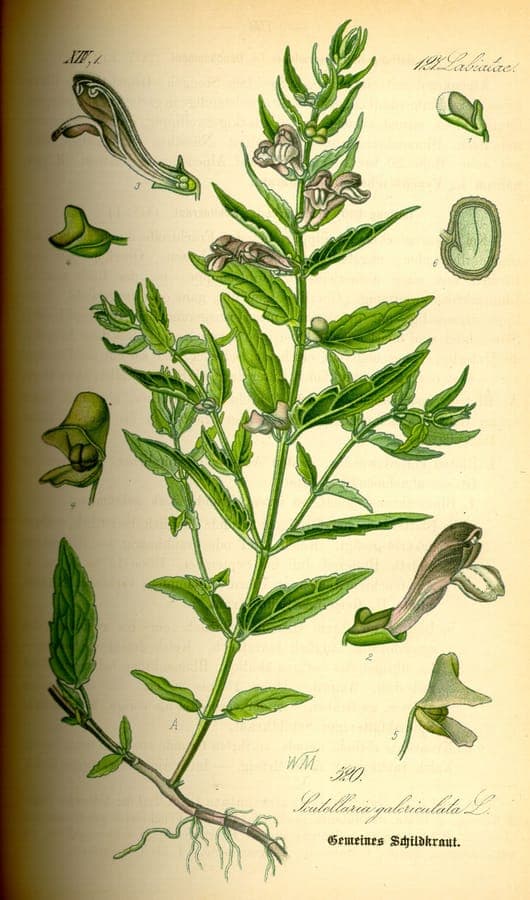
Wikimedia Commons / Public domain, via Wikimedia Commons
Marsh Skullcap (Scutellaria galericulata): complete guide
Scutellaria galericulata
¿Quieres ver Marsh Skullcap (Scutellaria galericulata): complete guide en tu jardín?
1 minuto, sin tarjeta de crédito
Marsh Skullcap (Scutellaria galericulata): Complete Guide
Overview
Marsh skullcap, scientifically known as Scutellaria galericulata, is a remarkable herbaceous perennial in the Lamiaceae family specifically adapted to moisture-rich growing conditions. This versatile plant thrives in areas where many conventional garden plants struggle, making it invaluable for wet site gardens and naturalistic water plantings.
Native to temperate regions across the Northern Hemisphere, this species demonstrates exceptional adaptability. In cultivation, it requires minimal intervention and establishes vigorously in consistently moist environments.
Appearance and Bloom
Marsh skullcap displays slender, unbranched stems clothed with lanceolate leaves and numerous small blue flowers distributed along the plant's length. Unlike some skullcap species producing dense terminal spikes, this species features flowers scattered along ascending stems.
Flowers measure approximately 1.5-2 centimeters long, displaying the characteristic helmet-shaped corolla typical of the genus. Blooming extends from June through September, providing an extended flowering period. Plants typically reach 30-50 centimeters in height, growing upright to semi-prostrate depending on moisture and light conditions.
The entire plant produces a subtle, pleasant aromatic fragrance, especially when foliage is brushed.
Ideal Location
Marsh skullcap tolerates full sun to partial shade but prefers light shade providing afternoon protection. Even in shade, the plant flowers reliably, though less abundantly than in sunnier locations.
The plant thrives in wet to very wet conditions, including areas with shallow water tables. This makes it invaluable for water garden designs and wetland plantings. Conversely, the species dislikes drought and performs poorly in dry conditions.
Soil
Marsh skullcap prefers moisture-rich soil with high organic content. Incorporate generous amounts of compost or peat into heavy soil to enhance moisture retention. Ideal pH ranges from neutral to slightly acidic (6.5-7.0), though considerable tolerance exists.
Heavy, silty material is entirely acceptable and even preferred as it supports water retention. Good drainage remains important in extremely wet situations where permanent waterlogging occurs to prevent root rot.
Diseño gratis
¿Quieres ver Marsh Skullcap (Scutellaria galericulata): complete guide en tu jardín? Crea un diseño gratis ahora.
Watering
Marsh skullcap requires substantial water, far more than conventional garden perennials. In normal garden soil, water regularly, keeping soil consistently moist but not waterlogged. In naturally wet locations, supplemental watering becomes unnecessary.
During dry spells, water deeply every two to three days to maintain plant vigor and continuous flowering. Apply mulch around the plant to conserve moisture and moderate soil temperature.
Pruning
Pruning is not essential but encourages bushier growth when desired. After flowering, pinch stem tips to promote branching. In spring, remove dead stems from the previous year.
Leave spent flowers on plants until late autumn when all stems can be cut back to basal rosettes.
Maintenance Calendar
Spring (March-May): Remove dead plant material from the previous season. Begin regular watering. Sow seed indoors in March for summer flowering.
Summer (June-September): Peak flowering period. Keep soil consistently moist. Deadhead spent flowers to extend blooming. Insect problems are uncommon in moist conditions.
Fall (October-November): Growth slows. Gradually reduce watering. Allow seed capsules to mature for self-sowing or harvest for indoor stratification.
Winter (December-February): Plant dormancy. No watering needed in regions with regular rainfall. No protection required.
Winter Hardiness
Marsh skullcap is fully winter hardy in zones 4-8, tolerating minimum temperatures from -30 to -10 degrees Celsius. The plant survives harsh winters and thrives in cold climates provided moisture remains available. In extremely dry winters, supplemental water proves beneficial.
Companion Plants
Marsh skullcap works excellently with other moisture-loving species:
- Mentha aquatica: Complementary growth and moisture requirements
- Lythrum salicaria: Red and purple blooms contrast beautifully with blue
- Iris versicolor: Shared wet habitat preferences
- Filipendula: Large flowers combine harmoniously
- Astilbe: Partial shade preference and moisture tolerance
Closing Remarks
Marsh skullcap is essential for gardeners with persistently wet areas requiring planting solutions. Its adaptability and enthusiastic flowering even in challenging conditions makes it invaluable. Source container-grown plants in spring from established nurseries. Seed propagation works well for self-sufficient gardeners. This species will provide years of reliable performance in difficult growing conditions.
Visit gardenworld.app/en for design inspiration on creating moisture-tolerant gardens featuring plants like marsh skullcap. Discover more aquatic and wetland plants at gardenworld.app/en.
¿Quieres ver Marsh Skullcap (Scutellaria galericulata): complete guide en tu jardín? Crea un diseño gratis ahora.
Sube una foto, elige un estilo y obtén un diseño fotorrealista con lista de plantas en menos de un minuto.
Más de 10.000 jardines diseñados
Sin tarjeta de crédito


Plantas similares
Apple mint (Mentha x villosa): complete guide
Mentha x villosa
Meet apple mint (Mentha x villosa): a fruity-scented kitchen herb with woolly leaves, perfect for tea and mojitos.
Salvia peyronii: complete guide
Salvia peyronii
Discover Salvia peyronii, a rare Lebanese mountain sage. Growing tips, hardiness, and companion planting for a Mediterranean gravel garden.
Bigleaf mint (Mentha x rotundifolia): complete guide
Mentha x rotundifolia
Discover bigleaf mint: cultivation, care tips, and garden uses. Learn how to grow this aromatic herb with soft, hairy leaves.