
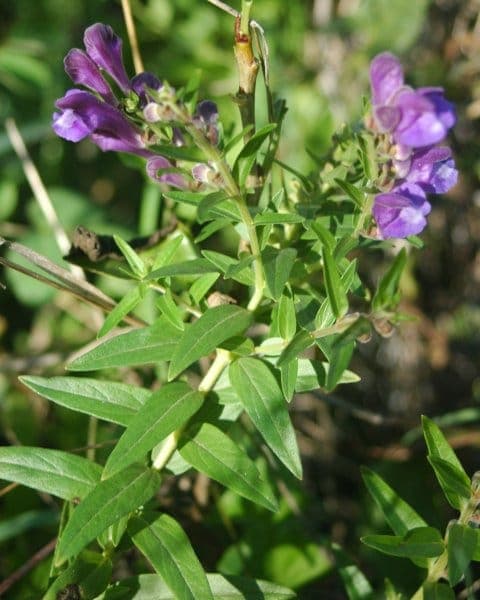
Doronenko / CC BY 3.0, via Wikimedia Commons
Scutellaria baicalensis: complete guide
Scutellaria baicalensis
¿Quieres ver Scutellaria baicalensis: complete guide en tu jardín?
1 minuto, sin tarjeta de crédito
Overview
Scutellaria baicalensis, commonly known as Baikal skullcap or Chinese skullcap, is an elegant and versatile herbal plant native to Siberian and Asian regions. This plant is particularly renowned for its beautiful blue flowers and its significant role in traditional Eastern medicine. The name 'skullcap' refers to the distinctive shape of the flowers, which resemble tiny helmets.
The plant grows wild in the Baikal region, Mongolia, and northeastern China, thriving in mountainous and arid environments. In Western Europe, Scutellaria baicalensis is less known than in traditional medicine centers, but is gradually gaining popularity among self-sufficiency enthusiasts and herb lovers discovering its benefits.
This plant combines aesthetic beauty with practical utility, making it a valuable addition to any garden offering space for medicinal applications.
Appearance and Bloom
Scutellaria baicalensis grows as a compact, herbaceous shrub, usually reaching 30 to 60 centimeters in height. The plant features slender, lance-shaped leaves that are dark green in color and arranged oppositely along the stems.
The flowers, which appear in August and September, are the highlight of this plant. They grow in densely packed spikes at the stem tips, displaying a vibrant blue to purple color. Each flower measures approximately 1.5 to 2 centimeters in length and features that characteristic helmet-like structure typical of the Scutellaria genus. Some cultivars may display white or softer blue tones.
After flowering, small round seed pods form and eventually mature, dispersing their seeds.
Ideal Location
Scutellaria baicalensis thrives best in a sunny to partially shaded location. The plant requires a minimum of four to six hours of direct sunlight daily to grow well and flower profusely. In warmer climates, some afternoon shade can even be beneficial, as it helps limit moisture loss through evaporation.
Choose a spot in your garden where the plant is protected from strong winds, as the thin stems can break in very windy conditions. The plant is highly suitable for borders, medicinal gardens, herb gardens, and also for container cultivation on terraces or balconies.
The plant prefers a position with good air circulation, which helps prevent fungal and other diseases.
Soil
Well-draining soil is essential for Scutellaria baicalensis, as the plant is sensitive to waterlogging and root rot. Sandy to loamy soils are ideal. Ensure your soil does not contain too much organic matter, unless you supplement it with sand to improve drainage.
The optimal pH range is between 6.0 and 7.5 (slightly acidic to neutral). Add compost or aged plant material when planting to improve structure, but do not overdo it, as this can cause moisture retention.
In pots, a mixture of potting soil with extra perlite or coarse sand works very well. This ensures optimal drainage and prevents accumulation problems.
Diseño gratis
¿Quieres ver Scutellaria baicalensis: complete guide en tu jardín? Crea un diseño gratis ahora.
Watering
Provide moderate watering during the growing season. Water the plant when the top centimeter of soil feels dry. Excess water is harmful and can lead to root rot, so ensure well-draining soil and pots with drainage holes.
During periods of extreme heat, the soil may remain somewhat moister, but ensure water does not stagnate. Morning watering is ideal to prevent leaf diseases.
In winter, when the plant slows growth or enters dormancy, you can significantly reduce watering. Check regularly that the plant does not dry out completely, especially in dry indoor environments.
Pruning
Regular pruning encourages bushy growth and creates a fuller, more attractive silhouette. Pinch back the tips of stems to the first complete leaf pair when the plant reaches 15 to 20 centimeters in height. You can repeat this later in the growing season for extra branching.
After flowering, remove spent flower heads to prevent energy wastage and extend the plant's blooming period. In spring, before new growth, you can cut back old, weak stems to 5 to 10 centimeters from the ground to encourage new shoots.
When using the plant medicinally, you can gently harvest leaves during the growing season.
Maintenance Calendar
FEBRUARY-MARCH: Prepare for pruning and restructuring. Remove dead plant material.
APRIL-MAY: Begin regular watering as new growth emerges. Add moderate fertilizer once monthly.
JUNE-JULY: Ensure adequate water and full sun exposure. Prune back overgrown sections for bushier growth.
AUGUST-SEPTEMBER: Full flowering period. Enjoy the blooms. Spent flowers can be removed.
OCTOBER-NOVEMBER: Reduce watering as growth slows. Ensure clean removal of plant debris.
DECEMBER-JANUARY: Quiet period. Minimal watering. Protect against severe frost in sensitive regions.
Winter Hardiness
Scutellaria baicalensis is quite hardy and can tolerate temperatures down to approximately -15 to -20 degrees Celsius, making it suitable for temperate climate zones. In parts of the Netherlands, Belgium, and France, it can overwinter in the ground with light protection during severe winters.
In more sensitive regions, mulching around the plant helps, or you can bring container-grown specimens indoors to an unheated greenhouse or shed. Protect the plant from frost damage by providing shelter against sudden frosts following warm periods.
In very cold climates, it is best to grow the plant in containers and move these indoors during winter.
Companion Plants
Scutellaria baicalensis works well with other drought-tolerant herbs such as Thymus (thyme), Lavandula (lavender), and Salvia (sage). This combination creates a harmonious medicinal herb bed.
In border combinations, low-growing perennials like Sedum (stonecrop) and Sempervivum (houseleek) work well. Grouping in threes or fives creates a more natural appearance.
Avoid densely packed combinations that promote moisture retention. Space between plants improves air circulation.
Conclusion
Scutellaria baicalensis is a versatile plant combining beauty and function. Whether you are building a medicinal herb bed or simply want an attractive blue bloomer, this Chinese skullcap deserves a place in your garden. With proper attention to drainage, sunlight, and moderate watering, your plant will flourish for years.
Interested in this plant? Visit gardenworld.app for more plant recommendations and garden design inspiration. Find seeds and plant material through specialty herb suppliers and garden centers.
¿Quieres ver Scutellaria baicalensis: complete guide en tu jardín? Crea un diseño gratis ahora.
Sube una foto, elige un estilo y obtén un diseño fotorrealista con lista de plantas en menos de un minuto.
Más de 10.000 jardines diseñados
Sin tarjeta de crédito


Plantas similares
Apple mint (Mentha x villosa): complete guide
Mentha x villosa
Meet apple mint (Mentha x villosa): a fruity-scented kitchen herb with woolly leaves, perfect for tea and mojitos.
Salvia peyronii: complete guide
Salvia peyronii
Discover Salvia peyronii, a rare Lebanese mountain sage. Growing tips, hardiness, and companion planting for a Mediterranean gravel garden.
Bigleaf mint (Mentha x rotundifolia): complete guide
Mentha x rotundifolia
Discover bigleaf mint: cultivation, care tips, and garden uses. Learn how to grow this aromatic herb with soft, hairy leaves.