
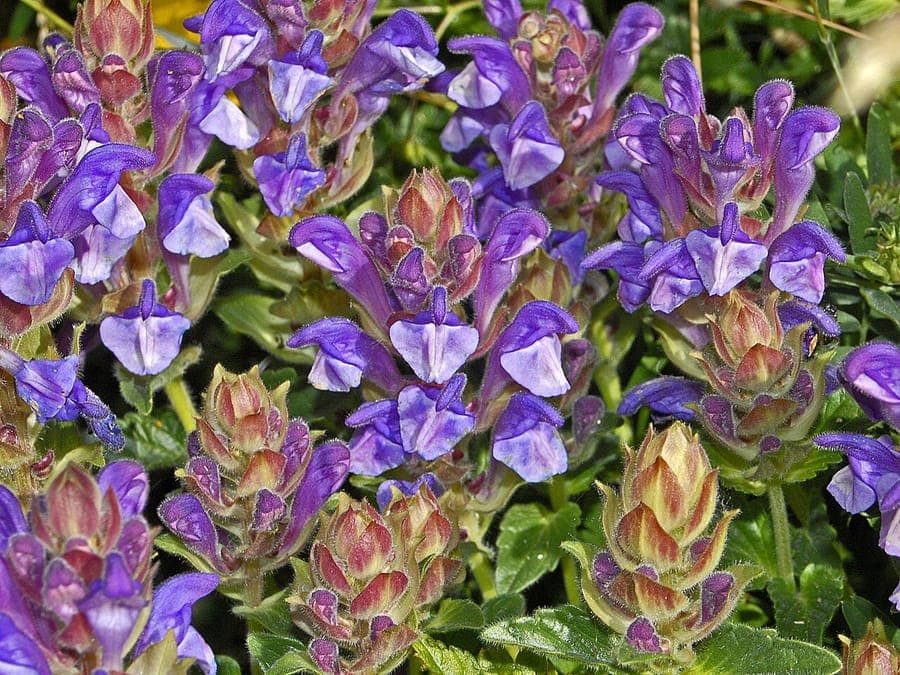
Hectonichus / CC BY-SA 3.0, via Wikimedia Commons
Alpine scullcap: complete guide
Scutellaria alpina
¿Quieres ver Alpine scullcap: complete guide en tu jardín?
1 minuto, sin tarjeta de crédito
Alpine scullcap represents a delightful alpine plant featuring purple flowers. This species naturally inhabits the mountains of Southern and Central Europe on rocky slopes with minimal soil depth. With its compact growth habit and extended flowering period, alpine scullcap offers a fascinating accent for any rock garden.
The plant originates from the Alpine regions and other European mountain chains. In these higher elevations, it grows on stony locations where minimal soil material is available. The plant tolerates extreme conditions admirably.
Overview
Alpine scullcap belongs to the Lamiaceae family and represents a compact mountain plant featuring striking purple flowers. It reaches only diminutive heights, making it perfect for rock gardens, alpine troughs, and other small-scale plantings. This plant offers reliable flowering year after year.
Appearance and bloom
The stems of alpine scullcap display reddish tints lined with small, oval leaves. The flowers are purple to blue-tinted, appearing in dense spikes. These flowers attract numerous bees and butterflies while providing extended flowering from June through August.
The plant grows compactly and forms attractive tight groupings. This makes it ideal for space-limited locations.
Ideal location
Alpine scullcap performs best in sunny, dry locations. The plant tolerates full sun and thrives on rocky slopes with minimal moisture. Select a warm position where the plant can dry thoroughly between waterings.
The plant even grows on very dry, stony locations unsuitable for most plants. This makes it particularly valuable.
Soil
Alpine scullcap thrives best on well-draining, nutrient-poor soils. The plant tolerates very stony substrates with minimal nutrients. This represents no disadvantage, as the plant actually thrives better in poor soils.
Always ensure excellent drainage. Plant this on slopes or raised beds where water drains rapidly.
Watering
Once established, alpine scullcap requires virtually no water. The plant demonstrates excellent drought tolerance. Watering becomes almost unnecessary once the plant is established.
During the first growing season provide moderate water. Thereafter, water only during extremely dry summers.
Pruning
Alpine scullcap requires minimal pruning intervention. After flowering, light pruning maintains compact form. This also encourages more compact growth the following season.
In early spring carefully remove any dead plant portions. Aggressive pruning is unnecessary.
Maintenance calendar
Spring: Plant emerges from dormancy. No watering needed in normal years.
Summer: Enjoy extended purple flowering. No watering typically required.
Autumn: Remove spent flower spikes. Plant prepares for dormancy.
Winter: Plant remains small and compact.
Winter hardiness
Alpine scullcap exhibits exceptional winter hardiness. The plant grows naturally in alpine environments with severe winters. It tolerates frost and snow without protection.
In extreme conditions, provide a dry scree layer. This is typically unnecessary.
Companion plants
Alpine scullcap combines beautifully with other alpine species. Stonecrop, sedums, and other dry-site plants are excellent companions. Add yellow or white-flowering alpine species for contrast.
Design combinations
The purple tones harmonize well with gray foliage and other mountain plants. Plant closely together for volume effect.
Closing thoughts
Alpine scullcap represents a valuable plant for rock gardens and alpine plantings. With its purple flowers and compact growth, it offers long-term interest. Plant it in dry, sunny locations and enjoy reliable, extended flowering.
Source alpine scullcap from quality retailers. Seedlings are available. Enjoy years of gardening satisfaction!
Visit gardenworld.app/en for comprehensive plant guides. Discover additional growing tips at gardenworld.app/en.
¿Quieres ver Alpine scullcap: complete guide en tu jardín? Crea un diseño gratis ahora.
Sube una foto, elige un estilo y obtén un diseño fotorrealista con lista de plantas en menos de un minuto.
Más de 10.000 jardines diseñados
Sin tarjeta de crédito


Plantas similares
Apple mint (Mentha x villosa): complete guide
Mentha x villosa
Meet apple mint (Mentha x villosa): a fruity-scented kitchen herb with woolly leaves, perfect for tea and mojitos.
Salvia peyronii: complete guide
Salvia peyronii
Discover Salvia peyronii, a rare Lebanese mountain sage. Growing tips, hardiness, and companion planting for a Mediterranean gravel garden.
Bigleaf mint (Mentha x rotundifolia): complete guide
Mentha x rotundifolia
Discover bigleaf mint: cultivation, care tips, and garden uses. Learn how to grow this aromatic herb with soft, hairy leaves.