
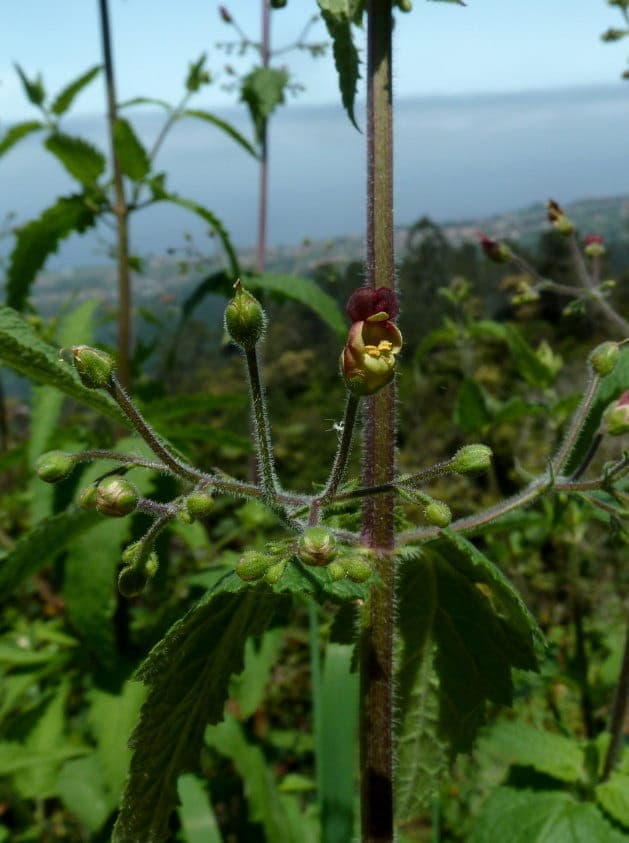
Aroche / CC BY-SA 4.0, via Wikimedia Commons
Scrophularia scorodonia: complete guide
Scrophularia scorodonia
¿Quieres ver Scrophularia scorodonia: complete guide en tu jardín?
1 minuto, sin tarjeta de crédito
Overview
Scrophularia scorodonia, commonly called balm-leaved figwort or garlic figwort, is a remarkable semi-shrubby perennial prized for its aromatic foliage and distinctive dark brown flowers. Native to southwestern Europe, the Azores and North Africa, this member of the Scrophulariaceae family offers an exceptionally long flowering period spanning May through September.
The plant excels at attracting pollinators, particularly butterflies and bees. Its fragrant foliage provides an additional sensory dimension to garden spaces, making it valuable beyond mere visual appeal.
Appearance and Bloom
Scrophularia scorodonia develops into a compact to moderately-sized plant, typically reaching 40 to 80 centimeters tall. The leaves are heart-shaped to broadly ovate, deep green, and notably aromatic. When touched, the foliage releases a distinctive garlic-like scent, explaining its scientific and common names.
Small dark brown to reddish flowers arrange in substantial flower spikes, blooming continuously from May through September. These blooms attract numerous butterfly species. Following flowering, characteristic small fruits develop.
Ideal Location
This species thrives in partial shade locations, though it tolerates full sun if soil remains consistently moist. The plant is notably more moisture-loving than most Mediterranean species. In very hot climates, afternoon shade protection proves beneficial.
In temperate zones, it combines excellently with other shade-tolerant perennials such as hostas and fatshedera.
Soil Requirements
Scrophularia scorodonia grows optimally in moist, well-draining, humus-rich soils. The plant accommodates various soil pH ranges with a preference for slightly acidic conditions (pH 5.5 to 6.5). Nutrient-rich soils promote superior growth.
Incorporating organic matter such as garden compost significantly improves soil structure and water retention.
Watering
This species requires regular watering, particularly during active growth and flowering from April through September. Soil should never dry completely. During hot periods, daily watering may be necessary.
Winter watering can be reduced, though complete drought must be avoided. Always maintain good drainage.
Diseño gratis
¿Quieres ver Scrophularia scorodonia: complete guide en tu jardín? Crea un diseño gratis ahora.
Pruning
Cut plants back severely in spring (March or April) to approximately 10-15 centimeters above ground. This promotes bushier, denser growth. Remove spent flowers throughout the season (deadheading) to encourage continuous flowering.
Following flowering, a light tidy-up pruning maintains plant shape.
Maintenance Calendar
United Kingdom: March - severe pruning. April-May - planting or seed sowing. May-September - regular watering and deadheading. October-November - reduce watering.
France: February-March - pruning. May-August - flowering and routine maintenance. September-October - seed collection.
Germany: April-May - planting after final frost. May-September - frequent care. October - frost protection preparation.
Winter Hardiness
This species demonstrates moderate frost tolerance. In southern Mediterranean Europe, outdoor cultivation presents no hardiness issues. In northern climates, the plant tolerates frost to approximately -5 to -10 degrees Celsius, depending on individual plants and site protection.
In very cold regions, winter protection becomes advisable. In temperate zones, it may be grown as an annual or overwintered indoors.
Companion Plants
This figwort combines beautifully with:
- Hosta (Hosta) - matching moisture preferences
- Astilbe (Astilbe) - similar growing conditions
- Impatiens (Impatiens) - partial shade lovers
- Fatshedera (Fatshedera) - decorative foliage
- Geranium (Geranium) - complementary flowering period
Pair with moisture-loving groundcovers for optimal effect.
Conclusion
Scrophularia scorodonia is an unusual and fascinating plant deserving greater attention in temperate gardens. With its extended flowering season, interesting dark brown flowers and aromatic foliage, this figwort brings distinctive character to any garden. Its pollinator-attracting properties make it particularly valuable for wildlife gardens.
Local garden centers occasionally stock seeds or young plants. Order online for convenient delivery. Visit gardenworld.app for further inspiration on shade-tolerant plants and moisture-loving species. For additional tips on wildlife gardens, explore gardenworld.app.
¿Quieres ver Scrophularia scorodonia: complete guide en tu jardín? Crea un diseño gratis ahora.
Sube una foto, elige un estilo y obtén un diseño fotorrealista con lista de plantas en menos de un minuto.
Más de 10.000 jardines diseñados
Sin tarjeta de crédito


Plantas similares
Naio: complete guide
Myoporum sandwicense
All about naio or bastard sandalwood (Myoporum sandwicense): a Hawaiian coastal tree, its uses, cultivation, and role as a tough windbreak in mild gardens.
Oriental Mullein: complete guide
Verbascum orientale
Complete guide to Oriental Mullein (Verbascum orientale): placement, soil, watering, pruning and garden design tips.
Buddleja marrubiifolia: complete guide
Buddleja marrubiifolia
Woolly butterfly-bush from Texas and Mexico. Shrub with soft, hairy leaves and orange-red flowers. Hardy to -5C. Blooms summer-fall. Drought-tolerant and low-maintenance plant.