
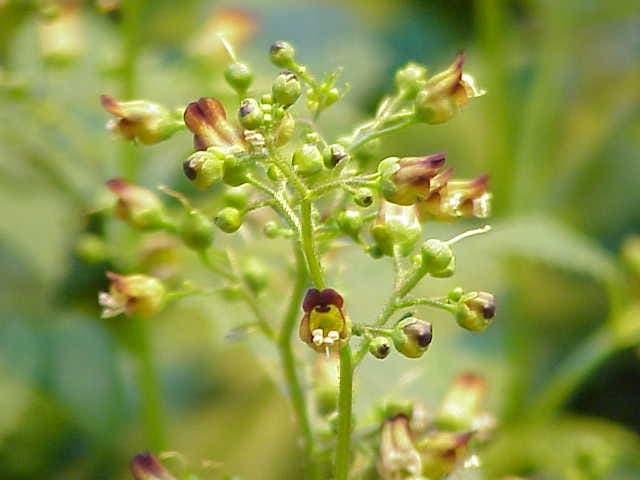
Kurt Stüber [1] / CC BY-SA 3.0, via Wikimedia Commons
Figwort: complete guide
Scrophularia nodosa
¿Quieres ver Figwort: complete guide en tu jardín?
1 minuto, sin tarjeta de crédito
Figwort, scientifically designated Scrophularia nodosa, is a captivating herbaceous plant widely distributed across European regions extending eastward to Mongolia. This distinctive species differentiate itself through knotted stems and dark brown flower clusters. With its strong preference for moist shaded locations, figwort proves ideally suited to woodland-style gardens and shade-focused plantings.
The plant naturally inhabits moist woodlands, streamside locations, and nutrient-rich soil environments. Its geographical distribution from Europe to Mongolia represents one of the widest ranges among figwort species. The botanical designation "nodosa" references the distinctive nodules adorning the stems.
Overview
Figwort belongs to the Scrophulariaceae family and represents a moisture-loving species perfect for shade-oriented gardens. The plant reaches substantial heights and forms attractive dense groupings. It is particularly well-suited to woodland-type environments and other shade-preferring plant communities.
Appearance and bloom
The stems of figwort display distinctive nodules or swellings characterizing the species. The leaves are notably elongated with finely serrated margins. The dark brown flowers emerge during summer months in loose clusters. These flowers attract numerous pollinating insects and provide substantial biological value to plantings.
The plant develops to considerable heights forming dense plant masses. In woodland environments, it frequently establishes extensive colonies.
Ideal location
Figwort performs optimally in shaded to partially shaded locations. The plant exhibits strong moisture requirements and grows ideally alongside streams or other moisture-rich locations. Select a position in half-shade to shade with consistent soil moisture.
The plant tolerates full shade admirably, though it flowers more abundantly with increased light. Avoid planting in full sun during warm climates.
Soil
Figwort thrives best on nutrient-rich, moisture-retentive soils. The plant demonstrates minimal soil type preferences but performs better on loamy substrates. Always ensure permanent soil moisture conditions.
Organic material enhances moisture and nutrient retention capabilities. Incorporate humus or peat moss when planting.
Watering
Water represents an essential element for figwort cultivation. The plant requires consistent and substantial moisture. Position this species in moisture-rich locations and provide regular irrigation during dry periods.
The plant flourishes when soil remains permanently moist. This makes it perfect for planting along water transitions.
Pruning
Figwort requires minimal pruning intervention. Remove spent flower clusters after blooming. This may encourage secondary flowering and maintain plant appearance.
In early spring, remove dead plant portions. Aggressive pruning is unnecessary and may weaken the plant.
Maintenance calendar
Spring: Remove winter damage and dead material. Monitor soil moisture levels.
Summer: Enjoy extended flowering period. Provide regular watering.
Autumn: Remove spent flower clusters. Prepare plant for dormancy.
Winter: Plant dies back to ground level.
Winter hardiness
Figwort demonstrates good winter hardiness. The plant dies back to ground level in winter, which represents normal behavior. The underground structures survive harsh winters without special protection.
In extremely cold regions, provide mulch protection. This is typically unnecessary in temperate climates.
Companion plants
Figwort combines beautifully with other woodland species. Wild elder, woodbine, and other shade-preferring species are excellent companions. Add white or yellow-flowering plants for color contrast.
Design combinations
Figwort's brown tones harmonize well with green foliage and other dark-colored flowers. Ensure variation in bloom timing.
Closing thoughts
Figwort represents a valuable plant for shaded, moist gardens. With its distinctive knotted stems and brown flowers, it offers year-round interest. Plant it in woodland-style environments and enjoy a naturalistic garden aesthetic.
Source figwort from quality retailers. Online ordering is available. Enjoy years of gardening satisfaction!
Visit gardenworld.app/en for comprehensive plant guides. Discover additional growing tips at gardenworld.app/en.
¿Quieres ver Figwort: complete guide en tu jardín? Crea un diseño gratis ahora.
Sube una foto, elige un estilo y obtén un diseño fotorrealista con lista de plantas en menos de un minuto.
Más de 10.000 jardines diseñados
Sin tarjeta de crédito


Plantas similares
Naio: complete guide
Myoporum sandwicense
All about naio or bastard sandalwood (Myoporum sandwicense): a Hawaiian coastal tree, its uses, cultivation, and role as a tough windbreak in mild gardens.
Oriental Mullein: complete guide
Verbascum orientale
Complete guide to Oriental Mullein (Verbascum orientale): placement, soil, watering, pruning and garden design tips.
Buddleja marrubiifolia: complete guide
Buddleja marrubiifolia
Woolly butterfly-bush from Texas and Mexico. Shrub with soft, hairy leaves and orange-red flowers. Hardy to -5C. Blooms summer-fall. Drought-tolerant and low-maintenance plant.