
Wikimedia Commons / CC BY-SA 3.0, via Wikimedia Commons
Water betony: complete guide
Scrophularia auriculata
¿Quieres ver Water betony: complete guide en tu jardín?
1 minuto, sin tarjeta de crédito
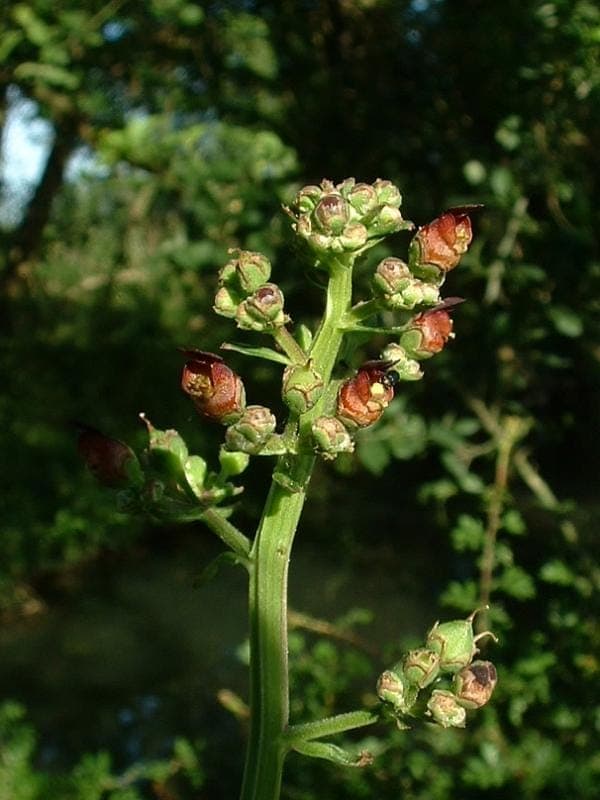
Water betony, scientifically known as Scrophularia auriculata, is an exceptional moisture-loving plant that thrives in wet environments. This distinctive plant is perfectly suited for waterside locations and boggy areas in the garden. With its remarkable ear-like leaf bases and deep brown flowers, water betony adds a unique character to any garden design.
This species originates from Europe and North Africa, where it naturally inhabits marshy areas, stream banks, and wetland environments. The common name "water betony" derives from its preference for aquatic and semi-aquatic habitats. It is a valuable addition to any gardener's collection who seeks to create naturalistic wetland gardens.
Overview
Water betony belongs to the Scrophulariaceae family and represents a robust herbaceous plant ideally suited for water garden applications. The plant grows to substantial heights and naturally forms colonies along watercourses. Its ability to thrive in permanently wet conditions makes it invaluable for creating authentic wetland plant communities in the garden setting.
Appearance and bloom
The leaves of water betony are notably elongated with distinctive ear-shaped appendages at their bases, which inspired both its common and scientific names. The plant produces dark brown flowers during summer months, displaying intricate morphology that attracts pollinators. These flowers emerge on upright stems creating striking visual interest above the foliage.
The plant develops substantial growth, creating dense structural forms that serve practical purposes for screening and naturalistic planting schemes. Its architectural form provides year-round interest even when not in bloom.
Ideal location
Water betony demonstrates exceptional tolerance for wet and permanently waterlogged soils. The plant performs optimally in locations where soil remains consistently moist or even submerged seasonally. This makes it perfect for low-lying garden areas and waterside plantings.
The plant adapts to both full sunlight and partial shade conditions. For maximum flowering, position water betony where it receives several hours of direct sunlight daily, though the plant tolerates shadier locations admirably.
Soil
Water betony is remarkably undemanding regarding soil composition. The plant tolerates heavy clay and waterlogged substrates that would challenge most garden plants. It thrives in loamy and clayey soils, particularly when these remain consistently moist.
Maintain open soil structure to allow water infiltration. While adding organic matter can enhance soil conditions, this is not strictly essential for water betony cultivation.
Watering
Watering requirements are straightforward for water betony, as the plant actually demands high moisture levels. Position the plant in locations where soil remains permanently wet or very moist. During dry spells, supplemental irrigation is rarely necessary once the plant becomes established, as water betony demonstrates good drought tolerance.
Sprinkler systems and drainage modifications are unnecessary. Instead, locate the plant where consistent moisture is naturally available.
Pruning
Water betony requires minimal pruning intervention. Remove spent flower heads after blooming to maintain plant appearance and potentially encourage secondary flowering. In early spring, remove any winter-damaged or dead material.
The plant grows vigorously, so careful early-spring pruning helps manage growth if needed. Avoid aggressive cutting as this can weaken the plant unnecessarily.
Maintenance calendar
Spring: Remove winter damage and dead plant material. Monitor soil moisture levels.
Summer: Enjoy the flowering period. Provide supplemental water during dry spells.
Autumn: Deadhead spent flowers. Prepare plant for dormancy.
Winter: The plant commonly dies back to ground level, which is normal behavior.
Winter hardiness
Water betony demonstrates good winter hardiness across most European regions. In mild winters, top growth may persist, but in harsh conditions the plant typically dies back to ground level. This represents normal behavior as the plant reliably regrows from underground structures each spring.
For added protection in severe climates, apply mulch around the root zone. This helps the plant survive particularly cold winters.
Companion plants
Water betony combines beautifully with other moisture-loving species including sedges, reeds, and marsh plants. Watercress and water avens are excellent companions. Mass plant with other waterside vegetation for naturalistic garden effects.
Design combinations
Water betony's brown tones harmonize beautifully with other dark-flowered plants and metallic foliage colors. Create visual interest through varying heights and staggered bloom times.
Closing thoughts
Water betony is a magnificent plant for gardeners seeking to establish authentic wetland gardens. With its distinctive ear-shaped leaves and dark brown flowers, it offers reliable seasonal interest. Plant it along waterside locations and wet areas to create naturalistic planting schemes that attract beneficial wildlife.
Source water betony from quality retailers. Online ordering is available. Enjoy years of gardening satisfaction!
Visit gardenworld.app/en for comprehensive plant guides. Discover additional growing tips at gardenworld.app/en.
¿Quieres ver Water betony: complete guide en tu jardín? Crea un diseño gratis ahora.
Sube una foto, elige un estilo y obtén un diseño fotorrealista con lista de plantas en menos de un minuto.
Más de 10.000 jardines diseñados
Sin tarjeta de crédito


Plantas similares
Naio: complete guide
Myoporum sandwicense
All about naio or bastard sandalwood (Myoporum sandwicense): a Hawaiian coastal tree, its uses, cultivation, and role as a tough windbreak in mild gardens.
Oriental Mullein: complete guide
Verbascum orientale
Complete guide to Oriental Mullein (Verbascum orientale): placement, soil, watering, pruning and garden design tips.
Buddleja marrubiifolia: complete guide
Buddleja marrubiifolia
Woolly butterfly-bush from Texas and Mexico. Shrub with soft, hairy leaves and orange-red flowers. Hardy to -5C. Blooms summer-fall. Drought-tolerant and low-maintenance plant.