
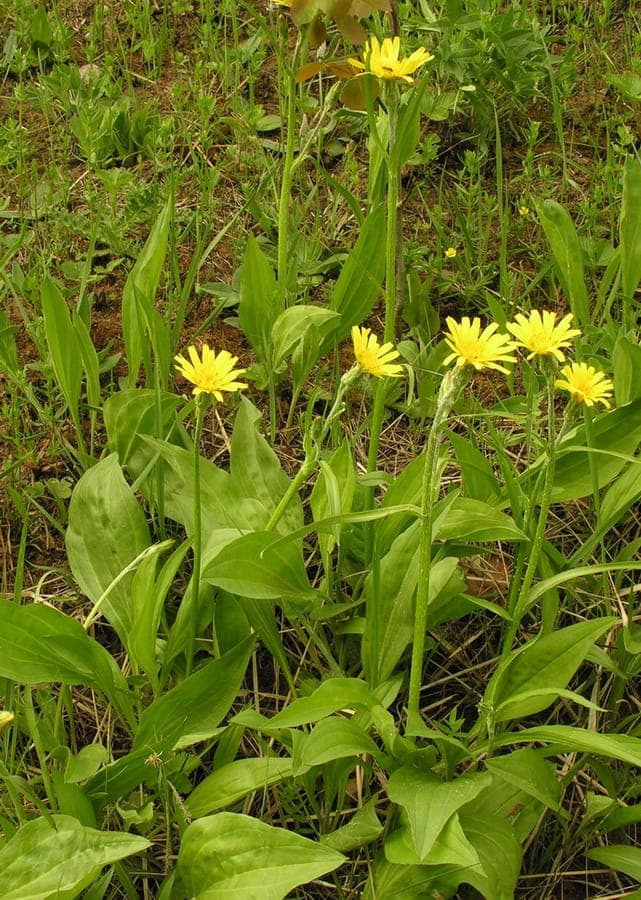
No machine-readable author provided. Rasbak assumed (based on copyright claims). / CC BY-SA 3.0, via Wikimedia Commons
Viper's grass: complete guide
Scorzonera humilis
¿Quieres ver Viper's grass: complete guide en tu jardín?
1 minuto, sin tarjeta de crédito
Viper's Grass: Complete Guide to This Moisture-Loving Plant
Scorzonera humilis, commonly known as viper's grass, dwarf scorzonera, or little yellow viper's grass, is an interesting perennial plant from the daisy family (Asteraceae). This European plant occurs naturally from Austria to Turkey in moist grasslands and wetland margins. In British and European gardens, this plant is becoming increasingly popular due to its attractive yellow flowers and preference for moist locations.
Overview
Viper's grass is an elegant plant distinguished by its yellow flowers and narrow foliage. With a height of approximately 20 to 40 centimeters, it fits well in wetland zones or streamside situations. The plant forms attractive groups and contributes to garden beauty through its charming flowers and graceful form.
The plant is recognized for its preference for moist soils and can grow in both full sun and partial shade. This makes it flexible for use in various garden settings.
Appearance and Bloom
Viper's grass forms an attractive rosette of long, thin, linear leaves that grow from the base. The leaves are dark green and can reach 20 to 40 centimeters in length. They have a smooth surface.
The flowers are yellow and appear from April to June in flower heads atop slender stems. The flowers are approximately 2 to 3 centimeters in diameter and have the typical daisy-like structure of daisies. Each flower head consists of many small florets. After flowering, the plant produces seed crowns (pappus) with which seeds are dispersed.
Ideal Location
Viper's grass grows best in full sun to light shade in moist soils. The plant is ideal for wetland zones, damp grasslands, and streamside situations. In European gardens, it functions well in moist soils with some organic material.
The plant is native to Europe from Scandinavian regions to the Mediterranean. This means it is well-adapted to European climates.
Diseño gratis
¿Quieres ver Viper's grass: complete guide en tu jardín? Crea un diseño gratis ahora.
Soil
Viper's grass grows best in moist to wet, nutrient-rich soils. The plant prefers slightly acidic to neutral soils (pH 5.0-7.0). Good moisture capacity is essential.
Organic matter such as peat or compost improves water availability. The plant grows naturally in nutrient-rich wetland soils, so fertilization is beneficial. Poorly drained clay soils can work well provided moisture conditions remain correct.
Watering
Viper's grass is moisture-loving and requires water throughout the growing season. Soil should remain consistently moist during the growing season. Regular watering during dry periods is essential.
The plant can also grow in shallow waters or along stream margins where water levels fluctuate seasonally. This makes it valuable for water gardens.
Pruning
Viper's grass requires minimal pruning. Remove spent flowers to encourage prolonged flowering. After blooming, flower stems can be cut back to keep the plant tidy.
In spring, dead parts from the previous year can be removed. This stimulates new growth.
Maintenance Calendar
Here is a typical maintenance calendar:
April-May: Plant in moist soils. Monitor moisture levels.
May-June: Enjoy yellow flower displays. Remove spent blooms.
July-October: Plant continues growing, possible secondary blooms. Maintain optimal moisture.
November-March: Plant enters dormancy. Check drainage and moisture levels.
Winter Hardiness
Viper's grass is very frost-hardy in Europe. The plant naturally grows from Austria to Turkey and can withstand harsh frosts in alpine regions. In Britain, continental Europe, and other temperate areas, winter protection is not necessary. The plant is classified as very frost-hardy. Underground roots survive frosts readily.
¿Quieres ver Viper's grass: complete guide en tu jardín? Crea un diseño gratis ahora.
Sube una foto, elige un estilo y obtén un diseño fotorrealista con lista de plantas en menos de un minuto.
Más de 10.000 jardines diseñados
Sin tarjeta de crédito


Plantas similares
Calendula stellata: complete guide
Calendula stellata
Complete guide to Calendula stellata, the star-flowered marigold from Sicily: location, soil, watering and companion planting tips.
Korean chrysanthemum: complete guide
Chrysanthemum x rubellum
Chrysanthemum x rubellum is a hardy autumn perennial with single pink to copper flowers from August to November. Care and combinations.
Helianthus divaricatus: complete guide
Helianthus divaricatus
Helianthus divaricatus is a North American woodland sunflower with yellow summer blooms, ideal for naturalistic borders and shady edges.